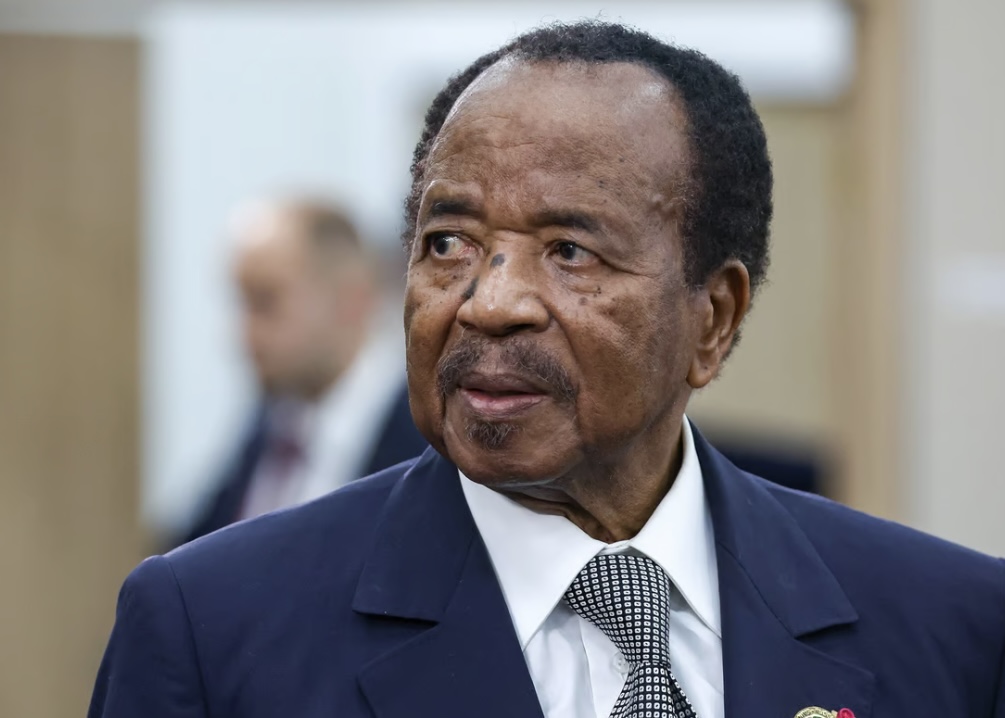
Paul Biya’s prolonged absence sparks debate in Cameroon
The Cameroon People’s Democratic Movement (RDPC) convened a high-level meeting of its top officials this week, marking 45 days since President Paul Biya departed for a private trip to Europe. No official announcement has been made regarding his expected return, leaving questions unanswered about the leadership vacuum and the functioning of state institutions.
Amid the uncertainty, the ruling party insists that government operations remain uninterrupted. Meanwhile, opposition figures are demanding clarity on how power is being exercised during the president’s extended absence and what contingency measures are in place for such scenarios.

RDPC’s response to growing concerns
Jean Nkuete, Secretary-General of the RDPC’s Central Committee, called an “important working session” this week, though the official statement provided no details about the agenda or reasons behind the gathering. The 93-year-old president left Cameroon on June 7, with his civil cabinet citing only a “short private stay in Europe.” Since then, no official communication has confirmed a return date.
The prolonged silence surrounding the president’s whereabouts has fueled speculation. The RDPC has been quick to dismiss concerns. In a July 15 editorial in L’Action, Christophe Mien Zok, the party’s propaganda director, asserted that “authority is not vacant” and that “the Lion has not left,” rejecting claims that Cameroon is being governed in “autopilot mode.” Official presidential channels have continued to release messages attributed to Biya, including greetings to foreign leaders like Emmanuel Macron for Bastille Day and the Montenegrin president, though no other public activities have been reported since his departure.
Opposition voices demand answers
The president’s extended absence has intensified calls for explanations from political leaders. Deputy Jean-Michel Nintcheu has urged the Constitutional Council to declare a presidential vacancy. The Democratic Union of Cameroon (UDC) takes a different stance, stating it does not wish to speculate on Biya’s personal situation but emphasizes that state continuity cannot rely on silence or assumptions. In an official statement on July 18, the party argued that a prolonged absence abroad does not, in itself, constitute a vacancy of power. However, it stressed the need to question how effectively presidential responsibilities are being carried out and to review the mechanisms for handling temporary incapacitation.
Constitutional gaps fuel uncertainty
Cameroon’s laws do not specify a maximum duration for the president’s absence from national territory. Analysts argue this gap warrants institutional review, yet no legal provision defines when the Constitutional Council should intervene. The UDC also points out that the vice-presidential position, reintroduced during the April constitutional revision, remains unfilled. The party advocates for legal reforms to clarify the framework governing presidential absences, particularly prolonged ones. In power since 1982, Biya has frequently traveled to Europe, but this trip—now surpassing all previous ones in duration—has been met with unprecedented silence regarding his return.