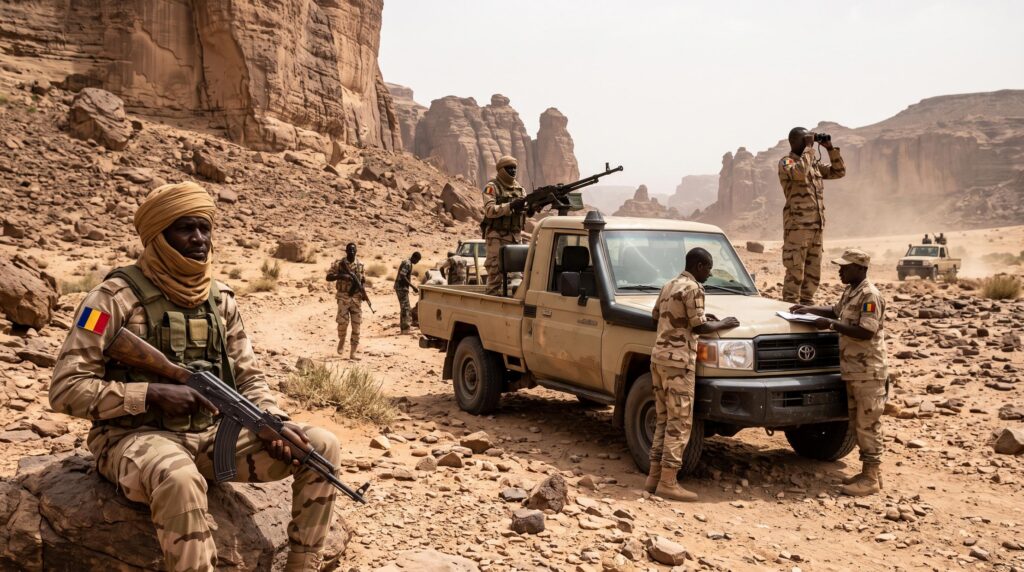
MISKI, Chad — Two soldiers killed and nine security personnel injured in fierce fighting between military forces and local self-defense groups have thrust the Tibesti region into deeper turmoil. The October 14 clashes, which erupted in the Awa mining zone, highlight the growing volatility of Chad’s gold-rich hinterland and the high stakes for both security and economic stability.
The spark igniting a powder keg
Witnesses near the Awa gold fields reported heavy gunfire beginning around 5:00 PM, sparking a confrontation that left the army blaming the local self-defense committee for the violence. Authorities have demanded immediate disarmament, warning that any refusal to lay down weapons will be treated as an act of rebellion. Without independent verification, these claims reflect only the military’s official stance—but the damage is already done.
From words to weapons: a timeline of escalation
The national broadcaster cited an October 13 statement by the self-defense committee accusing military mining brigades of heavy weapons fire the previous day. The group condemned these actions as provocations that violate a ceasefire agreement and called on government mediators to intervene. The series of events paints a picture of rising tensions, where economic control and territorial disputes are colliding with fragile peace accords.
Peace in name only: the fragile 2025 agreement
The roots of the current crisis stretch back to the April 20, 2025 peace accord, aimed at stabilizing the Tibesti region. Yet repeated violations—denounced by both sides—have left the agreement in tatters. The vice-Prime Minister’s October 3 visit to the area, part of an effort to reaffirm commitments, now appears to have had little impact in curbing hostilities. At the heart of the conflict lies the control of gold-rich mine sites and the uneasy coexistence between local communities and armed forces tasked with securing them.
What’s next for Miski: civilians caught in the crossfire
While no verified reports yet confirm civilian casualties or large-scale displacement, residents of Miski and surrounding areas face growing uncertainty. As both parties trade accusations, the risk of further military escalation looms large. The path to stability now hinges on whether dialogue, accountability, and mutual respect for peace agreements can prevail over the pull of armed confrontation.