Benin’s financial diplomacy delivers $460 million boost for infrastructure and development
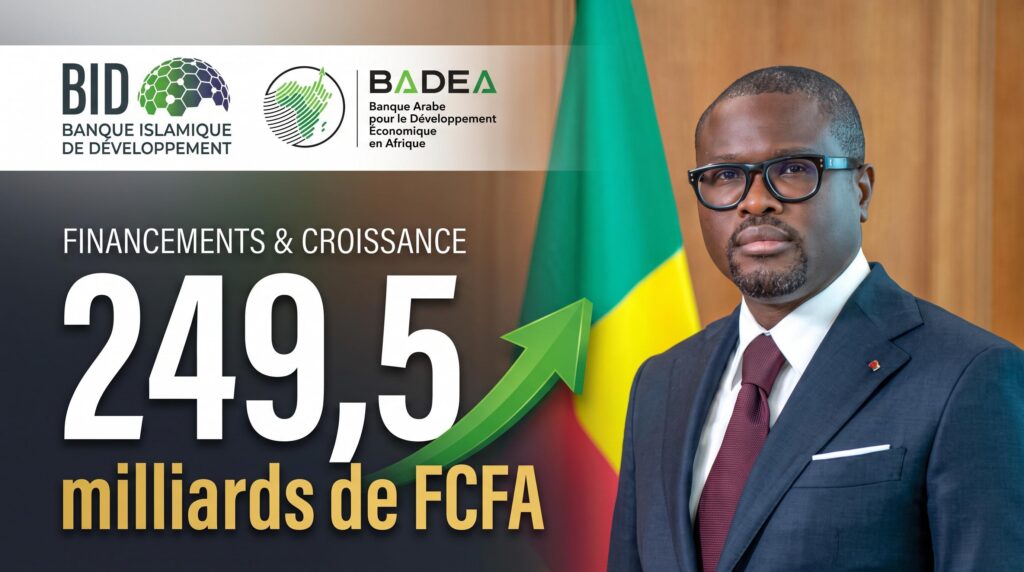
Benin has once again demonstrated its ability to secure critical funding on favorable terms by finalizing three financing agreements totaling 249.5 billion CFA francs ($460 million) during the 2026 annual meetings of the International Monetary Fund and World Bank in Bangkok. The deals were signed with the Islamic Development Bank (IsDB) and the Arab Bank for Economic Development in Africa (BADEA), reinforcing the country’s reputation as a stable and attractive partner for development financing in West Africa.
How strategic debt financing fuels Benin’s economic transformation
While public debt is often viewed with skepticism, Benin’s latest financial mobilization exemplifies how well-structured financing can serve as a catalyst for sustainable growth rather than a burden. The 249.5 billion CFA francs secured will not only support the expansion of critical infrastructure but also strengthen the government’s commitment to fiscal responsibility and debt sustainability.
The authorities have emphasized that this funding will target high-impact projects such as transportation networks, energy infrastructure, and public facilities. These investments are expected to reduce regional disparities, lower operational costs for businesses, and improve access to essential services for millions of citizens across Benin.
- Boosting productivity: Improved roads and energy supply will enhance business operations and attract private investment.
- Creating jobs: Infrastructure development will generate employment opportunities in construction, logistics, and related sectors.
- Expanding revenue base: Economic growth facilitated by these projects will broaden the tax base, providing more fiscal space for future investments.
Proven fiscal discipline underpins investor confidence
Benin’s ability to secure this financing reflects years of disciplined economic reforms and transparent fiscal management. According to the IMF’s April 2026 assessment, the country has made significant progress in reducing its fiscal deficit from 7.2% of GDP in 2021 to just 3.1% in 2024. Public debt levels have also declined over the past year, even after statistical adjustments to better reflect state-owned enterprise liabilities.
These milestones are not merely statistical achievements—they signal growing foreign investor trust and improved market conditions. The agreements with IsDB and BADEA underscore Benin’s strategic diversification of funding sources, reducing reliance on any single creditor and optimizing financing terms based on project needs and maturity profiles.
From financing to visible impact: ensuring every franc delivers
The real test of this financial success lies in its tangible outcomes for citizens and businesses. For maximum benefit, the government must prioritize execution quality, project relevance, and impact measurement at every stage.
Key measures to ensure accountability and efficiency include:
- Transparent tendering: Ensuring fair, competitive procurement processes to select the most cost-effective solutions.
- Rigorous oversight: Implementing real-time monitoring systems for project timelines, expenditures, and performance metrics.
- Independent audits: Conducting third-party evaluations to assess economic and social returns of funded initiatives.
Only through such measures can Benin ensure that borrowed funds translate into durable infrastructure, improved public services, and long-term prosperity rather than unsustainable liabilities.
Balancing ambition with fiscal prudence: the path forward
Benin’s latest financing package presents both an opportunity and a responsibility. To sustain its positive trajectory, the government must continue aligning borrowing strategies with long-term growth objectives while maintaining strict fiscal discipline.
Key considerations for the future include:
- Project prioritization: Focusing on initiatives with the highest economic multipliers and quickest returns on investment.
- Debt maturity planning: Ensuring repayment schedules align with revenue growth to avoid cash flow pressure.
- Investor engagement: Sustaining dialogue with international partners to access concessional financing and technical support.
The 249.5 billion CFA francs secured in 2026 represent more than just funds—they are a vote of confidence in Benin’s economic vision. How effectively these resources are deployed will determine whether the country achieves inclusive, resilient growth or faces future financial strain. With strong governance, transparent execution, and a clear focus on citizen benefit, Benin has the potential to turn this financial leverage into a lasting legacy of progress.