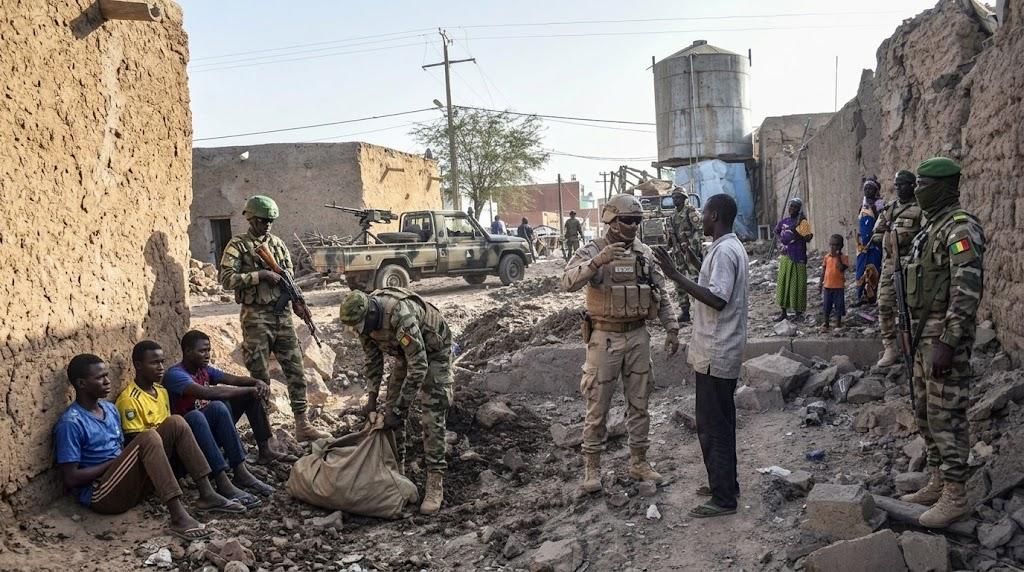
An unanswered tragedy: Mali’s military admits civilian harm but hides the truth
In an unusually subdued statement released on October 14, 2026, Mali’s military leadership acknowledged an ‘unfortunate incident’ involving civilian casualties in a combat zone. Yet, the communiqué—devoid of critical details—left families in Zanakoro and beyond grappling with grief and unresolved questions. Why the secrecy? And how many more incidents are being buried under vague military statements?
Zanakoro: where a baptism turned into a death toll
Local accounts describe a horrific scene on October 12, 2026, just two days before the military’s vague admission. A celebration of life—a child’s baptism—was shattered by what witnesses describe as indiscriminate airstrikes. Among the dead were a pregnant woman and three children under ten. At least eight people were killed, with others sustaining life-threatening injuries. Homes were reduced to rubble, and families fled into the surrounding wilderness to escape further attacks.
The military’s silence speaks louder than words
The October 14 statement did not specify the location of the incident, the timeline, or even the number of casualties. If this tragedy mirrors the events in Zanakoro, why is the army concealing the truth? The lack of transparency isn’t just a procedural failure—it’s a weapon that erodes trust in institutions sworn to protect citizens. For grieving families, it means justice delayed. For surviving witnesses, it means living with the fear that the next strike could target them.
From Wagner to Africa Corps: a cycle of unaccountability
The departure of the Wagner Group from Mali did little to stem the tide of allegations against Russian-backed forces now operating under the name Africa Corps. Reports from human rights organizations paint a damning picture: deliberate civilian killings, torture, arbitrary detentions, and indiscriminate bombings continue to plague communities across central Mali. Between 2023 and 2025, Amnesty International documented seven separate incidents where 34 civilians were allegedly executed by joint Malian-Russian operations. Some victims were shot, others burned alive. Entire villages have been left in ruins, their residents traumatized and displaced.
The shift from Wagner to Africa Corps has done nothing to curb these abuses. On June 15, 2026, eight civilians—including three children—were killed in Kyrnia, Mopti region, when what Human Rights Watch described as ‘indiscriminate aerial bombardments’ struck near a village market and a local leader’s residence. While jihadist fighters are active in the area, the lack of clear military objectives raises serious concerns about deliberate targeting or reckless disregard for civilian lives.
When counterterrorism eclipses civilian protection
Fighting extremist groups like the Jama’at Nusrat al-Islam wal Muslimeen (JNIM) is Mali’s stated priority. But this mission cannot absolve the state of its duty to comply with international humanitarian law. Civilians are not collateral damage—they are humans entitled to protection, regardless of the chaos around them. Every unexplained death, every unmarked grave, every family forced to flee erodes the social contract between Malians and their government.
The principle of distinction demands that forces differentiate between combatants and civilians. The principle of precaution requires avoiding attacks when civilian harm is foreseeable. Yet, Mali’s military has not demonstrated either in its handling of these tragedies. Without independent investigations, how can the public know whether these were tragic mistakes or systematic violations?
Trust broken: why transparency isn’t optional
An acknowledgment of civilian harm is a start—but it’s not enough. The families of Zanakoro need answers: Who is responsible? Were warnings issued? Could the strike have been avoided? Without this information, the October 14 statement serves only to deepen public skepticism. A military that hides the truth loses its legitimacy. Communities that fear their own forces lose confidence in the state. And a nation fighting for stability risks being torn apart by its own contradictions.
The cycle of violence and silence must end. For the sake of Mali’s future, truth must replace secrecy, accountability must replace impunity, and civilian lives must come before military convenience.
The path forward: what Mali’s military must do now
- Name the victims: Publish full names, ages, and identities of all casualties to honor their memory and enable independent verification.
- Disclose the location and date: Where and when did the incident occur? Transparency is not political—it’s a legal and moral obligation.
- Conduct independent inquiries: Allow international observers or neutral bodies to investigate alleged violations and hold perpetrators accountable.
- Provide reparations: Families deserve compensation for lost lives, destroyed livelihoods, and psychological trauma.
- End indiscriminate operations: Review targeting protocols to ensure strikes adhere to international law and prioritize civilian safety.
A nation’s dignity hangs in the balance
Mali stands at a crossroads. The fight against terrorism is real and urgent. But so is the fight to preserve its people’s dignity. Every civilian life lost to reckless or secretive operations is a stain on the nation’s conscience. Every family broken by a bomb dropped in error is a reminder of what’s at stake. The time for half-truths is over. The time for justice—and for change—has come.