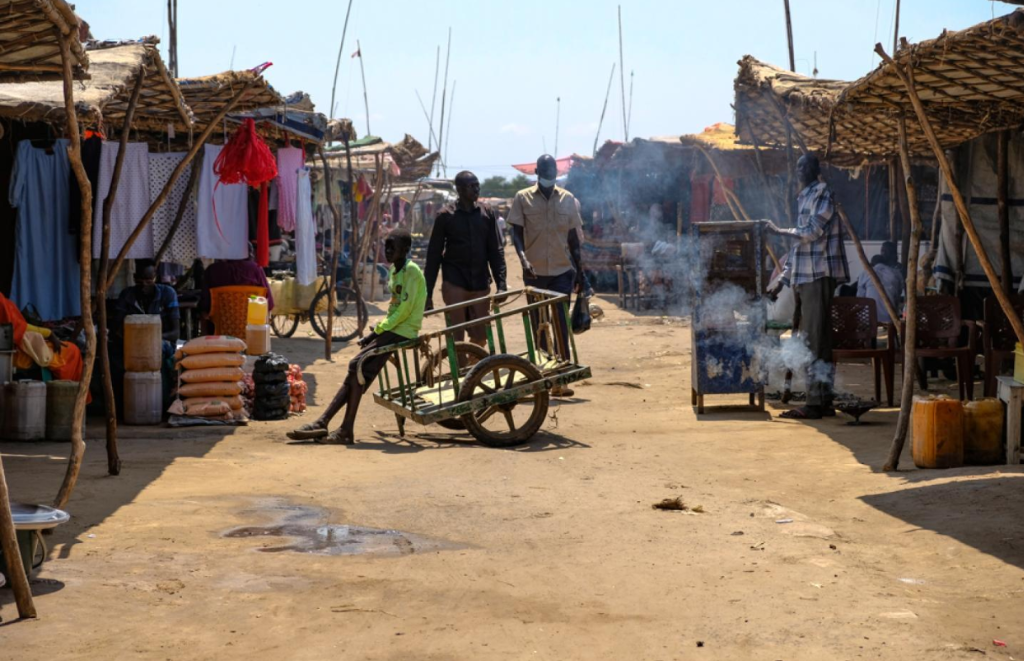
Civilian mass casualty in disputed Abyei sparks diplomatic firestorm
The disputed border region of Abyei has become the epicenter of a fresh humanitarian and diplomatic crisis after a suspected drone strike devastated Amiet Market, leaving at least 73 civilians dead and 19 injured. The attack, which occurred during peak trading hours, has not only claimed countless lives but also threatens to destabilize the already fragile economic lifeline that connects Sudan and South Sudan.
The strike, which eyewitnesses and local officials describe as a series of precision airstrikes, targeted multiple sectors of the market, including fuel storage areas and commercial stalls. The presence of large quantities of fuel exacerbated the disaster, sparking fires that hampered rescue operations and obscured visibility for recovery teams. Authorities report that the attack began around 11:30 AM local time, disrupting one of the region’s most vital trading hubs.
Market collapse disrupts critical supply chains across borders
Amiet Market is more than just a commercial hub—it is a cornerstone of economic survival for communities on both sides of the Sudan-South Sudan border. Traders here deal in fuel, food staples, construction materials, and medicine, supplying populations that have endured years of conflict, displacement, and economic hardship. The attack has crippled this vital node, cutting off access to essential goods and deepening humanitarian vulnerabilities in a region already reeling from the Sudanese civil war.
Fuel supplies from Amiet Market are reportedly critical for transport and small-scale agriculture in neighboring areas. The destruction of fuel storage facilities not only hampers local commerce but also threatens food security by impeding the movement of agricultural inputs such as seed and fertilizer. Aid agencies warn that the disruption could trigger shortages in remote communities, further straining already limited resources.
Cross-border commerce hangs in the balance
Since South Sudan’s independence in 2011, Abyei’s status remains unresolved, suspended in legal limbo. Successive provisional agreements have failed to yield a permanent solution, and competing territorial claims continue to fester. The current violence adds a dangerous new layer: as armed factions vie for control, commercial routes—and the civilian lives that depend on them—are increasingly caught in the crossfire.
Local reports indicate that goods flowing through Amiet Market include smuggled fuel and contraband goods originating from conflict zones in Sudan. While the military significance of such trade routes cannot be ignored, this does not justify the targeting of a crowded civilian market where families gather to buy daily necessities. Experts stress that under international humanitarian law, such attacks may constitute serious violations, particularly when precision is possible and civilian harm is foreseeable.
Juba delivers strong diplomatic rebuke, demands accountability
In a swift and decisive move, South Sudan’s Ministry of Foreign Affairs summoned Sudan’s ambassador to protest the attack and demand an immediate explanation. The government condemned the strike as a blatant violation of civilian protection norms and warned that such actions risk escalating tensions between the two nations.
South Sudan has urged Sudan to refrain from military actions that endanger civilian lives and called for the use of established diplomatic mechanisms to resolve the Abyei dispute. A government spokesperson emphasized that any provocation could have irreversible consequences on regional stability, especially given the ongoing humanitarian fallout from the Sudanese conflict.
The diplomatic démarche reflects growing frustration in Juba over the perceived impunity of military actions in border areas. While no retaliatory measures have been announced, the tone suggests a hardening stance—one that may push both governments toward a more confrontational path if the civilian toll continues to rise.
From tragedy to inquiry: the urgent call for truth and justice
With the death toll expected to rise as recovery operations continue, calls are mounting for a transparent, independent investigation into the attack. The absence of an official Sudanese response has only intensified suspicions, with local leaders, survivors, and regional observers questioning the military’s role.
International humanitarian organizations have echoed these demands, stressing that only an impartial inquiry can establish whether the strike violated international law. Such an investigation would need to determine the intended target, evaluate the proportionality of the strikes, and assess the precautions taken to protect civilians in a densely populated commercial area.
In the absence of conclusive evidence, misinformation and narratives of blame are already circulating. Yet amid the geopolitical posturing, the most urgent priority remains the dignity and memory of the victims—families torn apart, breadwinners lost, and communities left in shock.
What comes next for Abyei’s market—and the people who depend on it?
The aftermath of the Amiet Market strike raises critical questions about the future of Abyei and the safety of its population. Can the two governments use this tragedy as a catalyst for renewed dialogue? Will the international community intervene to protect civilians and enforce accountability? Or will this become just another entry in a long history of violence, displacement, and unanswered questions?
One thing is certain: the loss of 73 lives in a single day is not just a statistic—it is a rupture in the fragile social fabric of Abyei. It is a blow to a regional economy on the brink of collapse. And it is a stark reminder that when war touches markets, hospitals, and schools, it is not just territory that is contested—it is humanity itself.
Immediate priorities: healing, investigation, and prevention
- Provision of emergency medical care to the injured and psychosocial support for families
- Deployment of forensic teams to identify victims and document the attack site
- Formation of an independent fact-finding commission with international oversight
- Strengthening of early warning systems and civilian protection protocols in border regions
- Resumption of dialogue between Juba and Khartoum through neutral mediation
Until justice is served and safety restored, the people of Abyei—and the markets they rely on—will continue to live in the shadow of uncertainty.