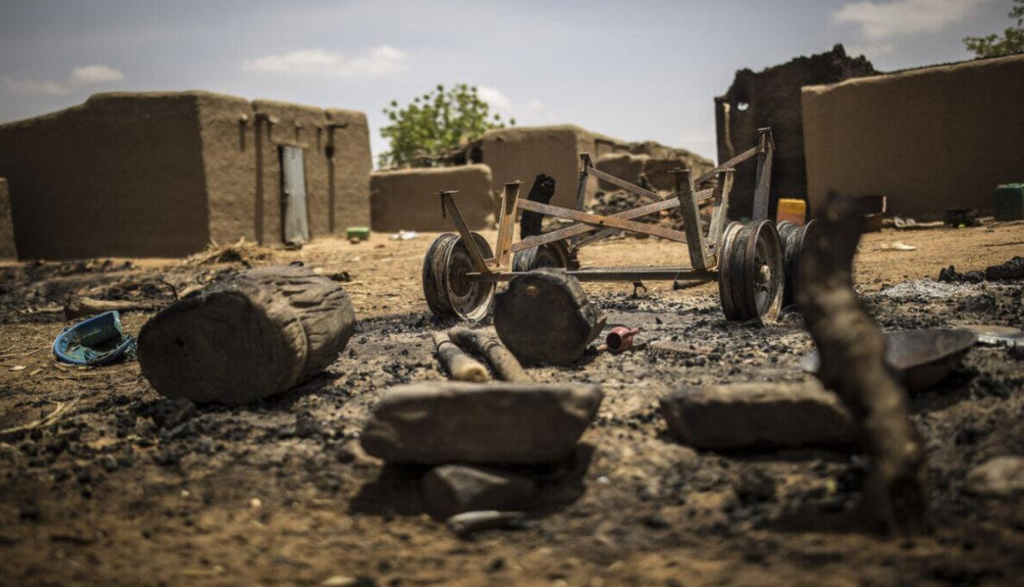
How conflict in Mali is leaving civilians trapped in a cycle of violence
In the heart of West Africa, Mali’s war has entered a deadly new phase where no one—from farmers to health workers and schoolchildren—is spared. Recent evidence reveals a disturbing pattern of attacks on civilians by both state-backed forces and armed groups, with devastating consequences for local communities. The crisis goes beyond military confrontations; it has become a humanitarian catastrophe that risks destabilizing the entire region.
Last month’s report by Human Rights Watch exposes harrowing violations, from drone strikes on bustling markets to deliberate killings of minors. These atrocities are not isolated incidents but part of a broader strategy of intimidation and control that has shattered lives across the country. With civilians bearing the brunt, the international community faces mounting pressure to intervene before the situation deteriorates further.
Civilian casualties mount as military operations escalate
The report documents several high-impact incidents where civilian gatherings became unintended targets. On August 19, a drone strike hit Tombonkore cattle market in Bandiagara, killing six people and injuring 20. Survivors describe chaos as livestock collapsed amid the rubble, with no evidence of militant activity in the vicinity. Such incidents raise serious questions about adherence to international humanitarian law, which requires parties in conflict to distinguish between combatants and civilians.
Another attack on July 29 struck a health center in Talahandak, Kidal, reducing critical medical supplies to ruins. The facility, serving displaced families, housed no militants yet became collateral damage in a broader offensive. This violation of protected civilian infrastructure—hospitals, schools, and places of worship—has become a recurring tactic, forcing international observers to demand stricter accountability.
The report also details an incident on July 12 near Niono, where five young girls were killed by government soldiers after being mistaken for insurgents. Though the military later apologized, the tragedy underscores systemic failures in civilian protection protocols. In another case, Dozo militia allies of the Malian army executed three civilians in Mopti during late July, further evidence of unchecked violence.
Insurgent groups exploit chaos while civilians pay the price
Human Rights Watch also documents atrocities attributed to groups such as the Group for the Support of Islam and Muslims (GSIM) and the National Movement for the Liberation of Azawad (MNLA). On July 18, fighters from these groups ambushed a military convoy near Tabrichat, Gao, executing at least 19 Malian soldiers after capturing them. Such acts violate the core principles of wartime conduct, which prohibit torture, summary executions, and the maltreatment of prisoners.
The report highlights how insurgent violence has evolved from hit-and-run tactics to systematic campaigns targeting government infrastructure and personnel. This escalation has forced communities into a perilous cycle of displacement, with families fleeing their homes only to face new threats in internally displaced persons camps. Aid workers report severe shortages in food, medicine, and shelter, compounding the suffering of vulnerable populations.
Regional bodies called to enforce accountability and protect civilians
Human Rights Watch has urged the African Union’s Peace and Security Council to convene an emergency session focused on civilian protection in Mali. The organization insists on independent investigations into all alleged abuses and regular reporting on measures taken to hold perpetrators accountable. Without swift and decisive action, the cycle of violence will continue unchecked, with civilians trapped in the crossfire.
The report also reveals that Human Rights Watch submitted its findings to Mali’s Ministry of Defense in early August but received no response. This silence reflects a broader pattern of impunity that has emboldened perpetrators. As UN officials warn, the lack of justice not only perpetuates suffering but also risks fueling recruitment into armed groups, deepening the crisis.
For Mali’s embattled population, the stakes could not be higher. With food security collapsing, healthcare systems crumbling, and education disrupted, the country faces a generational setback. International observers argue that restoring safety requires more than ceasefires—it demands a robust framework for transitional justice, humanitarian corridors, and regional cooperation to isolate violators and rebuild trust.
Key demands to end civilian suffering
- Immediate ceasefire and protection for humanitarian aid workers.
- Independent, multi-party inquiries into all reports of civilian casualties.
- Sanctions against armed groups and military units responsible for war crimes.
- Safe return pathways for displaced families with guarantees of security and reintegration support.
What comes next: a turning point or deeper collapse?
The African Union and ECOWAS must now decide whether to reinforce their commitments to justice or watch Mali slide further into fragmentation. For the families of the victims, for the children who no longer attend school, and for the communities too afraid to farm their land, this moment is their last hope for a resolution that prioritizes human life over military goals. The world is watching—and the window for decisive action is closing fast.