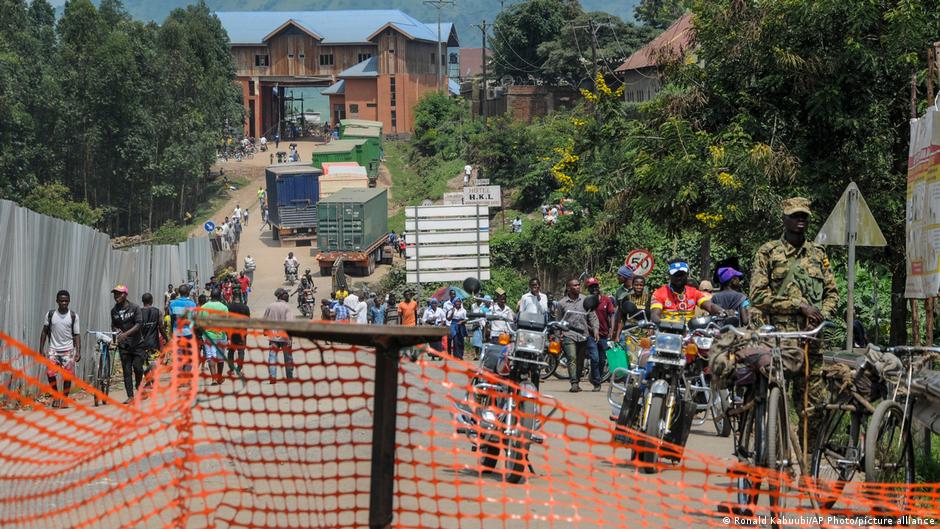
The Democratic Republic of the Congo is grappling with a relentless surge in Ebola cases, with over 3,000 confirmed infections and nearly 1,500 deaths reported in the latest government update. The spread has reached alarming speeds, prompting urgent calls from humanitarian organizations for an accelerated response.
Julien Harneis, the United Nations’ lead coordinator for Ebola response, warned that the disease is multiplying at a “doubling rate of every 20 days”, far outpacing the efforts to contain it. This exponential rise has raised concerns about the broader impact on public health and regional stability.
Open Borders, Critical for Medical Response
In response to the crisis, several nations implemented border restrictions or temporary closures, citing Ebola-related risks. Among them, Rwanda had sealed its land borders with the DRC and barred entry to travelers with recent Congolese travel history. While some restrictions were later eased in early July—with mandatory handwashing and temperature checks at reopened crossings—the initial shutdowns underscored the tension between containment and humanitarian access.
Uganda also imposed temporary closures at key border posts, though exceptions were maintained for humanitarian aid, security operations, and essential trade. Beyond Africa, Canada recently announced a 21-day travel ban for foreign nationals who had visited the DRC, along with suspended immigration services for the country and neighboring high-risk regions like Uganda and South Sudan.
However, the United Nations stresses that maintaining open borders is vital. It ensures the swift delivery of medical supplies, allows rapid deployment of response teams, and enables healthcare workers to move freely across the DRC. Blocking border crossings, officials argue, could force populations into unmonitored routes, complicating surveillance and control efforts.
Ebola’s Ripple Effect: Food Insecurity Deepens
The World Food Programme (WFP) describes the outbreak as “a crisis layered upon a crisis”. The Ituri region, the epicenter of the epidemic, is particularly hard-hit, with nearly 1.9 million people facing severe food shortages. Butoto Bigiri Naum, head of the local NGO Action for Community Development and Well-being (UGEAFI), highlights the human toll: “Many patients are cared for by their families, not aid groups or the government, and food access has become a growing challenge at the community level.”
Border restrictions have disrupted food supplies and agricultural inputs, creating shortages of seeds, tools, and other essentials. The WFP reports that over 2.65 million people in Ebola-affected health zones now face acute food insecurity, including more than 628,000 in emergency conditions. Women, children, and pregnant women are among the most vulnerable, struggling to secure basic nutrition amid soaring food prices.
The epidemic’s impact extends to agriculture, as farmers—fearful of infection or labor shortages—are abandoning their fields. This could lead to long-term food deficits and famine risks. To mitigate the damage, the WFP is distributing emergency food aid to Ebola patients, their close contacts, frontline workers, and affected households. The goal is twofold: support families under strain and reduce risky population movements in search of food, while fostering conditions that allow health teams to operate effectively.
The agency emphasizes that food assistance not only alleviates immediate hunger but also strengthens compliance with containment measures, easing the burden on overstretched local systems.




More Stories
What price did Niger’s junta pay for survival after the August mutiny?
Will Benin’s 6.6 billion FCFA CCI budget for 2027 actually deliver for small businesses?
Can Ousmane Sonko and Sadio Mané’s Bambali agro park truly transform Sédhiou?