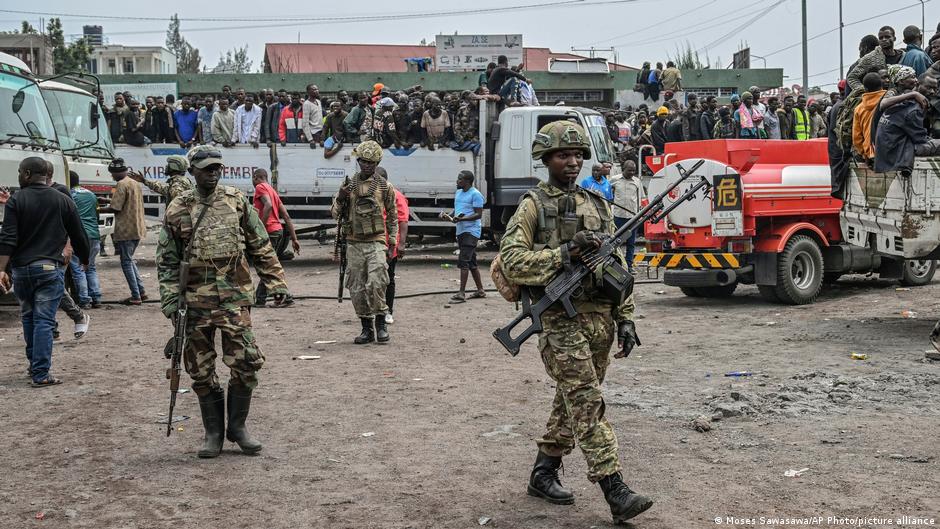
In the République démocratique du Congo, the security crisis in Minembwe remains a critical concern. Despite recent diplomatic efforts in London between the Congolese and Rwandan governments, the reality on the ground in Sud-Kivu tells a different story. On June 24, both nations reaffirmed their commitment to the peace framework established in June 2025, pledging to enforce a ceasefire and de-escalate the volatile situation in Minembwe.
This strategic territory is currently a primary objective for the Congolese army and the AFC-M23 rebels, who operate through their respective local allies, the Wazalendo and Twirwaneho militias.
A war that spares no one, including medical facilities
Violence continues to tear through this administrative section of Fizi territory. Daily life is marked by human loss and severe property damage, particularly due to the increasing use of drone strikes. These aerial bombardments have not spared essential services; the Minembwe General Reference Hospital and several local clinics have been hit. A local witness described the scene: “The pediatric wing was bombed just yesterday. The Ilundu health center, located near the airfield, was also targeted. The war is constant, and these drones are terrorizing everyone. People have no choice but to flee.”
Civilians caught in a cycle of violence
The escalation of hostilities around Minembwe has triggered a fresh wave of displacement. Civil society collectives in Sud-Kivu are demanding that all parties honor their signatures on peace agreements and immediately implement a ceasefire.
“It is devastating to see that civilians remain the primary targets for combatants across the region,” says Hypocrate Marume, a member of the Sud-Kivu civil society coordination framework. “Families continue to abandon their homes as the crisis deepens. It is our people who are being killed. We urge both sides to lay down their weapons and engage in dialogue for the sake of peace.”
The struggle for a high-stakes strategic zone
The battle for Minembwe is more than a local skirmish; it is rooted in deep-seated community tensions and a fight for a territory of immense military and symbolic value.
Professor Philippe Doudou Kaganda, a leading researcher on peace and conflict in the Great Lakes region, notes that Minembwe’s geography is key. “This vast area allows whoever controls it to launch counter-offensives into the Ruzizi plain and the surrounding plateaus. It serves as a vital junction connecting to Mwenga territory. Furthermore, conquering Minembwe is seen as a major victory in a war that has become both territorial and ethnicized over the decades.”
For the residents of Minembwe, peace remains an elusive prospect. They continue to live under the shadow of persistent gunfire and the ever-present threat of drone attacks.




More Stories
Can Mali’s double-edged strategy of war and dialogue against jihadists truly work?
AirBadminton gold for Benin: does the 3-0 win over Mauritius change the game?
Arsenal vs Chelsea: premier grand duel de la saison en Premier League