
Ghana-Gabon Partnership: A New Era of African Investment
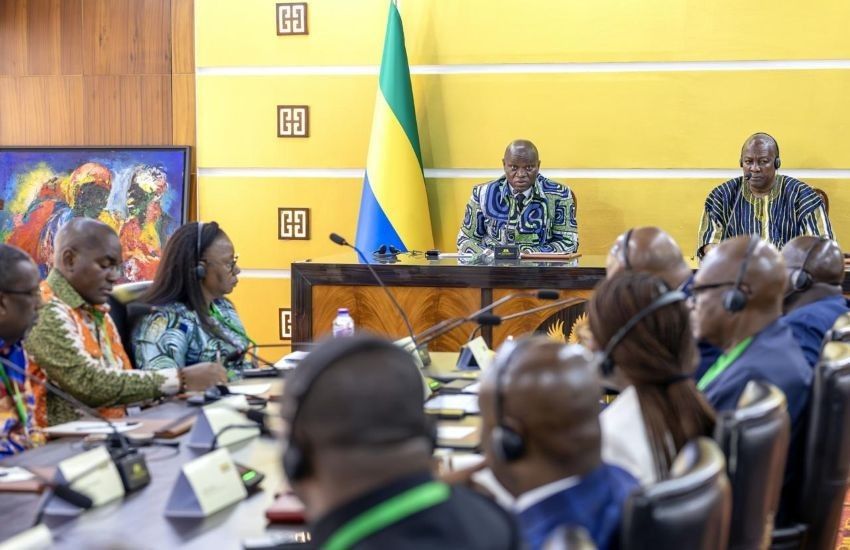
Libreville, July 29, 2026 – In choosing Accra as one of its first major diplomatic visits after his election, Gabonese President Brice Clotaire Oligui Nguema sent a signal that far exceeds the bilateral framework. Amidst Africa’s quest to accelerate integration, Libreville opts for continental partnerships with a goal of transforming political relations into growth engines, investments, and industrialization.
The official visit to Ghana showcases this new direction where African cooperation becomes an instrument of economic development as much as strategic influence. The meeting between the two heads of state was placed under the sign of complementary economics. Both countries boast assets that complement each other. Ghana has emerged in recent years as one of Africa’s most diversified economies, while Gabon aims to accelerate local resource transformation and enhance its economy’s attractiveness.
Beyond protocol exchanges, face-to-face interviews between the two leaders defined the large orientations of a partnership meant to last. Discussions quickly led to an expanded working session bringing together delegations from both countries around sectors deemed crucial for their development.
A Focus on Real Economy Cooperation
The domains selected testify to a productive vision of cooperation. Mines, agriculture, fishing, forestry, digitalization, education, and local material transformation are the primary axes retened by Libreville and Accra.
The aim is clear: no longer just multiplying agreements of cooperation, but fostering cross-investments, developing African value chains, and creating more jobs on the continent. This orientation aligns with President Oligui Nguema’s economic strategy, which places diversification of the economy, skill transfer, and industrialization at its core. In this logic, diplomacy ceases to be solely political and becomes a genuine tool for national development.
Two major agreements were concluded as a result of these discussions. The first establishes reciprocal diplomatic training to strengthen institutional capacities. The second sets up a permanent coordination mechanism for Ghana and Gabon in regional and international organizations.
The Rise of African Diplomacy
This visit symbolizes a deeper evolution of Africa’s international relations. Long focused on major external partners, African diplomacy now seeks to strengthen exchanges between economies on the continent.
Libreville-Accra rapprochement fits into this trend. The two capitals demonstrate their willingness to build partnerships based on shared interests rather than aid logic. This approach could contribute to solidifying intra-African trade, which remains significantly lower than in other major regions of the world.
The symbol chosen to conclude this visit embodies this ambition perfectly: the planting of an amity tree, a gesture that transcends protocol. For two countries deeply committed to preserving their natural resources, this act recalls that African cooperation can also rely on environmental protection, climate change mitigation, and green economy development.
Turning Intentions into Results
The true extent of this visit depends now on the implementation of announced commitments. The agreements signed must translate into concrete projects, investments, university exchanges, industrial cooperations, and business opportunities for both countries’ businesses.
However, beyond the partnership between Gabon and Ghana, this sequence reveals a deeper shift in African diplomacy. In response to global economic uncertainties, more states are seeking to build their growth by relying on neighbors, complements, and domestic markets.
For Gabon, this approach marks an inflection point. The international opening no longer proceeds exclusively through traditional partners but also through building alliances that can accompany industrialization, innovation, and value creation on the continent.
The Ghana visit could appear, with hindsight, as one of the first stones in a diplomatic economy assumed by Africa, where states do not simply dialogue among themselves but choose to build together their future.

More Stories
Niger–Bénin border closure: a political pawn in Niamey’s strategy
Bénin: president wadagni establishes legal reform committee for a modern rule of law
Cameroon: president paul biya’s prolonged absence raises national questions