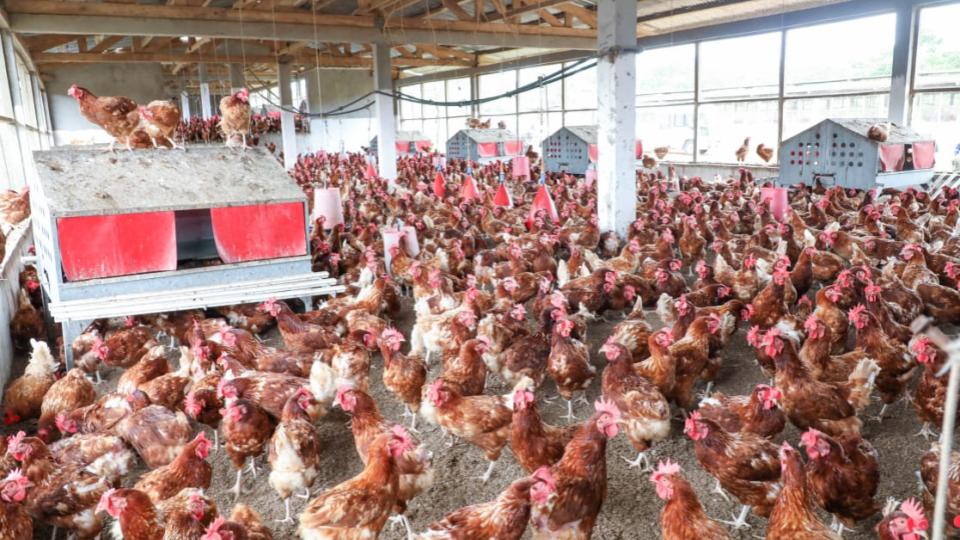
Gabon’s agricultural ambitions are once again in the spotlight following the announcement of a major foreign investment project. The arrival of Guinean agribusiness giant SONOCO, which plans to produce 15 million chickens annually, has reignited discussions about food security—and whether the country is overlooking its own homegrown talent in the process.
While officials celebrate the initiative as a leap forward for domestic food production, critics are questioning why the government isn’t prioritizing existing national players who have already invested heavily in Gabon’s agricultural sector. Former lawmaker Jean-Valentin Leyama has been among the most vocal, highlighting the case of SOGADA—a Gabonese agricultural development company with over a decade of operation.
The contrast between the two approaches could hardly be sharper. SONOCO’s project, though promising, remains on the drawing board, while SOGADA has been quietly building an integrated agro-industrial complex in Meyang, just 50 kilometers from Libreville. Since its founding in 2013, the company has transformed more than 160 hectares of land into a full-fledged poultry and egg production hub, with additional operations in pork farming, agricultural processing, and egg packaging. Its total investments exceed 16 billion CFA francs—all financed with private Gabonese capital.
From rhetoric to reality: where’s the support for local pioneers?
The debate cuts to the core of Gabon’s economic strategy. The country continues to rely heavily on food imports, making local production an urgent priority. Yet while foreign investors are welcomed with open arms, domestic entrepreneurs who took the initial risks often feel sidelined. SOGADA’s story is a case in point: it has been producing, employing Gabonese workers, paying taxes, and contributing to food self-sufficiency for years—without the fanfare or institutional backing now being directed toward new arrivals.
This raises a fundamental question: if economic sovereignty is truly a national goal, why aren’t Gabon’s early movers—the businesses that proved the viability of local agriculture when it was still considered a high-risk sector—being championed as part of this vision? A coherent industrial policy should begin by strengthening those who have already demonstrated commitment, not by waiting for external investors to fill the gap.
Lessons from global success stories
The challenge isn’t unique to Gabon. Countries that have successfully transformed their economies—from South Korea to Morocco and Rwanda—did so by nurturing homegrown champions alongside foreign investment. These nations didn’t just attract capital; they actively supported local businesses, providing financing, protection, and growth opportunities.
In Gabon, the pattern seems to favor foreign-led projects, even when comparable local initiatives already exist. SONOCO’s planned output could eventually reduce poultry imports and create jobs, but the broader question remains: is the government building a system that rewards those who invest their own resources in Gabon’s future—or merely outsourcing its development?
Building sovereignty on solid foundations
Economic sovereignty isn’t achieved by importing production capacity. It’s built on the ability of a nation to foster, finance, and protect its own entrepreneurs. Gabon’s challenge isn’t to choose between foreign investment and local industry, but to ensure that both coexist in a balanced ecosystem where domestic players aren’t just tolerated, but actively empowered.
The arrival of SONOCO shouldn’t overshadow the achievements of SOGADA and others like it. These are the real pioneers—the ones who bet on Gabon when the odds were uncertain. If the country is serious about food security and economic independence, it’s time to give them the recognition—and the support—they deserve.