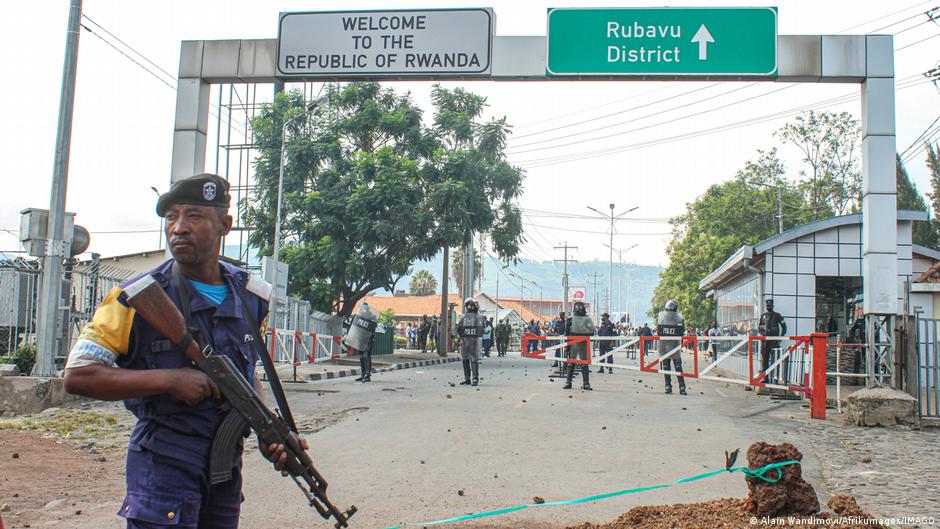
Goma’s economy struggles amid border closure with Rwanda
Goma, a bustling city in eastern Democratic Republic of Congo (DRC), is feeling the financial pinch as cross-border trade with Rwanda grinds to a halt. The closure of key border points has sent shockwaves through the local economy, leaving businesses and residents grappling with severe disruptions.
The decision by Rwanda to seal its borders stems from efforts to curb the spread of Ebola, prompting strict health checks at all entry points. While the move aims to protect public health, its economic repercussions are becoming increasingly visible in Goma.
Small traders bear the brunt of border shutdown
Jacques Safari, a street vendor selling eggs near the Goma border, has watched his daily sales plummet. Once moving up to five trays of eggs daily, his earnings now barely cover two trays—a stark contrast to his pre-closure routine.
“Most of my customers were travelers crossing the border regularly. Without them, my sales have dropped drastically,” he explained. The closure has slashed foot traffic, leaving many like Jacques scrambling to adapt to the new normal.
Wholesalers face supply chain nightmares
At Birere Market, wholesalers are struggling to keep their shelves stocked. Hamuli Kasilembo, a long-time trader, recalls how seamless cross-border exchanges once fueled his business. Now, he faces logistical nightmares and dwindling demand.
“The money flow has slowed to a trickle. Transactions that were once swift and routine are now rare and complicated,” he said. The once-vibrant trade route between Goma and Gisenyi has turned into a logistical labyrinth.
Economists warn of deeper economic fallout
Alphonse Muanda, an economist, warns that the border closure will have long-term consequences. Goma’s economy thrives on daily exchanges with Rwanda, with countless small traders relying on these transactions for survival.
“When borders close, it’s the small traders who suffer most. Many depend on daily cross-border trade for their livelihoods,” he noted. Products like rice, soap, and other staples that were once easily sourced from Gisenyi are now scarce and expensive.
As Rwanda maintains its strict health measures, Goma’s residents brace for worsening economic hardship. The closure, though necessary for public health, has left a trail of financial instability in its wake.