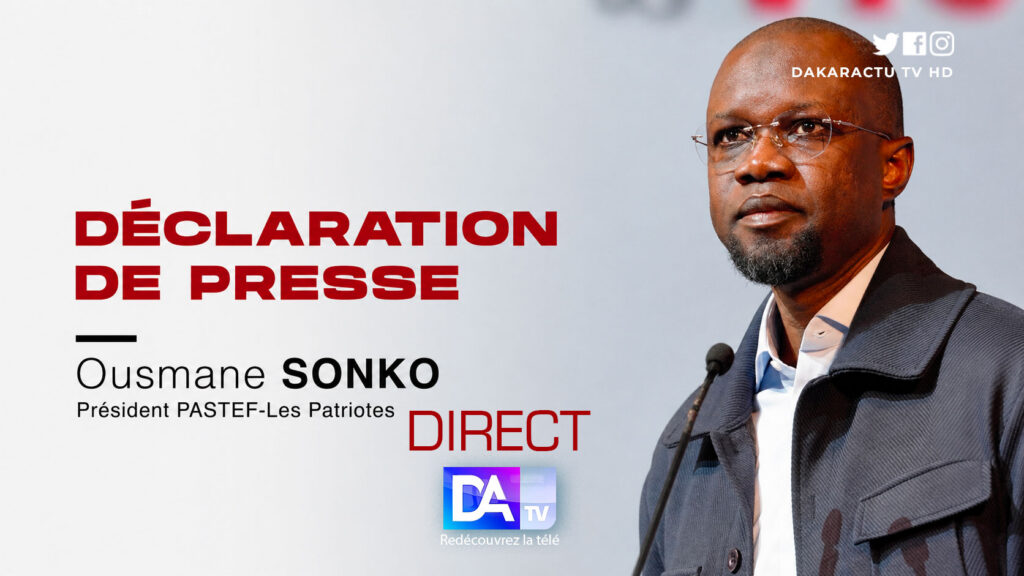
Following the announcement of Senegal’s freshly appointed cabinet, political figures are already making their voices heard. Among them, Ousmane Sonko, a prominent opposition leader, took the floor to address journalists, delivering remarks that have since sparked national discussion.
Key statements from Sonko after cabinet reshuffle
Ousmane Sonko, whose party holds significant influence in the National Assembly, used the press briefing to share his perspective on the new government’s composition. He emphasized that his political movement would not support a cabinet where their voices remain unheard, stating that participation without real impact would be meaningless.
The opposition leader went on to explain his recent dismissal from a previous advisory role, framing it as a decision made by the administration rather than an initiative from his side. His comments hinted at underlying tensions between his party and the ruling coalition, suggesting that trust between the two sides has eroded over time.
Sonko’s statements did not stop there. He also addressed broader governance concerns, calling for greater transparency in how cabinet decisions are made. His remarks reflect growing public skepticism about whether the new government will address pressing economic and social challenges facing the country.
Reactions to Sonko’s press conference
While Sonko’s speech resonated with his supporters, critics argue that his refusal to engage in the government could limit Senegal’s ability to implement critical reforms. Political analysts suggest that his stance may further polarize an already divided political landscape, making consensus-driven governance more difficult in the coming months.
The timing of Sonko’s address—just one day after the cabinet’s unveiling—highlights the immediate scrutiny surrounding the new administration. As Senegal navigates economic pressures and regional security concerns, the relationship between the government and opposition will remain a focal point for observers and citizens alike.