Integrated health services bridge gaps for Chad’s nomadic families
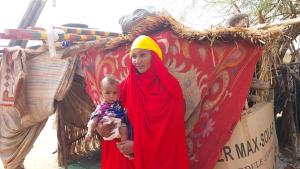
In the heart of Chad’s bustling capital lies Mandjafa, a nomadic camp on the outskirts of N’Djamena, where mobility defines daily life. Here, Afia arrived with her four-month-old daughter Fatma, determined to access life-saving services during a specialized outreach program designed for mobile communities. For this mother of five, the integrated health interventions are a lifeline. « Vaccines keep my children healthy. Whenever they fall ill, I rush them to the nearest health center, » she shares with quiet conviction.
Afia’s story mirrors that of thousands of nomadic households across Chad, where pastoralism sustains livelihoods. Seasonal migrations and remote locations often isolate these communities from essential services. Nomadic populations make up roughly 3.5% of the national population, yet their unique needs have long been overlooked. Recognizing this gap, the government has adopted the « One Health » approach—a collaborative framework uniting health, livestock, environmental and agricultural sectors to deliver tailored services to pastoral communities.
On June 9, 2026, this transformative strategy reached Mandjafa, where integrated services were provided to 134 individuals, including 11 children. The initiative combined human and animal vaccination, with 96 livestock immunized. Beyond immunizations, families received vitamin A supplementation, deworming treatments and insecticide-treated mosquito nets. Such combined efforts ensure no family is left behind, especially when mobility constrains access.
Dr. Mahamat Béchir, National Coordinator of the One Health platform at the Ministry of Public Health and Prevention, emphasizes the necessity of this approach: « Early studies in the 2000s revealed significant gaps in vaccination coverage among nomadic groups. Adapting services to their lifestyle wasn’t just beneficial—it was essential. » The strategy leverages the fact that livestock owners already engage with veterinary services. By aligning human and animal health interventions, outreach teams maximize reach while minimizing travel for nomadic families.
Youssouf Idriss, a local herder near Mandjafa, tends to sheep, cattle and camels that sustain his family’s survival. « Our animals are our lifeline—they feed us and secure our future. Their well-being is non-negotiable, » he states. For pastoral households, animal health directly impacts nutrition, income and stability. Joint campaigns address multiple needs in one visit, reinforcing prevention while improving access. On the ground, this collaboration unfolds through mobile outreach to nomadic settlements.
Raphaël Neni, a veterinarian with the Ministry of Livestock, has participated in these campaigns for five years. « Since we intensified vaccination efforts, the incidence of preventable diseases has dropped noticeably. Herders themselves witness the change, » he observes. These interventions not only protect livestock but also reduce zoonotic disease risks, enhancing community safety.
Nationally, the One Health platform coordinates cross-sectoral action to strengthen disease prevention, surveillance and response. « Health challenges today transcend single sectors. Zoonotic threats, climate shifts and environmental pressures demand unified solutions to safeguard populations, » Dr. Béchir explains. The World Health Organization (WHO) has supported Chad’s One Health initiative for years, assisting with platform strengthening, International Health Regulations assessments, national health security planning and capacity building.
Dr. Tamadji Mbaïhol, WHO Chad’s routine immunization focal point, has worked with nomadic communities for nearly two decades. « These families are eager for health services when delivered where they live. The challenge lies in reaching them—not in their willingness to participate, » he notes. This adaptability has proven critical in mobile settings where access is inconsistent.
Over time, the One Health approach has thrived through collaboration between ministries and technical partners. « WHO’s support has strengthened the platform and fostered sectoral synergy. Today, we advance together on shared public health priorities, » Dr. Béchir reflects.
As Afia prepares to return home with Fatma, she leaves with more than just health supplies—she carries a message for her community: « When a child falls ill, act fast and seek care. Early intervention saves lives and protects futures. » In Mandjafa, One Health isn’t just a strategy; it’s a bridge connecting nomadic families to the essential services they deserve.