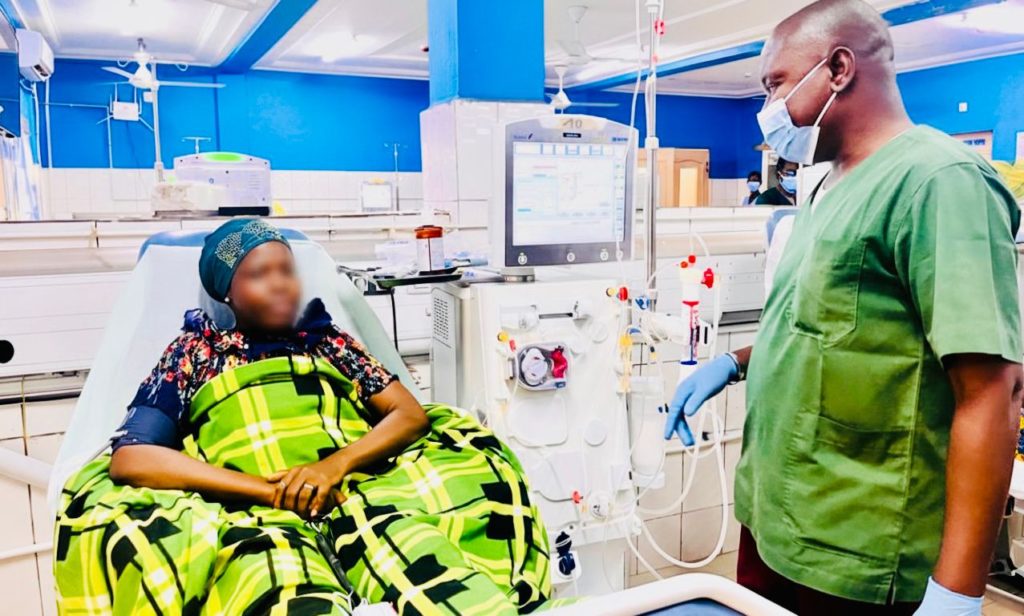
Burkina Faso makes healthcare affordable: a revolution in medical access
For countless Burkinabè, seeking medical care was once an insurmountable challenge. The divide between illness and treatment was bridged not by urgency, but by financial barriers—exorbitant costs, prohibitive upfront payments, and unaffordable exams. Since March 13, 2024, the government has dismantled these invisible walls, slashing medical imaging and dialysis fees and eliminating advance deposits in public hospitals. The result? A healthcare system where treatment is no longer a privilege reserved for the few, but a right within reach for all.
From privilege to right: the human cost of delayed care
In the crowded corridors of Burkina Faso’s public hospitals, fear and despair once pervaded every waiting room. Madi Diallo’s story is one of many. Three years ago, his sister required urgent dialysis—yet the required deposit of 500,000 FCFA was unattainable. She passed away before treatment could begin. Today, that barrier no longer exists. “The measure is justified, but it comes too late for us,” he reflects, a testament to lives lost to a system stacked against the most vulnerable.
His experience reflects a national reality. For years, access to life-saving care was contingent on financial means, turning hospitals into spaces of exclusion rather than healing. But on that pivotal day in March, the tide began to turn.
Concrete reforms, measurable impact
The government’s landmark decision reduced key medical exam costs across public health facilities. CT scans dropped from 50,000 to 25,000 FCFA. MRIs, previously priced at 100,000 FCFA, now cost 40,000. Most significantly, the mandatory deposit for dialysis was abolished entirely. These changes were not merely announcements—they were implemented immediately, with real-world results.
- Ouagadougou’s CHU-Bogodogo: Dame Ouédraogo, a patient undergoing pelvic MRI, saved over 100,000 FCFA—enough to sustain her tontine contributions and daily needs.
- Ziniaré Regional Hospital: Reduced imaging costs kept patients from traveling to the capital for diagnostics. Director Mady Zorné reports a 50% drop in referrals to Ouagadougou, easing pressure on the central system.
- Bobo-Dioulasso’s CHU Sourou Sanou: Patients like Élie Ouattara praise the affordability of medical supplies and exams, transforming the hospital experience from financial strain to relief.
Dialysis: a lifeline restored
The elimination of the 500,000 FCFA deposit for dialysis has been transformative. At CHU-Yalgado Ouédraogo, Tuina Nsoma Hélène, head of the dialysis unit, confirms the change: “No advance is required. Emergency cases are prioritized, and 16 new patients have begun treatment without financial exclusion.” Still, demand far outstrips capacity—only 34 machines serve nearly 100 patients daily. “A death frees a spot for someone waiting,” she admits, underscoring the urgent need for expanded infrastructure.
Dame Sanou Traoré, a dialysis patient since 2018, began treatment only after family support overcame the initial deposit. Now, she says, “The lifting of this burden honors the dignity of every patient facing chronic illness.”
Beyond cost: strengthening health systems
Lower fees have not only eased financial strain—they’ve improved care quality. With diagnostics now accessible locally, delays in diagnosis and treatment have plummeted. Professor Nina Astrid Ouédraogo of CHU-Yalgado Ouédraogo notes a 38% increase in CT scans performed, highlighting the pent-up demand finally met.
Yet challenges persist. Dr. Hamidou Sawadogo of CHU Sourou Sanou points to structural limits: “We’ve added only 17 new dialysis patients since the reform. Acute cases still go untreated due to machine shortages.” He calls for urgent investment in dialysis centers, staff recruitment, and equipment to extend care beyond major cities.
A nation in transformation
Youl Sié, a dialysis patient from Bobo-Dioulasso, speaks for many when he says, “We need dialysis centers in every community. Being sick shouldn’t mean leaving home, abandoning families, or neglecting children’s education.” His words echo a broader truth: healthcare is not just medical—it’s social, familial, and foundational to national cohesion.
While the journey is far from over, Burkina Faso’s healthcare reform marks a turning point. It is no longer a question of whether people can afford to get well—it’s a matter of ensuring they do. And with new university hospitals and radiotherapy centers on the horizon, the future of healthcare in Burkina Faso is not just accessible—it’s advancing.
As one patient put it, “Small steps matter. And in Burkina Faso, we’re taking them—toward a nation where health is a right, not a privilege.”