Listen to this article⏱ ~4 min
Macky Sall’s return to Senegal: a controversial visit that stirs political divisions
The former president’s arrival in Dakar rekindles debates on justice and political transitions in Senegal
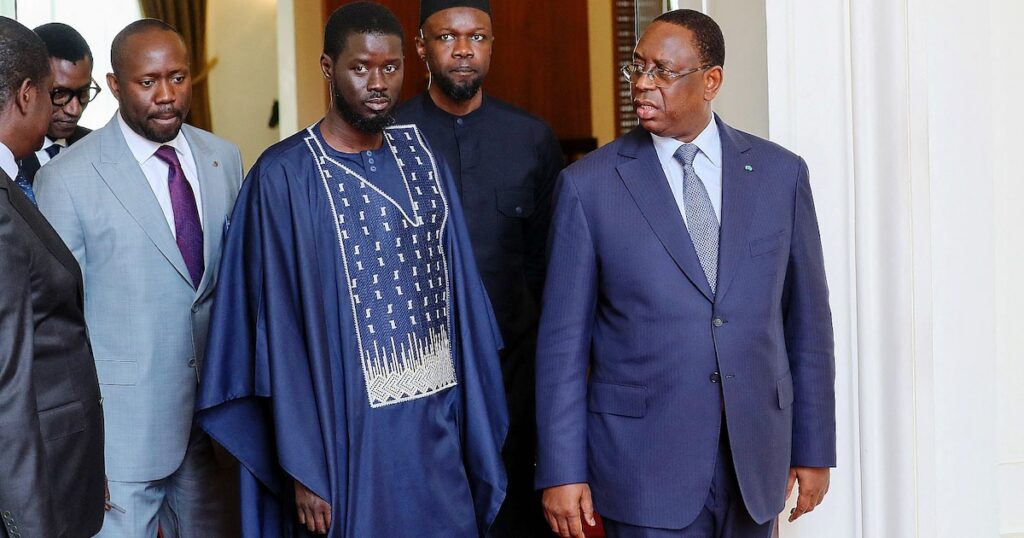
A dramatic twist in Senegal’s political landscape: former president Macky Sall, who left office after defeat in the 2024 elections and has since been living abroad, is scheduled to land at Yoff military airport in Dakar this Friday. His arrival—planned with considerable fanfare—includes a highly anticipated meeting with his successor, President Bassirou Diomaye Faye. The announcement has taken many Senegalese by surprise, particularly given the strained history between the two leaders.
Old wounds resurface
The timing couldn’t be more sensitive. Just weeks before the 2024 elections, Bassirou Diomaye Faye was still imprisoned at Cap Manuel prison, alongside hundreds of members of his Pastef party. The crackdown on dissent during Macky Sall’s final months in office left a deep scar on the nation’s collective memory.
Aly Coly, a political activist, was among those detained. He recalls how his entire family—including his wife and three-month-old baby—were imprisoned for months simply for wearing Pastef colors. “Today, as I watch my son play, I learn that our president is welcoming the man who orchestrated all of this,” he says, voice trembling with anger. “No investigations, no accountability—just Macky Sall returning as if nothing happened. That’s the old system back in power, and we’re not blind to it.”
Global ambitions behind local tensions
Macky Sall’s brief visit carries weight far beyond Senegal’s borders. In a statement, he confirmed that the trip is tied to his candidacy for United Nations Secretary-General, a role he’s actively pursued since addressing the UN General Assembly in April. There, he positioned himself as a champion of multilateralism and impartiality. Yet, his bid has so far failed to secure support from the African Union or his own government. A breakthrough may come if he gains the current president’s endorsement.
To many Senegalese, the idea is deeply unsettling. “The UN’s raison d’être is to defend human rights, isn’t it? How can someone who presided over 60 deaths lead this institution?” Aly Coly questions, highlighting the gravity of the situation.
Others see potential benefits for Senegal. Maurice Soundieck Dione, a political science professor at Gaston Berger University, argues that Sall’s UN role could enhance the country’s global standing. “A strong international image is crucial for attracting foreign investment and securing economic partnerships,” he notes.
A strategic gambit for both leaders
For President Bassirou Diomaye Faye, aligning with his predecessor could prove strategically vital. Tensions between Faye and his former mentor, Ousmane Sonko—now speaker of parliament—have escalated in recent months. Sonko, once Faye’s political ally, now holds significant influence and could obstruct the president’s agenda.
“The meeting may shock many, but it reflects the political realities of the past year,” Soundieck Dione explains. “Faye is seeking new alliances, even if it means facing accusations of betraying his campaign promises.”
Critics argue that Faye’s government has already begun reintegrating figures from the old regime, despite his electoral pledge to dismantle it. “There’s a growing sense that Diomaye is abandoning Sonko—and by extension, his own roots,” Soundieck Dione adds. “In Senegal, turning your back on your mentor is culturally unacceptable.”
As Friday’s meeting approaches, the nation watches closely. Will it deepen Bassirou Diomaye Faye’s isolation, or mark the start of a new political chapter for Senegal?
Section feedGet new articles in your favourite feed reader