
The government of Mali has escalated diplomatic tensions with France, accusing Paris of providing clandestine support to the Front de libération de l’Azawad (FLA), a coalition of Tuareg separatists that launched a major offensive in northern Mali in late April. The transitional authorities, led by General Assimi Goïta, are leveraging this allegation to reinforce their sovereignist stance and justify the ongoing political tightening following the twin coups of 2020 and 2021. This latest confrontation unfolds against a backdrop of near-total rupture between Bamako and its former colonial power, marked by the withdrawal of the Barkhane force in 2022 and the exit of the UN’s MINUSMA mission at the end of 2023.
The FLA: reviving a historical Tuareg struggle
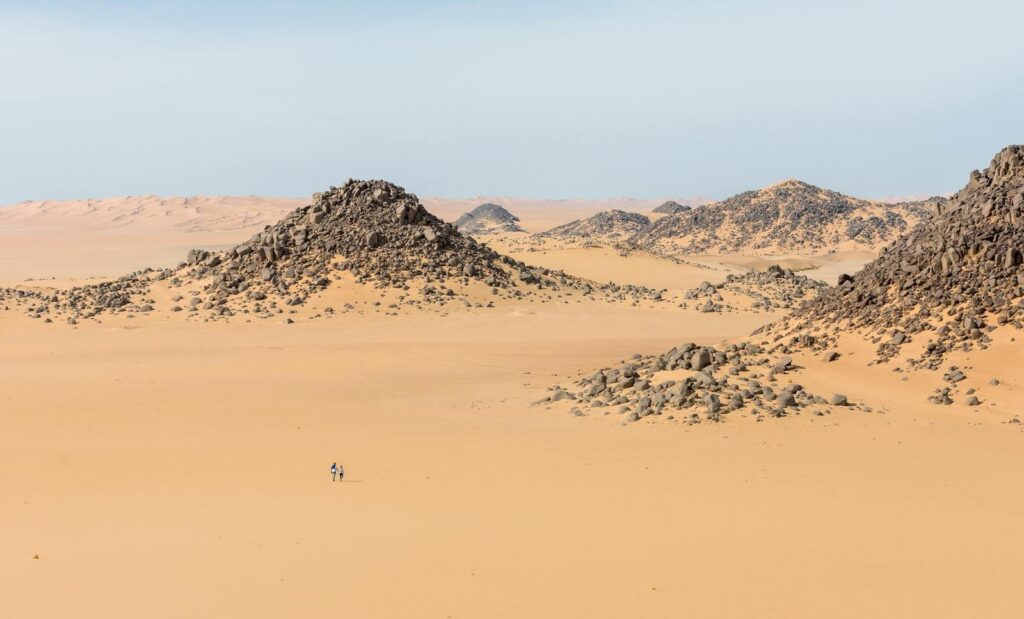
The Front de libération de l’Azawad emerged from the remnants of the Coordination des mouvements de l’Azawad (CMA), a coalition dismantled after its military defeats in 2023 at the hands of Malian forces and Russian-backed Africa Corps—formerly Wagner Group. The FLA’s formation signals a renewed armed campaign for autonomy or outright independence for the regions of Kidal, Gao, and Tombouctou, collectively referred to by separatists as Azawad. This demand is not new; it has fueled successive rebellions in 1963, 1990, 2006, and 2012.
The late April offensive highlights the group’s resurgence following months of reorganization. Operating in a terrain reshaped by the presence of Russian paramilitaries alongside Malian troops, the FLA’s fighters have regained strategic momentum, particularly after inflicting heavy losses on a joint Russo-Malian column near Tinzaouatène in the summer of 2024—a confrontation that also involved jihadist elements from the Jama’at Nasr al-Islam wal Muslimin (JNIM).
France’s shifting alliances with Tuareg factions
While historical ties between Paris and certain Tuareg groups date back to colonial times, it was France’s 2013 Serval intervention that cemented a tactical partnership. To reclaim northern Mali from jihadist control, French forces relied heavily on the National Movement for the Liberation of Azawad (MNLA) and its allies, who possessed superior local knowledge and proved reliable against Al-Qaeda in the Islamic Maghreb. This battlefield cooperation fueled persistent suspicions in Bamako of a strategic alignment between France and the separatists, especially concerning the long-restricted stronghold of Kidal.
Over time, however, this relationship frayed. As France sought to recalibrate its role and the Barkhane mission faltered, official engagements with the CMA dwindled. The forced departure of French troops in 2022, demanded by the Malian junta, severed institutional channels entirely. Left without a major Western interlocutor, the rebels have since pivoted toward regional allies in Algeria and Mauritania, though no state has openly claimed sponsorship.
Political exploitation of foreign interference narratives
Bamako’s current accusations fit a familiar pattern. For the past three years, Malian authorities have wielded the specter of French destabilization to rally domestic support, marginalize dissent, and legitimize their pivot toward Moscow. The formation of the Alliance of Sahel States (AES) with Burkina Faso and Niger in September 2023—and its evolution into a confederation in early 2024—rests largely on this shared anti-French narrative.
Paris, for its part, firmly denies any involvement. French officials point to the absence of military, diplomatic, or security cooperation with Mali in recent years. Yet the ambiguities of the past—particularly around Kidal’s prolonged exclusion from Malian control and the tactical alliance with Tuareg fighters during Serval—provide the junta with ample rhetorical ammunition. For the separatists, this instrumentalization is a double-edged sword: it lends credence to claims of external backing without delivering tangible support.
The FLA’s future hinges less on Bamako’s allegations than on its military resilience against Malian forces and Africa Corps, as well as its ability to rebuild political influence in a region where Algeria remains a pivotal actor. Historical patterns suggest these alliances have often been opportunistic rather than rooted in enduring ideological commitment.

More Stories
Cameroun : les manœuvres d’une transition en préparation ?
Niger: Tiani faces fallout from special forces anger after Russian intervention
Mali : 17 morts dans les rangs des dozos, le JNIM accentue sa pression