
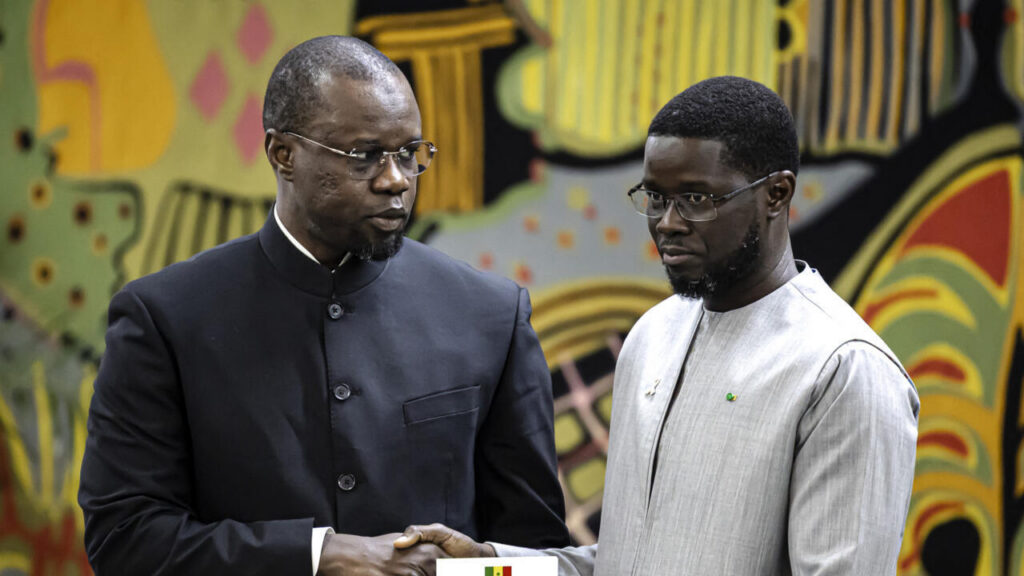
Senegal political shake-up: sonko dismissed as faye consolidates power
The political landscape in Senegal has shifted dramatically this week as President Bassirou Diomaye Faye dismissed his longtime ally and former Prime Minister Ousmane Sonko, replacing the entire government. Just one day later, Sonko resumed his role as a member of parliament, setting the stage for a potential power struggle between the executive and legislative branches.
Meanwhile, the Speaker of the National Assembly, Malick Ndiaye, announced his resignation, and a new election to replace him is scheduled for Tuesday. Speculation is rife that Sonko could win the position, intensifying the confrontation between the presidency and the legislature.
a deep schism at the heart of power
The rift between Faye and Sonko was not sudden but had been brewing for months. Xalima, a leading Senegalese news outlet, argued that the partnership was doomed from the start: “The Faye-Sonko alliance carried within it an irreconcilable contradiction. It was not a matter of talent or diverging visions, but of governance. A republic cannot function as an unscripted jazz duet where two soloists improvise endlessly. Executive power, by its very nature, must be unified.” Historical parallels were drawn, from Nkrumah to Sankara, highlighting how cohabitation between two equally strong leaders in African politics has historically led to the downfall of one or both.
Dakar Actu echoed this sentiment, pointing out that tensions had surfaced as early as July 2025, when Sonko first raised concerns about “authority issues,” accusing the president of failing to defend him against political attacks. The final break came after a heated parliamentary session where Sonko publicly criticized key presidential decisions, including the management of political funds, stating that the president had “made a mistake.”
executive vs. legislature: a looming confrontation
Observers question whether Sonko, now a deputy with substantial public support, could become the president’s main opponent. Le Monde Afrique suggested that the political battle may shift to the National Assembly, where Sonko’s party, the Pastef, holds significant influence. “The fight could move into the legislative chamber, creating a direct clash between the head of state and the assembly,” noted Moussa Diaw, a political science professor at the University Gaston-Berger in Saint-Louis. This would severely limit Faye’s ability to push through critical reforms, including constitutional changes and the establishment of an independent electoral commission.
sonko’s potential advantage
Analyst Adrien Poussou, a former Central African minister of Communication and geopolitical expert, believes Sonko may hold the upper hand. “Senegal’s political reality remains unyielding: the Pastef dominates the national scene with an exceptional grassroots presence, a mobilized youth base, and a compelling narrative forged during years of opposition to the Macky Sall regime. Sonko remains the central figure in this movement.” Though legally barred from running in the last presidential election, his influence has only grown. While Faye holds institutional legitimacy, Sonko commands overwhelming popular and militant support—a factor that could prove decisive in future political or electoral showdowns.
With local elections in 2027 and presidential elections in 2029 on the horizon, the stakes could not be higher. Disillusionment is growing among young Senegalese who once placed their hopes in the Faye-Sonko tandem, now left uncertain about which leader to trust.
More Stories
Ousmane Sonko’s firm stance on Senegal’s FMI agreement demands full transparency
Senegal’s institutional crossroads: the unfolding dynamic between Ousmane Sonko and Bassirou Diomaye Faye
Minister abdourahmane diouf reignites feud with ousmane sonko over special credits reform