Mali’s future hinges on political dialogue, not military victories
How should Mali respond to the escalating violence from armed groups like the Group for the Support of Islam and Muslims (JNIM)? Is it possible to negotiate with these factions without compromising national unity? What role could imam Mahmoud Dicko play in a potential transition? And should Mali rethink its territorial organization?
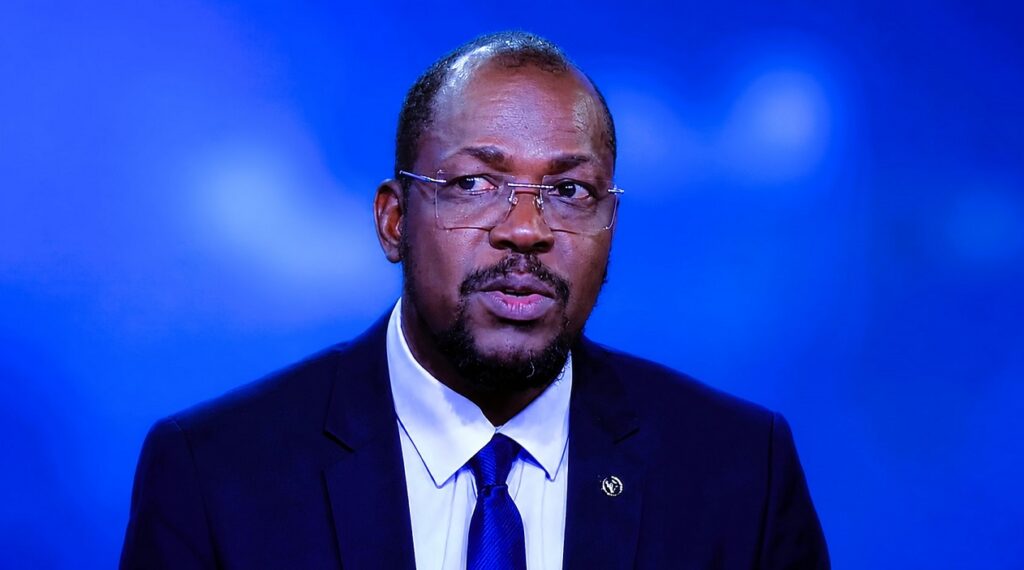
In a candid interview, Étienne Fabaka Sissoko, spokesman for the Coalition of Forces for the Republic (CFR), outlines his movement’s vision for resolving the crisis. He emphasizes that for the CFR, “dialogue does not mean alliance.”
Bamako’s survival under siege: the human cost of blockades
Étienne Fabaka Sissoko begins by addressing the critical situation in Bamako, where daily life is increasingly strained due to supply shortages and rising prices. “Calling the blockade a ‘success’ would imply that starving civilians is an acceptable strategy,” he states. “The CFR opposes this approach because it punishes the very people it claims to protect.”
He argues that the current crisis highlights the limitations of a purely military response. “A sustainable solution must combine security, political dialogue, and the restoration of state authority,” he asserts. “The blockade only deepens suffering and delays recovery.”
CFR: a young movement meeting Mali’s urgent demand for peace
Founded in December 2025, the Coalition of Forces for the Republic (CFR) is still in its early stages but has already become a symbol of hope for many Malians. Sissoko explains that the movement was created not as a traditional party, but as a platform for national salvation. “Malians are exhausted by the crisis and are searching for a responsible, structured alternative,” he says. “We offer a middle path between prolonged military rule and a country trapped in endless conflict.”
The CFR’s ambition is to restore democratic governance through a civilian-led transition. Its priorities include reopening schools, strengthening the justice system, protecting civilians, and reviving the economy. “Our goal is to rebuild an ‘effective state’ that serves the people, not the other way around,” Sissoko emphasizes.
No alliance with armed groups: clarifying CFR’s stance
Some observers have speculated about a possible connection between the CFR and the Front for the Liberation of Azawad (FLA). Sissoko dismisses these claims outright: “The CFR is not the FLA’s political wing, nor is the FLA its armed branch. We engage in dialogue with all crisis actors, but that does not mean we coordinate actions or form alliances.”
He reiterates the CFR’s core principles: no partition of Mali, no negotiation with foreign agendas, and no compromise on the country’s republican values. “Dialogue is a tool to end the war, not a surrender,” he states. “Our red lines are clear: Mali’s unity, a republican state, fundamental freedoms, and an end to attacks on civilians.”
Transition scenarios: restoring democracy without chaos
Sissoko acknowledges that the CFR has considered transition scenarios, but rejects the idea of power emerging from military collapse. “A transition must restore public freedoms, secure the population, and prepare for elections—not the other way around,” he explains. “Without security and national consensus, we risk repeating the same mistakes.”
Regarding the role of imam Mahmoud Dicko, Sissoko clarifies that Dicko’s influence should be moral, not political. “He could help ease tensions and facilitate dialogue, but executive power must belong to legitimate civilian institutions,” he says. “Political legitimacy comes from the people, not religious leaders.”
Dialogue with JNIM: where to draw the line?
The CFR advocates for dialogue with armed groups, but Sissoko stresses that this is not unconditional. “Our approach is neither surrender nor reward—it’s a pragmatic tool to end violence,” he states. “The JNIM’s ties to Al-Qaeda make negotiations particularly complex.”
He sets out the CFR’s non-negotiable conditions: Mali’s territorial integrity, a republican state, protection of fundamental rights, and a definitive break from transnational jihadist agendas. “We do not negotiate the existence of the Malian state,” Sissoko insists. “We discuss how to end the war without abandoning our republican principles.”
Decentralization: governance, not division
Sissoko rejects the notion that the CFR promotes Islamic law or federalism as a path to partition. “The real issue is the collapse of local governance,” he says. “In many areas, the state has vanished—no administration, no justice, no services. The CFR proposes a decentralized republic where local mediation operates within a constitutional framework.”
He outlines the movement’s vision: a unitary, sovereign Mali where regions have greater autonomy over resources and decision-making, while the state retains its core functions. “Centralization has failed. A stronger, more responsive state requires empowering local communities.”
Rebuilding Mali: education, justice, and economic revival
The CFR’s transition program focuses on restoring essential services. “We prioritize reopening schools, strengthening the judiciary, securing supply routes, and reviving the economy,” Sissoko explains. “Without education, justice, and security, there can be no lasting peace.”
He also dismisses the idea of a return to the pre-crisis system. “The CFR is not about revenge, partition, or a return to the old ways. It’s about a civil transition, national dialogue, and a refounded republic where the people’s voice is heard.”
“Mali will not be saved by a strongman. It will be saved by a strong national pact.”