- Top Stories
- Politics
Mali crisis: negotiating with JNIM emerges as potential solution
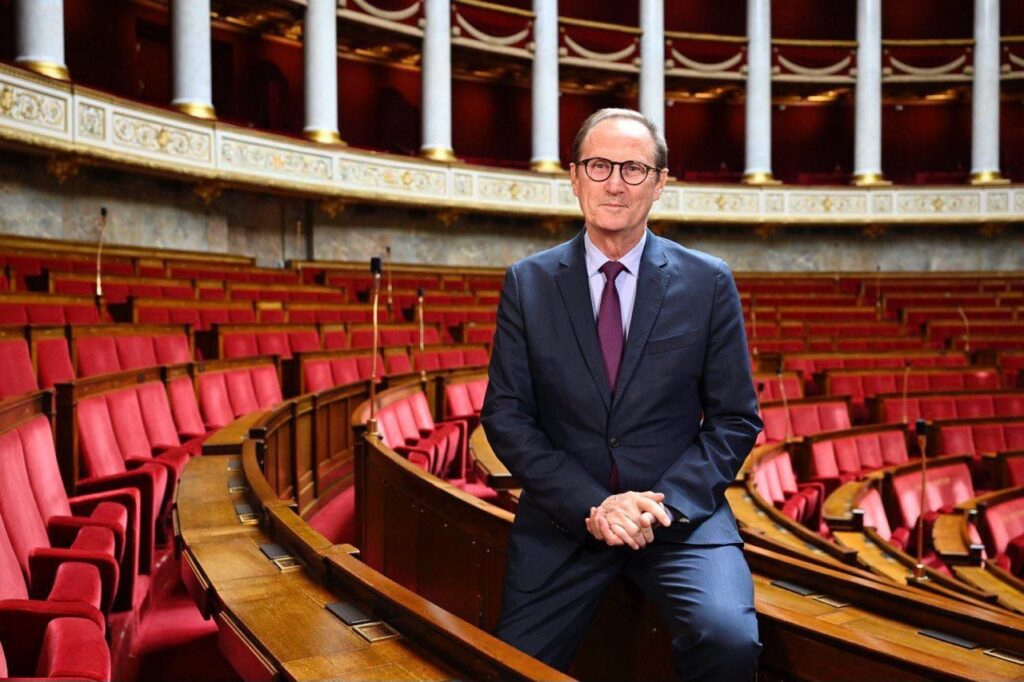
France’s stance on Mali’s escalating crisis is becoming increasingly transparent. Bruno Fuchs, chair of the National Assembly’s Foreign Affairs Committee and a frequent travel companion of President Emmanuel Macron, recently shared his unfiltered perspective on the matter.
Beyond rosy predictions about France’s future on the continent—“If we remove all irritants like the CFA franc and visa issues, we can regain our status as a desired power”—the most striking aspect of his remarks lies in the contradiction between abandoning France’s colonial influence and the persistent drive to reclaim lost ground against Russian presence.
The most unsettling and infuriating claim came regarding Mali. Fuchs, mirroring the views of unnamed French military and political strategists who celebrated the April 25 complex attack, presented a stark narrative: “Russia is negotiating its exit from Mali, and the current junta in Bamako will collapse within weeks or months.”
In response to Emmanuel Macron’s recent statement in Nairobi—“The junta’s decision to oust French troops is likely not the wisest move for their country”—RFI interviewer Christophe Boisbouvier posed a direct question: “Is France celebrating Russia’s military setbacks in northern Mali?”
Contradictory stance on French presence
Bruno Fuchs sidestepped the question, instead echoing Macron’s words: “Removing France as a partner is counterproductive.” Observers could infer the subtext. The deputy then doubled down on his forecast: “I believe the Malian junta has only days or weeks left. It is now weaker than the FLA and JNIM, making regime change inevitable within weeks or months.”
The parliamentarian ventured into murky territory next. “The Malians face a choice between extremist jihadists—though not all—and FLA rebels on one side, and democracy, public freedoms, and life as it was before on the other.” He emphasized, “Life in Mali is about to change,” ignoring the 14 years of war already endured by the battered population.
Potential negotiations with JNIM
Bruno Fuchs confidently outlined two potential future scenarios for Mali. In the first, Bamako agrees to negotiate. “If the junta and President Assimi Goïta act rationally, they will open negotiations. A three-to-six-month transition period could follow, led by a military figure—not Assimi Goïta—culminating in elections within the same timeframe.” The unrealistic timeline aside, he posited a central question: “How can JNIM be integrated into governance during this transition?”
The JNIM, affiliated with al-Qaeda, remains a formidable force. Its leader, Iyad Ag Ghali, was once France’s public enemy number one in the Sahel, with 57 French soldiers killed in combat against the group. Fuchs claims to possess insider knowledge about JNIM’s intentions: “I believe JNIM is prepared to lay down arms and end armed struggle, provided it gains a political role in the country—not control, but participation in political life.”
Fuchs did not explain why JNIM, the dominant actor on the ground, would settle for participation without asserting dominance. Instead, he framed the dilemma for “Europeans or French observers”: “Should we support this transition where JNIM holds a political role, or reject it? I don’t have the answer, but it presents a serious ethical and political dilemma.” Indeed, it is a critical question—not just for “Europeans or French observers” but primarily for the Malians themselves.
Afghanistan scenario looms
- Fuchs then presented a second scenario. “If the junta refuses to negotiate and resists absolutely, it will eventually weaken. Russia is indeed negotiating its departure from Bamako—contrary to its public statements. When the junta falls, if not through negotiation, the outcome will likely be worse.” Worse for whom? For Mali, the region, or France? Fuchs did not specify.
Returning to his preferred scenario, Fuchs proposed a possible resolution: “We could see a Mauritania-style system—a religious regime; or a Nigerian-style federal state where some regions implement Sharia while others do not.” He favored the latter: a moderately Islamic republic ensuring representation for all communities. Yet, he offered no clarity on how such a system would function in practice. A critical flaw, given Mali’s diverse, interwoven communities rather than isolated regions.
His second scenario is the “ultimate nightmare”: an Afghanistan-style state emerging in the heart of the Sahel. “We must avoid this at all costs,” he warned, citing potential repercussions for neighboring countries such as Guinea, Senegal, Côte d’Ivoire, Benin, and Togo. “It would be complicated,” he admitted—an understatement.
Russia negotiating exit
Stunned by Fuchs’ bold assertions, Boisbouvier pressed further: “Do you have evidence that Russia is negotiating its departure from Bamako?”
Without hesitation, Fuchs replied, “Yes. They are negotiating. They have withdrawn their positions. Talks are underway.” The outcome remains uncertain, “depending entirely on JNIM and the junta.” However, he insisted Russia “would be ready to return, provided certain guarantees—particularly regarding mining assets like gold mines, which they fear losing despite disputed legitimacy.”
Fuchs, though advocating for closure on France’s colonial past—“a legacy of colonization”—and criticizing the imposition of “our truths and views” without tolerating resistance, asserted France’s—and Europe’s—superior legitimacy in Mali’s resource management. “We are more reliable in our commitments than the Americans or Russians, who are withdrawing from Mali due to poor outcomes.” He cited the Central African Republic as an example of normalized relations with President Faustin Archange Touadéra, “even with Russian presence.” The message was clear: “We must learn to work with everyone.” Everyone, that is, except the leaders of the Alliance of Sahel States.