The Fezzan and Oubari: Logistical Strongholds of the Tuareg Rebellion
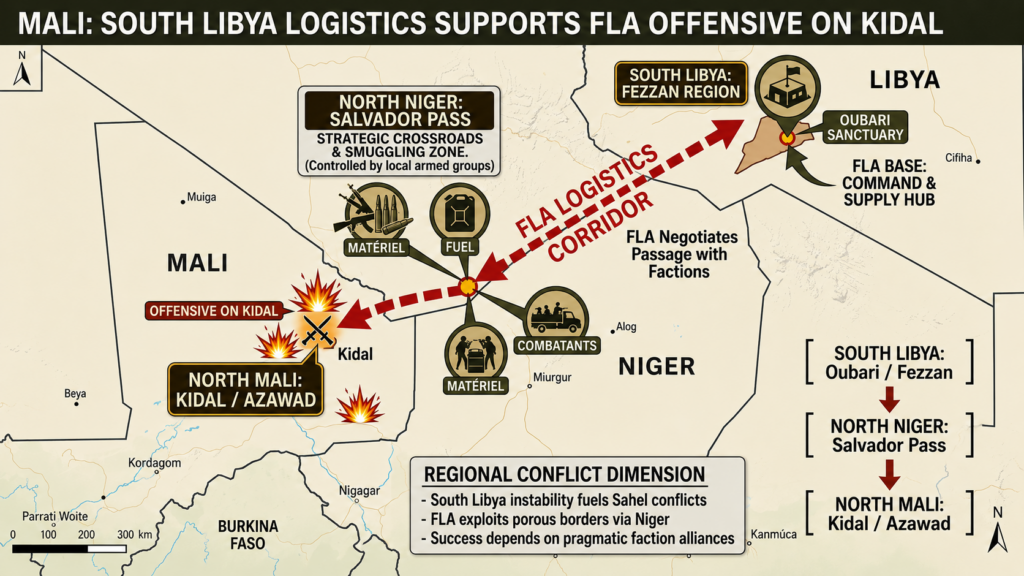
In the ever-shifting landscape of Sahelian security dynamics, southern Libya has once again emerged as a critical hub for rebel activities. Intelligence gathered from multiple sources confirms that the Front de Libération de l’Azawad (FLA) rebels have established a strategic corridor linking Libya to northern Mali, traversing Niger, to execute their recent military campaign aimed at retaking Kidal.
The operational backbone of this offensive is rooted in the Fezzan region, a historically porous area in southern Libya. Here, rebel infrastructure has reportedly taken shape near the town of Oubari. Far from serving as a passive refuge, this zone has functioned as a launching point, a logistical command center, and a supply hub for FLA fighters, enabling the meticulous planning of operations that now destabilize northern Mali.
The ‘Salvador Pass’: A Pivotal Transit Route
To project their forces and equipment into the Malian theater, the rebels rely on a highly strategic transnational axis. This corridor forms an uninterrupted line connecting southern Libya to northern Mali, cutting across Niger’s territory.
The linchpin of this route is the infamous ‘passe de Salvador.’ Located in the extreme north of Niger, this desert crossroads is notorious for being a preferred transit zone for terrorist groups and illicit arms and drug trafficking networks.
In the context of this offensive, the pass facilitates the movement of three critical components:
- Military equipment: including weapons, ammunition, and logistical supplies;
- Fuel: an invaluable resource for maintaining the mobility of pickup columns traversing the desert;
- Fighters: who utilize this route to advance to the front lines before retreating into Libyan territory post-combat.
Geographical Flow of the Offensive:
- Southern Libya: Oubari / Fezzan
- Northern Niger: Passe de Salvador (area under local armed group control)
- Northern Mali: Kidal / Azawad
Niger: A Necessary but Conditional Passage
The utilization of this corridor underscores the complexity of cross-border alliances. Since the Nigerien segment of this axis is controlled by various local armed groups, the FLA could not operate unilaterally.
To ensure the safe transit of troops and supply convoys, the Tuareg rebellion was compelled to negotiate passage rights and secure permissions from these actors who dominate northern Niger. This logistical compromise highlights that the success of Sahelian offensives now hinges on pragmatic agreements between interconnected regional armed factions.
As the battle for control over northern Mali intensifies, these developments reaffirm the deeply regional nature of the conflict. Instability in Libya continues to cast a long shadow over Sahelian hotspots, with ripple effects felt across multiple nations.