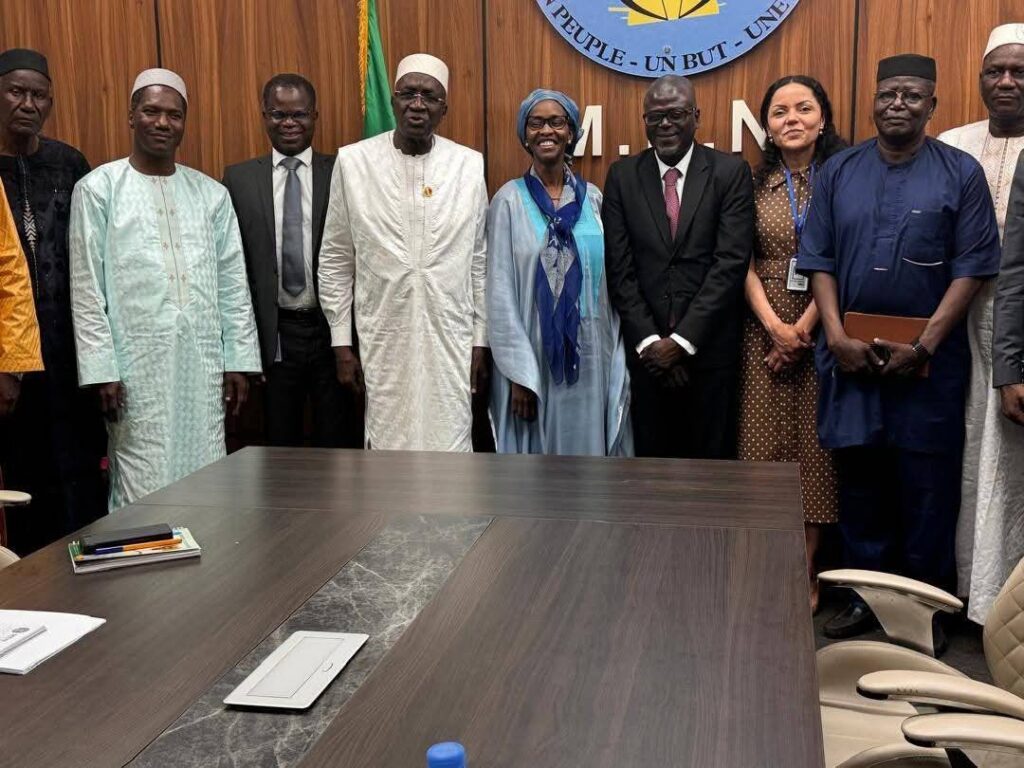
In a bid to revitalize its struggling education sector, the Malian government has intensified collaboration with the World Bank, focusing on long-term solutions to persistent challenges. Rising insecurity, mass displacement, and resource shortages have pushed the system to its limits, prompting urgent action.
Strategic partnership for Mali’s future
The Minister of National Education, Amadou Sy Savané, recently hosted a high-level delegation from the World Bank led by Awa Cissé Wagué in Bamako. Discussions centered on innovative projects designed to enhance human capital and elevate educational outcomes across the country. These efforts align with a broader development agenda that also prioritizes energy access and agricultural modernization.
Past investments paving the way
This push builds on previous commitments, including a $150 million grant approved in early 2026 through the International Development Association (IDA). The funding aims to safeguard critical services in health and education, with a direct impact on over one million students. Key initiatives include expanded enrollment, streamlined national examinations, and upgraded learning environments to foster better academic performance.
Overcoming obstacles in education
Despite these efforts, Mali’s education system remains under severe strain due to ongoing security threats in multiple regions. Frequent school closures, mass migrations, and logistical hurdles continue to disrupt learning, leaving countless children without consistent access to schooling. The collaboration with the World Bank is seen as a vital step toward stabilizing and strengthening the sector for future generations.
Roadmap for progress
Moving forward, both parties are set to finalize the details of new projects, including funding mechanisms and implementation timelines. For Bamako, this partnership is not just about short-term relief but a strategic investment in a sector deemed essential for the nation’s sustainable development and growth.