The Mali government has made strides in public health indicators over recent years, including reductions in infant and under-five mortality rates, improved maternal health outcomes, and increased life expectancy according to World Health Organization and UNICEF data (2025). In 2018, the country launched a bold universal health coverage initiative (Mathauer et al., 2019). Yet, significant barriers persist, with healthcare access remaining uneven across regions.
Chronic shortages of trained medical personnel and insufficient funding continue to hinder progress, compounded by years of political instability (World Bank, 2024; Touré et al., 2022; UN Human Security Trust Fund, 2025; Arie, 2019). Rural communities face the greatest challenges, as over half of the nation’s doctors practice in the capital, Bamako (Sangare et al., 2021).
The World Health Organization’s 2024 Universal Health Coverage Service Coverage Index places Mali at 41 out of 100—below both the African average (44) and the global benchmark (68).
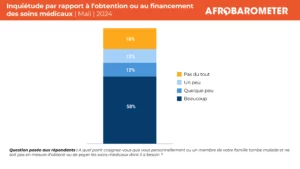
Findings from the Afrobarometer Round 10 health module reveal that Malians rank healthcare as the most pressing issue requiring government intervention. Only about one in seven adults currently has health insurance, and widespread concerns persist about affordability and accessibility of essential medical services. An overwhelming majority believe the government must ensure universal healthcare access, even if it requires higher taxation.
Among citizens who visited public clinics or hospitals in the past year, experiences were mixed. While most reported receiving necessary care, many cited obstacles such as exorbitant costs, long wait times, and unreliable supplies of medicines and equipment. Nearly half of respondents noted that a family member went without needed medical attention in the previous year.
Despite these challenges, two-thirds of Malians express approval for the government’s efforts to improve basic healthcare services and trust the Ministry of Health’s leadership in addressing these gaps.