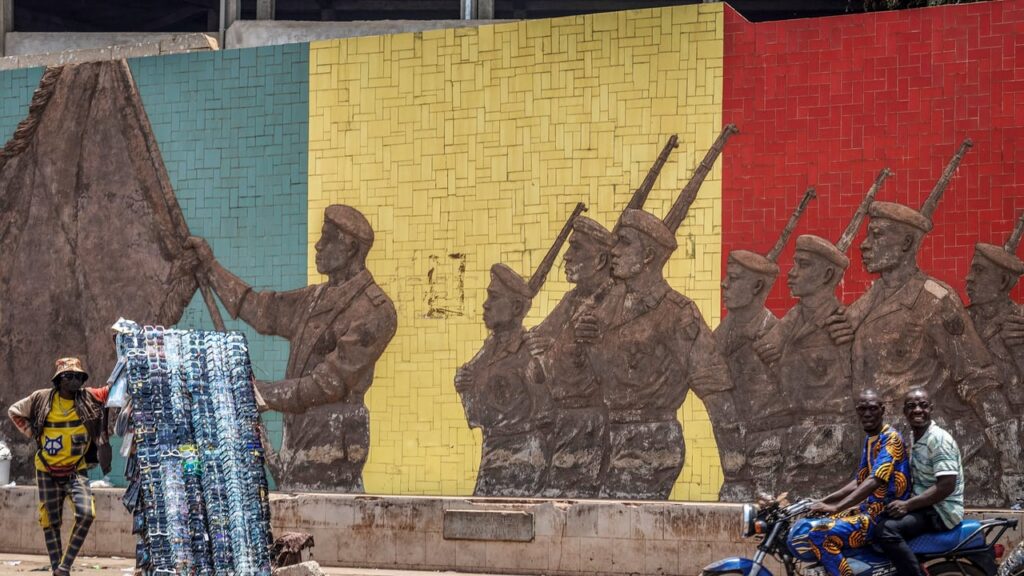

For over a decade, Mali’s security challenges have been framed primarily through a military lens. Successive operations, supported by domestic and international forces, were designed to restore stability through force. Yet today, the conflict’s center of gravity has shifted in ways that demand a fundamental rethinking of strategy. Military victories alone will not bring lasting peace.
Across vast stretches of northern and central Mali, the reality on the ground reveals a stark truth: the state has not merely withdrawn—it has been replaced. Armed groups, whether jihadist or otherwise, now exercise varying degrees of authority, performing functions once reserved for the state. They provide local security, resolve disputes, regulate economic activity, and shape social norms. This is not a temporary vacuum; it is a durable transformation of power.
Why military force isn’t enough
This shift exposes a critical flaw in the prevailing approach. The assumption that security restoration would naturally lead to state reassertion has proven false. Mali demonstrates that an army can maintain operational capacity while losing political and social legitimacy across swathes of its territory. The deeper battle is no longer about controlling terrain—it is about restoring credibility.
Who truly protects civilians? Who delivers justice perceived as fair? Who embodies authority that is both credible and predictable? These questions now shape local allegiances. In this environment, military superiority does not guarantee victory. Without political and social legitimacy, even hard-won gains risk unraveling.
Building legitimacy: the real challenge ahead
The path forward requires more than tactical victories. It demands a holistic strategy that integrates security, governance, and social cohesion. The state must become visible not just through force, but through utility. This means:
- Restoring core state functions in communities where they have eroded
- Reinvesting in credible administrative and social services
- Rebuilding trust through responsive local governance
- Recapturing the narrative by demonstrating tangible benefits to the population
The goal is not merely to restore authority, but to make it legitimate again.
Mali as a microcosm of Sahel-wide trends
Mali is not an isolated case. It reflects broader transformations in conflict across the Sahel. Here, competition extends beyond battles to contest the very organization of society. The struggle is not just for territory, but for influence over populations and the legitimacy to govern. Power now depends less on coercion and more on the ability to establish an order that people accept.
This shift demands new thinking about both war and stabilization. The challenge is no longer just reclaiming land, but rebuilding a political space where state authority can function credibly once more.
The road to stabilization remains uncertain
The current phase of Mali’s crisis is defined by a crucial question: how can the state regain not just control, but legitimacy? This task is complicated by weakened political institutions, the marginalization of civilian voices, and the dominance of security-first approaches. The real test is not military, but political: creating conditions for credible governance that can sustain reconstruction.
Ultimately, Mali’s future hinges on whether its leaders can move beyond battlefield solutions and address the deeper crisis of legitimacy. Without this, no amount of tactical success will bring lasting peace.