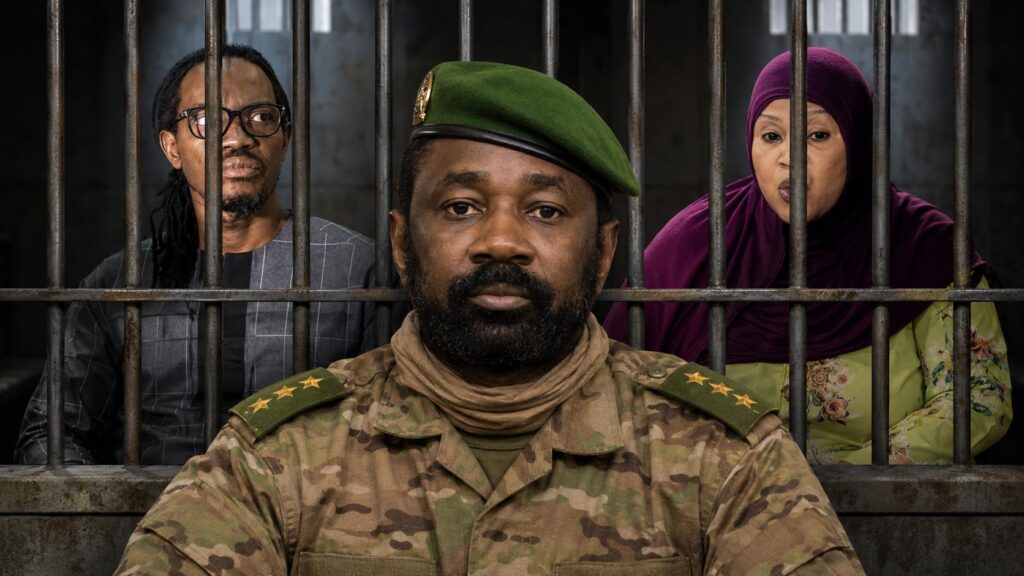
Mali’s military justice system has once again delivered a harsh blow to free speech. Radio commentator Mohamed Youssouf Bathily, widely recognized as Ras Bath, and social media influencer Rokia Doumbia, popularly dubbed Rose ‘la vie chère,’ were sentenced to a decade behind bars by a Bamako court. Three years are suspended, leaving seven years of prison time to serve.
The charges? ‘Criminal association’ and ‘undermining state credibility’—allegations tied to their persistent criticism of the transitional government led by General Assimi Goïta.
Silencing voices under the guise of national stability
This verdict is not an isolated incident. It reflects a growing pattern of repression sweeping across Mali, where dissent is increasingly met with imprisonment or worse. The message is clear: questioning the status quo comes at a steep price.
Politicians and public figures facing the crackdown
Ethiopian economist Étienne Fakaba Sissoko, a former presidential advisor, is currently serving a prison term for publishing a book that scrutinized the transition’s management. His fate echoes that of Malick Coulibaly, a former justice minister, and several opposition party leaders, all of whom have faced prosecution or arbitrary detention for challenging the regime.
Civil society and activists under siege
The clampdown extends beyond political circles. Clément Dembélé, a well-known anti-corruption activist, was detained after publicly questioning the government’s strategic decisions. Meanwhile, social media activists face account bans or legal repercussions for simply discussing Mali’s economic or security challenges.
Press freedom under sustained pressure
Local journalists operate under constant threat of arrest or broadcast suspensions, while international outlets remain barred from the country. The message to the media is unmistakable: compliance is expected, and dissent is not tolerated.
When criticism becomes a crime
Legal teams representing Ras Bath and Rose ‘la vie chère’ have vowed to challenge the verdict at the Supreme Court. Their appeal underscores the broader crisis: in Mali today, questioning living costs or military governance is increasingly treated as a threat to national security. The justice system, once a pillar of democracy, now appears to be a tool for silencing those who dare to speak out.