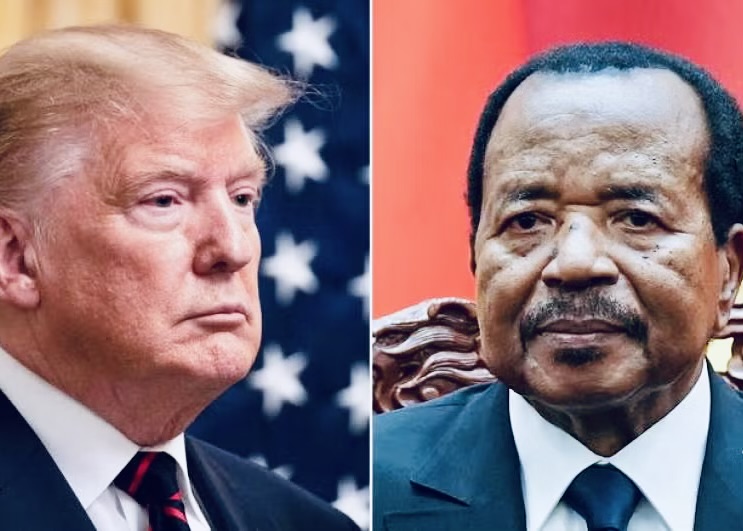
Migrants expelled from the US challenge in Cameroonian court the agreement with Washington
Thirty-six African nationals, forcibly returned from the United States to Cameroon, have taken legal action in Yaoundé’s administrative tribunal. Their lawsuit seeks to suspend the mechanism that enabled their transfer and to secure legal protection against potential deportation to their countries of origin, where they claim persecution risks.
- Immigration
A coalition of migrants, including nine African countries of origin, has filed a lawsuit in Cameroon’s administrative court to challenge a bilateral agreement permitting their expulsion from the United States to Yaoundé. Their legal team argues that the transfer violates international law and exposes them to harm upon return.
The petitioners, who arrived between January and May 2026, include individuals from the Democratic Republic of the Congo, Ghana, Angola, Ethiopia, Sierra Leone, Kenya, Senegal, Zimbabwe, and Morocco. Their attorney contends that prior US court rulings had blocked their deportation to these nations, yet they were rerouted to Cameroon instead. The lawyer emphasized the principle that no country should serve as a transit point for individuals facing persecution or torture.
Administrative limbo and unresolved status
Upon arrival, the group was housed in a center managed with support from the International Organization for Migration (IOM). However, their lawyer asserts they lack proper identification documents or a clear legal status, severely restricting their freedom of movement. The lawsuit demands not only the suspension of the agreement but also the recognition of their right to remain in Cameroon until their asylum claims are resolved.
Cameroon is among several African nations that have agreed to accept deportees from the US under these circumstances. Other countries involved include the Central African Republic, Equatorial Guinea, Rwanda, South Sudan, and Eswatini. The Trump administration’s policy asserts that when deportations to original countries are blocked, transfers to third-party states remain permissible. This case could set a precedent for how such agreements are enforced in Cameroon.




More Stories
Burkina Faso’s shrinking public payroll: a household burden as schools reopen
Simporé’s televised admission: can Burkina Faso’s army still hold the line?
Gabon’s ghost worker purge: can 11 billion CFA francs in savings really reach the people?