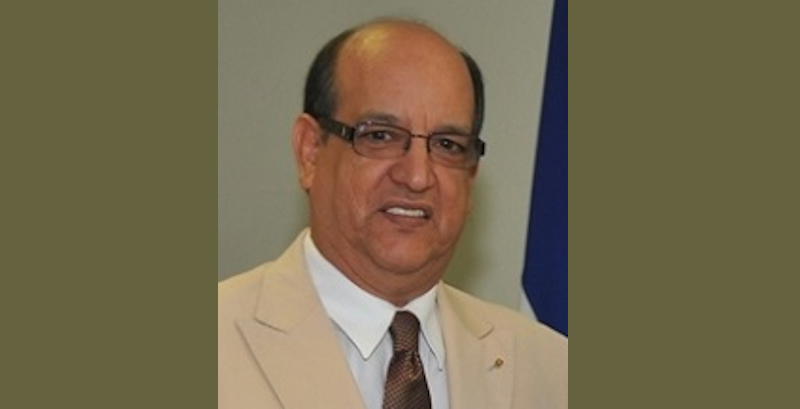
Confidential records from October 2008 provide a deep dive into the hidden machinery of Moroccan diplomacy and intelligence. These secret correspondences, sent from the embassy of Maroc in Caracas, Venezuela, expose a calculated strategy by Rabat to penetrate the Front Polisario and disrupt Algerian influence across Central America. The operation relied heavily on intelligence provided by the Sahrawi diplomat Salama Ould Hennane.
The documents were dispatched directly to Yassine El Mansouri, the head of the DGED (Morocco’s external intelligence agency). Signed by Ambassador Dr Brahim Housseine Moussa, the letters highlight severe tribal friction among the separatists and significant geopolitical shifts, particularly regarding Panama.
Exploiting tribal rifts: the Rguibatte vs. other factions
At the center of these disclosures is a major opportunity for Rabat: the potential defection of high-ranking Polisario officials. The Moroccan ambassador reported multiple meetings with an individual known as M. Sliman—the alias for Salama Ould Hennane. A native of Dakhla and a member of the Oulad Dlim tribe, he previously served as the RASD “ambassador” to Panama and Central America.
Sliman’s assessment was blunt, describing a state of “intense dissatisfaction” within the movement. This unrest stems from perceived favoritism by the Polisario leadership toward the Rguibatte tribe, which has marginalized other groups such as the Oulad Dlim, Oulad Tidrarine, Ait Lahcen, Ait Baamran, and the Takna confederation.
The former diplomat suggested that the timing was perfect to strike a blow against the movement:
“This is the definitive moment to act within the Polisario to further weaken it and consolidate opponents around the Autonomy Project.”
Sliman claimed to have the backing of several prominent RASD figures ready to lead an internal revolt, including:
- Ahmed ould Souilem (Minister Delegate for Arab countries).
- Mahfoud Ould Ahmed Zine (former minister and military commander).
- Mansour (former Foreign Minister and representative in Paris).
The strategy proposed to the DGED involved these figures forming an official opposition group, declaring their dissent during an international press conference in Madrid, and publicly endorsing the Moroccan Autonomy Project. Ambassador Moussa recommended using Sliman as an “infiltrated agent” to orchestrate this destabilization.
The Central American front: Algeria’s diplomatic offensive
Beyond internal disputes, the records reveal a fierce shadow war between Rabat and Alger for influence in Latin America. In late 2008, Moroccan officials learned that a high-level Algerian delegation, led by Ambassador M. Baali from Washington, was preparing a tour of Central America.
Alger’s goal was to block the Moroccan autonomy plan at the UN. To gain favor, Algeria offered a “cooperation package”—essentially financial and economic incentives—in exchange for support of separatist views. Simultaneously, the Polisario sent envoy Mohamed Yaslem Beissat to Panama to shore up their position.
Panama as a strategic pivot
Panama emerged as the primary battlefield for this diplomatic struggle. The documents confirm a cooling of relations between Panama City and the separatists. Panamanian authorities had refused to credit a new RASD ambassador, effectively demoting the Sahrawi mission to the status of a “chargé d’affaires.”
Recognizing this opening, the Moroccan ambassador urged Rabat to act, noting that Panama expected a reciprocal gesture. He pushed for an official Moroccan envoy to solidify this bilateral warming and block Algerian efforts. In a final lobbying effort, the diplomat utilized local networks to stall Polisario requests, suggesting that any reversal by Panama “could damage bilateral ties with the Kingdom of Maroc.”
The surveillance of Mohamed Abdelaziz
The precision of the intelligence gathered is evident in a report from October 27, 2008, which tracked the movements of the then-Polisario leader, Mohamed Abdelaziz. It detailed his planned visit to New York on November 4 to meet UN Secretary-General Ban Ki-moon, followed by a trip to Valence, Espagne, for the EUCOCO conference.
These diplomatic archives expose the raw reality of the Sahara conflict: a shadow war where North African rivalries play out in Latin American capitals, and where alliances are forged or broken through tribal politics and embassy secrets.
Full text of the letters from the Embassy of Maroc in Caracas
#SaharaOccidental #Maroc #DGED #Intelligence #SalamaHennane #MoroccanDiplomacy #Sahara #Polisario #InternationalRelations #Panama #CentralAmerica #Rabat #YassineElMansouri #BrahimHousseinMoussa #Espionage #Confidential #AutonomyProject