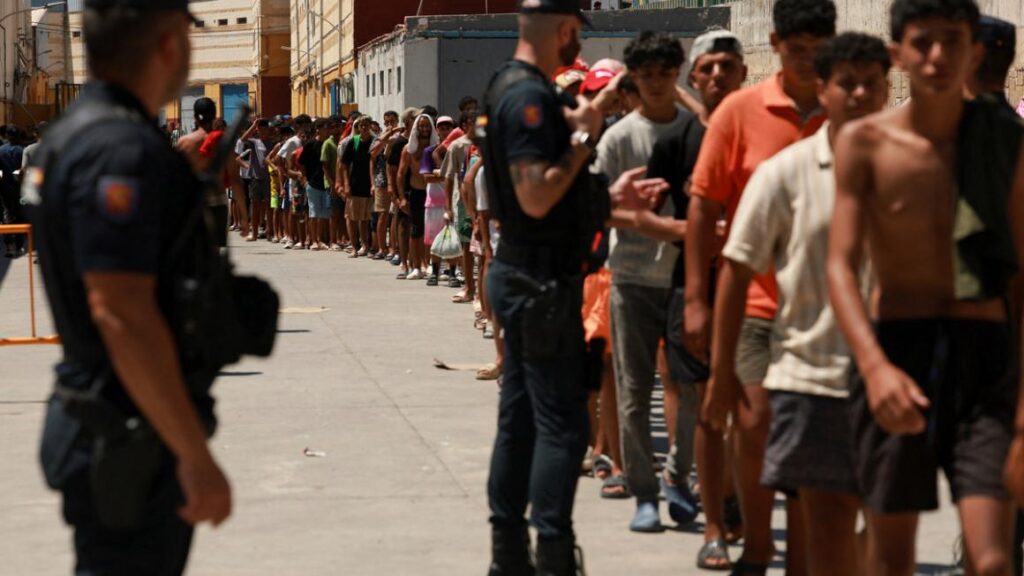
Following the sudden arrival of thousands of migrants from Morocco into the Spanish enclave of Ceuta, Moroccan authorities have announced their willingness to facilitate the return of unaccompanied minors.
Morocco has responded swiftly to the situation. Rabat has declared itself “ready to assist” in the repatriation of unaccompanied minors who have entered Ceuta after tens of thousands of migrants crossed into the Spanish territory from Morocco. However, the process faces legal hurdles within Spain’s judicial system, as highlighted by a diplomatic source speaking on condition of anonymity to the official Moroccan press agency MAP.
The kingdom has pledged to “support the identification of unaccompanied minors for their return to their home country” and to collaborate “with Spanish and European partners” to achieve this goal. Yet, these partners must first address “internal challenges” by overcoming legislative and administrative barriers that currently impede the operation, the source emphasized.
Ceuta sees record migrant arrivals
In a span of just a few days at the end of July, approximately 72,000 migrants illegally entered Ceuta—a figure that set a new record for such a short period. According to Spain’s Interior Ministry in Madrid, around 70,000 of these individuals have already been returned to Morocco. However, children remaining in Ceuta cannot be deported under international and national laws.
Local authorities in Ceuta report that out of the roughly 2,000 people still present, over 1,000 are unaccompanied minors. Their nationalities remain unspecified. On Thursday, several humanitarian organizations raised alarms about the vulnerabilities these minors face, including exploitation, trafficking, and abuse.
Meanwhile, at least 80 deaths have been recorded, primarily due to drowning, as confirmed by a Spanish forensic medicine commission. Moroccan officials, in contrast, have reported 11 fatalities on their side of the border.

More Stories
Will Togo’s Faure Gnassingbé broker the breakthrough east DRC needs?
Can Nigeria’s military campaign end the kidnapping economy in the north?
Can Algeria’s expertise truly reshape Benin’s defense strategy?