The ripple effect: how Moscow’s decisions could reach markets in Cotonou
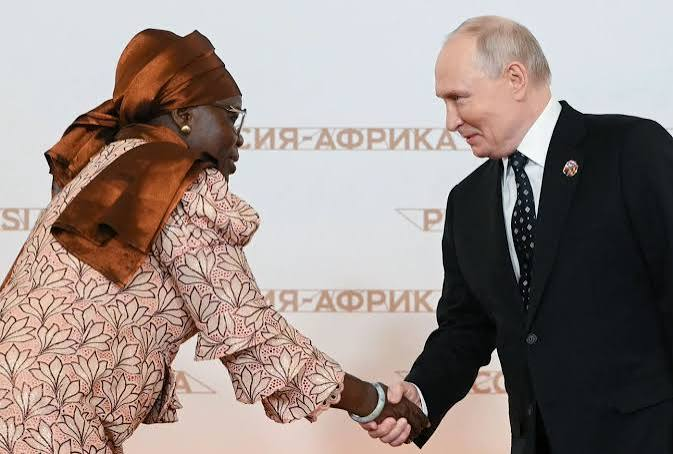
At the third Russia-Africa Summit held in Moscow on 28–29 October 2026, Benin’s Vice-President Mariam Chabi Talata stepped onto a global stage where the rules of international trade are quietly being rewritten. Every agreement signed here influences how goods move, how jobs grow, and how small farmers in Porto-Novo will eventually price their harvests. For a country whose economy still bears the scars of colonial-era trade imbalances, this summit was not another diplomatic photo-op; it was a chance to tilt the scales toward local producers.
From Moscow’s grand halls to Benin’s street markets: a 60-year friendship in the balance
The roots of Benin-Russia cooperation stretch back to 10 January 1962, the day after the former Dahomey declared independence. During the 1970s and 1980s, under the People’s Republic of Benin, Soviet universities educated thousands of Béninese doctors, engineers, and agronomists. Those alumni now hold posts in ministries, clinics, and farms across the country. The Vice-President’s presence in Moscow this year was therefore an attempt to update that long-standing partnership so it can support the next generation rather than repeat the trade patterns of the past.
From summits to streets: what concrete benefits could Beninese citizens see?
The Moscow summit produced a revised three-year action plan for 2027–2029, replacing the 2023–2026 version. For Cotonou, the critical detail is that the new framework pushes partner countries to move beyond aid handouts and toward shared-value investments. Side-effect benefits could include:
- Agro-processing hubs that give cashew and cotton cooperatives higher margins by processing beans and fibers locally instead of exporting raw.
- Renewable-energy tenders that unlock solar-powered irrigation systems in northern zones hardest hit by erratic rainfall, lowering costs for rice and maize farmers.
- Vocational-training centers modeled on the old Soviet polytechnics but upgraded with digital labs, preparing youth for jobs in logistics, metalwork, and ICT.
- Port modernization funds aimed at turning the autonomous port of Cotonou into a regional transshipment hub, cutting transit times for neighboring landlocked countries and boosting warehouse jobs.
The Vice-President pushed for clauses that require any incoming investment to hire locally and source at least 40 % of materials within the ECOWAS zone, a first under Russia-Africa accords. These conditions are designed to prevent resource flows from simply enriching foreign contractors while leaving Benin’s workers on the sidelines.
The Kremlin’s reception: a signal sent to Moscow’s business elite
Official greetings at the Kremlin’s St. George Hall are a symbolic nod, but they carry a practical message: Moscow’s state-owned banks and energy companies now have a clearer signal that Benin is open for joint ventures—and that those ventures must respect the country’s development priorities. The Vice-President’s one-on-one with President Poutine was limited in time, yet it set the tone for the entire economic track: no more top-down projects, but co-designed programmes with built-in transparency and measurable social returns.
What happens next: turning summit pledges into real paychecks
The joint declaration and renewed action programme still need to be translated into contracts, laws, and budget lines. Benin’s next move is a National Economic Partnership Council that will meet within 60 days of the summit. Its mandate: vet every proposed project for three criteria—local job creation, technology transfer, and import substitution. Citizens will feel the impact first through:
- More stable prices for staple foods, thanks to reduced import dependency.
- New factory jobs in agro-industry parks popping up outside Parakou and Bohicon.
- Cheaper electricity once solar farms commissioned with Russian technology start feeding the grid.
Critics warn that previous cooperation pledges sometimes evaporated in bureaucratic delays. This time, the Vice-President has tied the release of any sovereign guarantees to pre-agreed milestones—effectively betting her political capital that the Moscow summit will not be forgotten when delegates return home.
From dialogue to delivery: the final test for Benin’s Moscow strategy
In the coming months, the world will watch whether Benin’s gamble pays off. Every ton of processed cashew that leaves Cotonou instead of raw kernels, every kilowatt of solar power added to the grid, and every vocational trainee hired in a factory is a direct testament to the choices made in Moscow’s grand halls. For Beninese people whose daily struggles are measured in rising transport costs and uncertain harvests, the summit’s legacy will be judged not by communiqués, but by the stability—and dignity—those communiqués help create.