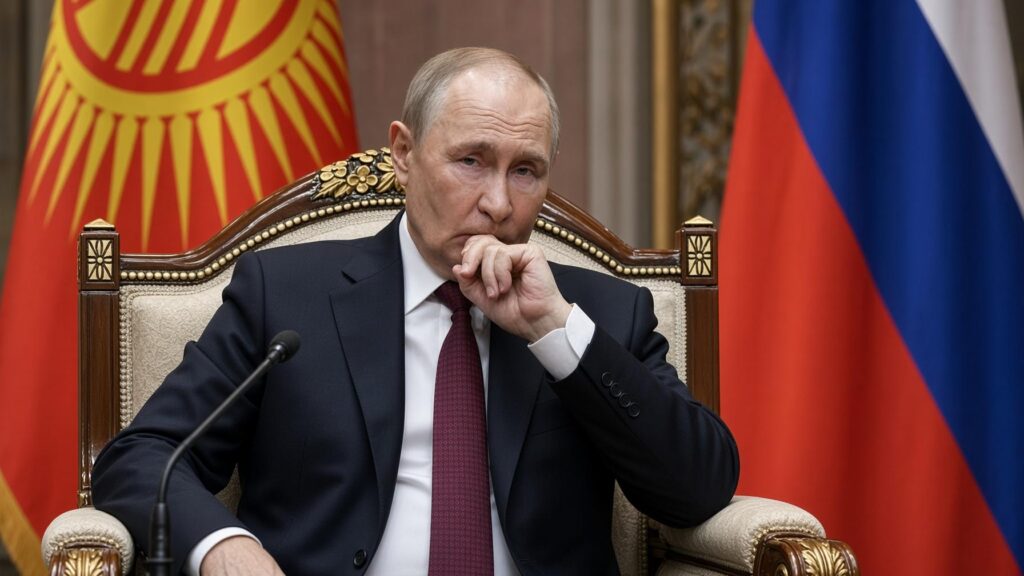
Across Africa, Russia’s bold diplomatic push has reshaped the geopolitical landscape, with military pacts, private security deployments, and mining deals expanding rapidly. Yet, behind the bold rhetoric of a resurgent Moscow lies a glaring disparity: the Kremlin’s economic leverage falls far short of its geopolitical ambitions, leaving partner nations grappling with more extraction than development.
How Russia’s limited economic power shapes unequal African partnerships
Russia’s engagement in Africa is often framed as a strategic revival, but the reality tells a different story. While Moscow leverages its military and diplomatic influence, its economic footprint remains strikingly narrow. A closer look at trade and investment data reveals a pattern of resource extraction that prioritizes short-term gains over sustainable growth.
Weak economic fundamentals limit Moscow’s leverage
The Kremlin’s ability to deliver large-scale development assistance or infrastructure funding is constrained by its economic scale. With a nominal GDP hovering around $2.2 trillion—comparable to European mid-tier economies like Italy or Canada—Russia’s global economic clout is modest at best. At roughly 2% of global GDP, Moscow lacks the financial muscle of giants like the United States or China, or even regional players such as the European Union.
This structural weakness translates into a foreign policy that leans heavily on hard power and extractive industries rather than sustainable investment. While other global players fund roads, power plants, and industrial zones, Russia’s approach is concentrated in security partnerships and raw material concessions.
Trade flows reveal a one-sided partnership
The numbers tell an unmistakable story: Russia’s trade with Africa remains insignificant compared to other global powers. Annual two-way trade hovers around $27 billion—less than 3% of the continent’s total external commerce. Contrast that with China’s $280 billion or the EU’s $300 billion in African trade, and the scale of Russia’s economic presence shrinks dramatically.
Moscow’s export basket: fuel, food, and few alternatives
Over 90% of Russia’s exports to Africa consist of basic goods:
- Wheat: Between 14 and 20 million tons shipped annually, feeding African food security but failing to foster agricultural transformation.
- Mineral fertilizers: About 1.5 million tons exported each year, supporting agro-industrial needs without building local fertilizer industries.
- Refined petroleum products: Around 10 to 12 million tons of diesel and fuel oil delivered annually, meeting energy demand but sidelining renewable or industrial development.
Meanwhile, Russian foreign direct investment (FDI) in Africa accounts for less than 1% of the continent’s total inflows. Unlike partners that build dams, railways, and factories, Russia focuses its limited investments on securing mining rights and security contracts—offering little in return beyond resource rents.
The double cost of resource extraction for African nations
In countries across the Sahel and Sub-Saharan Africa tied to Moscow through security and mining agreements, the economic consequences are becoming clear. These partnerships often deliver immediate political or military benefits to ruling elites but deepen structural inequalities in the long run.
Financial opacity and lost revenue
Mining concessions managed by Russian-linked entities frequently operate through opaque financial structures. Profits generated from gold, diamonds, uranium, and hydrocarbons bypass national treasuries, depriving governments of critical tax revenues needed for schools, hospitals, and infrastructure. In nations already struggling with fragile institutions, this loss further entrenches poverty and underdevelopment.
No local transformation, no job creation
Despite abundant natural wealth, many partner countries remain trapped in a cycle of raw material export with minimal value addition. Russian-backed projects rarely include provisions for technology transfer, local processing, or skills development. As a result, communities see wealth extracted but few lasting jobs or industries created.
This pattern reinforces what economists call “the resource curse”—where abundant natural riches coexist with stagnant economies and high unemployment.
Beyond extraction: can Africa demand better?
Growing discontent is emerging across the continent. Civil society, policymakers, and economic analysts are calling for a fundamental rethink of external partnerships. The quest for diversified alliances must go hand in hand with demands for transparency, fair contracts, and sustainable value chains.
To break the cycle of dependence, African nations need partnerships that prioritize shared prosperity over unilateral resource access. That means insisting on local beneficiation, transparent governance, and equitable revenue sharing—ensuring that natural wealth translates into inclusive growth.
The challenge is clear: without structural change, Africa risks once again becoming a theater for foreign extraction rather than a continent on the rise.