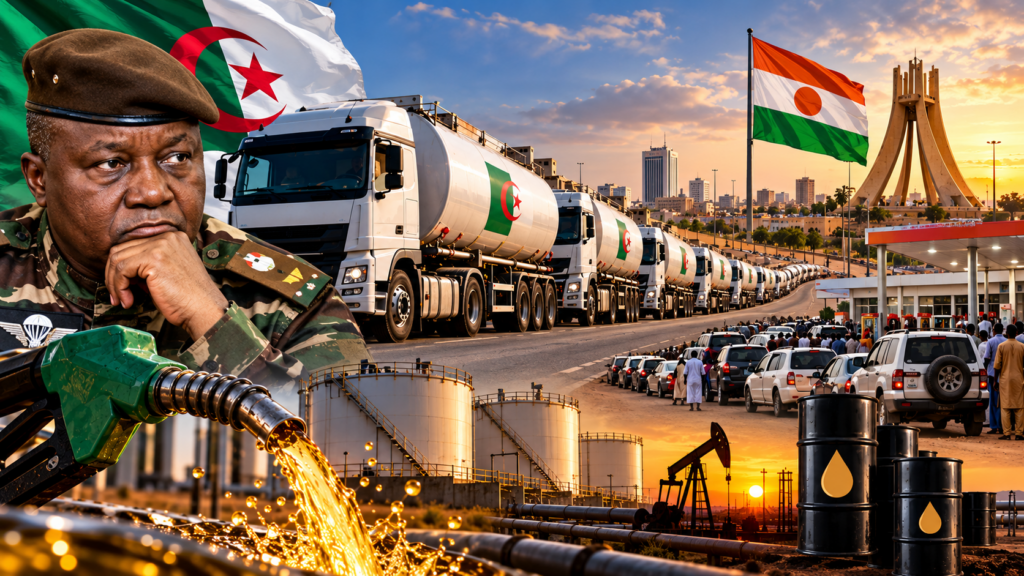
Niamey’s critical fuel shortage has taken a new turn as 150 tankers, originally earmarked for Agadez, now face rerouting to the capital. The 3.75 million liters of Algerian diesel, priced at 800 FCFA per liter with repayment in crude oil, underscores the financial and strategic dilemmas facing Niger’s fuel supply chain.
From Agadez to Niamey: A logistical shift with unanswered questions
The sudden redirection of 150 tankers each holding 25,000 liters from Agadez to Niamey has raised concerns about the government’s decision-making process. While authorities have not confirmed the full extent of the rerouting, the move suggests a rapid reassessment of priorities in response to Niamey’s growing fuel deficit. The shift leaves Agadez, already struggling with logistical challenges, to grapple with the unmet terms of the initial agreement with Algeria.
With 3.75 million liters now potentially destined for Niamey, the capital braces for a critical infusion of fuel. However, the lack of transparency surrounding the destination of the remaining tankers leaves citizens and businesses in the dark about how this emergency supply will be distributed.
Price disparity fuels economic strain on Niger’s budget
The 800 FCFA per liter cost of Algerian diesel, payable in crude oil, marks a significant premium over the 702 FCFA per liter previously sourced from Nigeria. At this price, the total cost for just the Algerian supply could reach 3 billion FCFA when accounting for crude oil repayment terms. This financial burden raises questions about long-term affordability, especially as Niger grapples with economic constraints.
While the immediate availability of fuel is undeniable, the higher cost demands scrutiny. Is the premium justified by the lack of alternative supply routes? Or does it risk diverting crucial funds from other national priorities? The absence of clear pricing breakdowns and repayment valuation methods further complicates efforts to assess the true economic impact.
The hidden costs of dependency
Beyond the per-liter price, Niger’s reliance on foreign fuel supplies exposes its vulnerability to global market fluctuations and geopolitical pressures. The shift from Nigerian to Algerian sources may offer short-term relief, but it also entrenches a dependency that could prove costly in the long run. Without diversified, locally managed reserves, Niamey remains at the mercy of unpredictable supply chains.
Stockpiling strategies: A temporary fix or a long-term solution?
The arrival of 3.75 million liters presents an opportunity to fortify Niamey’s fuel reserves a necessity in a city where daily life hinges on uninterrupted access to transportation, electricity, and commerce. However, the effectiveness of this influx depends entirely on how it is managed. Will the fuel be allocated to immediate consumption, or will it be set aside as a strategic buffer against future shortages?
Niamey’s fuel reserves must be more than a reactive measure. A sustainable stockpiling strategy requires robust storage infrastructure, transparent distribution protocols, and regular audits to prevent losses or mismanagement. Without these safeguards, the capital risks squandering a critical resource in times of need.
Balancing urgency with foresight
The rerouting of these tankers highlights a fundamental tension in Niger’s fuel policy: the need to address immediate shortages while laying the groundwork for long-term energy security. While emergency imports can postpone crises, they do little to solve structural problems. The government must clarify its intentions is this a stopgap measure, or does it signal a permanent shift in supply strategy?
For Niamey’s residents and businesses, the answers matter deeply. Without clear communication from authorities, uncertainty breeds speculation, and the true cost of this operation remains obscured. As the capital awaits further shipments, one question looms largest: Will this fuel truly secure Niamey’s energy future, or merely delay the next crisis?
What’s next for Niger’s fuel supply?
Transparent reporting: Authorities must disclose the final distribution plan for the 3.75 million liters, including allocations for immediate use and reserves.
Investment in storage: Expanding fuel storage capacity in Niamey is critical to mitigate future shortages and reduce reliance on emergency imports.
Diversification efforts: Niger must explore additional supply routes and local production initiatives to decrease vulnerability to external shocks.
Pricing accountability: A detailed breakdown of costs including crude oil repayment valuations is essential to assess the economic impact of this deal.
Niamey cannot afford to operate without a safety net. The arrival of Algerian fuel is a reminder that short-term fixes are no substitute for a resilient, self-sustaining energy strategy.
By Marguerite Ndongo — Journalist