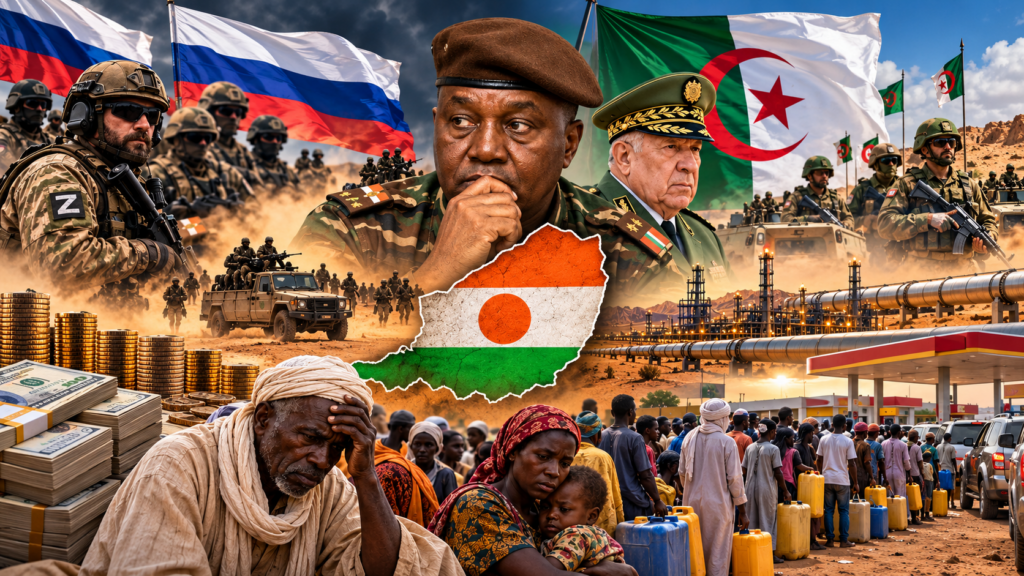
In a strategic pivot that could reshape Niger’s security landscape, President Abdourahamane Tiani’s administration has turned to Algeria for military support after leaning heavily on Russian mercenaries. With the Algerian Parliament’s recent authorization of troop deployment to Niger, a critical question emerges: what real-world consequences will this new alliance have for the nation’s economy and its people?
Algeria’s military commitment: a calculated shift in regional security?
On October 25, 2026, Algeria’s Parliament approved the deployment of units from its Armée Nationale Populaire (ANP) to Niger, marking a significant departure from Algeria’s traditionally cautious foreign military engagements. While the move underscores a deepening bilateral relationship, the specifics of the mission including its scope and objectives remain shrouded in ambiguity. Reports suggest energy interests and existing bilateral agreements may be driving this decision, but without transparency, the true motivations are open to interpretation.
Why Niamey’s military partnerships fail to guarantee security
Since the July 2023 coup, Niger’s military leadership has prioritized partnerships with foreign forces, first with Russian mercenaries under the Africa Corps banner. Yet, despite these alliances, measurable improvements in security such as reduced armed attacks, safer roads, or stronger state control in threatened regions have yet to materialize. This raises a pressing question: if external military support is meant to bolster Niger’s defenses, why does the government continue to seek additional foreign assistance?
The hidden costs of Russian military cooperation
Reports allege Russian mercenaries cost up to $10,000 per month per fighter, though concrete contract details remain undisclosed. Even if these figures are accurate, they underscore a troubling trend: public funds may be diverted to foreign fighters while essential services healthcare, education, and infrastructure struggle for resources. With no published agreements to verify, citizens lack clarity on how these expenditures align with national priorities.
Algeria’s strategic interests: more than just security?
Beyond combating armed groups, Algeria’s interests in Niger appear intertwined with energy and economic stakes. The potential Trans-Saharan Gas Pipeline and oil projects in Niger could explain Algiers’ heightened engagement. While shared threats justify cooperation, the question remains: will this alliance prioritize Niger’s security needs or Algeria’s economic ambitions?
Who benefits from the Algeria-Niger military pact?
Collaboration between the two nations could indeed serve mutual interests securing borders while protecting critical infrastructure. However, without clear operational definitions, the population risks bearing the brunt. Will rural communities, traders, and families in high-risk zones see tangible improvements, or will military focus remain on high-value targets like energy sites?
Financial opacity: the hidden burden on Niger’s future
Every major military commitment demands fiscal responsibility. Yet, details on funding whether borne by Algeria, Niger, or shared are conspicuously absent. Will taxpayers foot the bill for logistics, housing, and supplies? Unanswered questions fuel concerns that repeated security partnerships could strain public finances, leaving fewer resources for social development and exacerbating economic hardship.
As Algeria prepares for deployment, Niger’s government must address these gaps. Transparency is not optional; it is a prerequisite for public trust and sustainable security.
Sovereignty vs. strategic dependence: can Niamey balance the scales?
The Tiani administration has framed its foreign alliances as acts of sovereignty choosing partners to protect national interests. But sovereignty also demands accountability. If Russian mercenaries fail to deliver, and Algeria’s forces arrive without clear terms, what recourse does Niger’s population have?
True sovereignty lies not in rejecting old alliances or embracing new ones, but in demonstrating tangible benefits for the people. Without measurable security gains and fiscal transparency, every new military partnership risks becoming a burden rather than a solution.
Accountability must drive the agenda
The Algerian Parliament’s decision could herald a new chapter for Sahel security, but it offers no guarantee of progress. Success will hinge on concrete outcomes: fewer attacks, safer communities, and preserved resources for development. Citizens deserve nothing less.
For Niger’s leadership, the challenge is clear: justify these partnerships with results, not just rhetoric. Otherwise, the cost of security may ultimately be paid not by foreign fighters or diplomats, but by the very people the government claims to protect.
By Marguerite Ndongo — Journalist