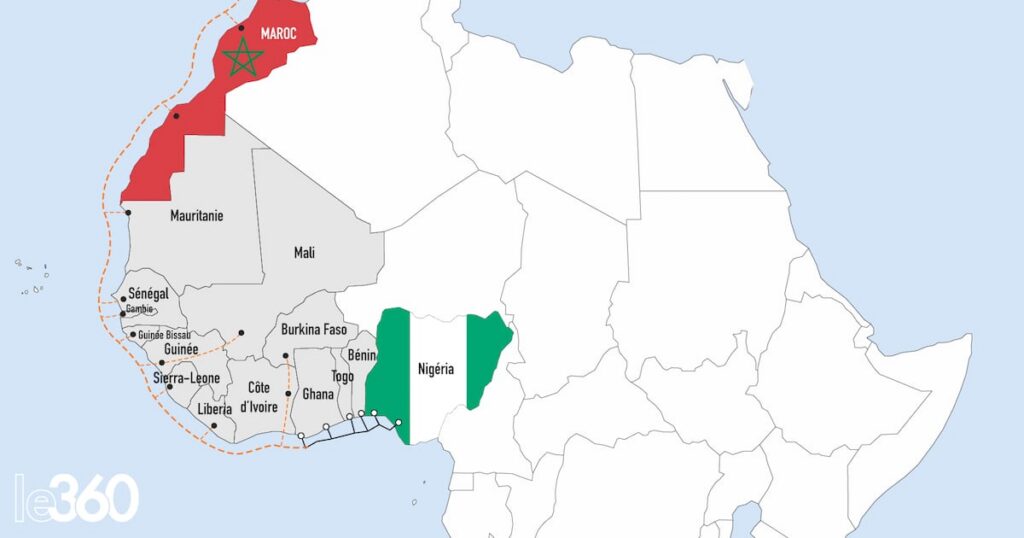
The Nigeria-Morocco gas pipeline project has reached a new milestone. Etafat, a Moroccan engineering and survey firm—and a subsidiary of the French group Parera—announced on LinkedIn the launch of initial topographic surveys along the northern segment of the future pipeline, covering Morocco, Mauritania, and Senegal.
The studies were set in motion following a meeting between Etafat’s experts and representatives from the Office National des Hydrocarbures et des Mines (ONHYM) in Morocco and the Nigerian Petroleum Company (NNPC). The company shared aerial images of the early survey operations, expressing pride in its role, stating it is «ready to tackle this strategic project with success».

These surveys—spanning topographic, geophysical, and geotechnical assessments—will continue until spring 2025, according to Stéphane Ciesielski, International Operations Director at Fondasol, the French partner collaborating with Etafat on this initiative.
Challenges beyond offshore surveys
Amin Bennouna, an energy expert, highlighted the additional complexity of these land-based topographic operations compared to offshore studies. «These surveys must account for technical constraints, access requirements via roads or transport networks, and land ownership issues—especially in urban expansion zones—to determine the most efficient pipeline route,» he explained.
The pipeline, spanning 5,600 km with an estimated cost of $25 billion, will originate in Nigeria and traverse 13 West African nations before reaching Morocco. There, it will link to the Maghreb-Europe Gas Pipeline, connecting to Europe’s broader gas network.