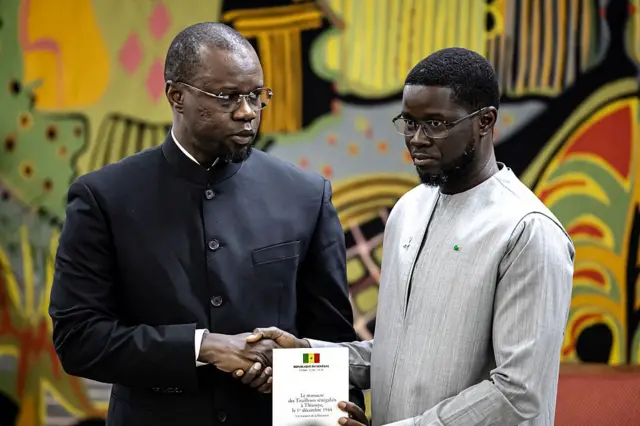
The growing political divide between Senegal’s former Prime Minister Ousmane Sonko and President Bassirou Diomaye Faye has reached a critical juncture. During a press briefing in Dakar, Sonko outlined the reasons behind his party’s decision to boycott the new government led by Prime Minister Ahmadou Alamine Mohamed Lô.
Sonko cited deep-rooted disagreements over key national policies as the primary cause of the conflict. Among the most pressing issues are judicial reform, accountability mechanisms, and the renegotiation of economic contracts deemed unfavorable to Senegal’s interests. Additionally, the management of public debt has emerged as a contentious topic.
The opposition leader emphasized that the government failed to provide sufficient assurances regarding financial commitments and future engagements with international lenders. He also voiced concerns over subsidy policies and the administration’s approach to judicial governance, describing it as misaligned with the needs of the Senegalese people.
Beyond policy differences, the composition of the new cabinet has intensified the dispute. Sonko argued that his party, which commands a strong majority in Senegal’s political landscape, deserved a substantial share of ministerial positions. He insisted that the Pastef could not participate in the government without securing at least half of the key ministries.
While questioning the legitimacy of the new administration—despite the inclusion of several figures aligned with his movement—Sonko ruled out immediate action to challenge the government’s authority. He clarified that the Pastef would not pursue a no-confidence motion, signaling a measured yet firm stance in the face of escalating tensions.
This public declaration underscores the deepening fractures within Senegal’s leadership and signals a period of heightened uncertainty in the relationship between the presidency and the party that spearheaded the 2024 political transition.