DR Congo: opposition leader accuses President Tshisekedi of prioritizing talks with M23 over national dialogue
The Democratic Republic of Congo is facing escalating political tensions as opposition figures challenge President Félix Tshisekedi’s approach to the ongoing conflict in the east. Olivier Kamitatu, Chief of Staff to opposition leader Moïse Katumbi, has publicly criticized the president’s preference for negotiating with the M23 rebel group through international channels rather than engaging in domestic political dialogue.
Criticism of the government’s negotiation strategy
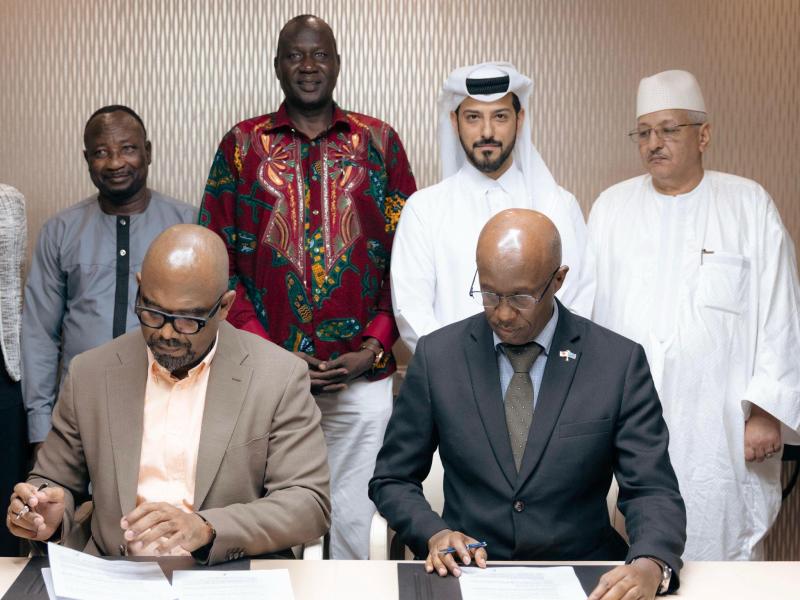
Speaking during a live broadcast with journalist Stanis Bujakera Tshiamala, Kamitatu questioned President Tshisekedi’s apparent comfort level in negotiations with the M23 alliance in Doha, compared to his reluctance to convene all Congolese political stakeholders for inclusive national discussions.
“It is clear that the head of state finds it easier to deal with the M23 than with his own opposition,” Kamitatu stated. He suggested that the president’s approach may be driven by factors that require public scrutiny, calling the situation both incomprehensible and counterproductive.
Calls for a comprehensive national dialogue
The opposition leader’s chief of staff emphasized that sustainable peace in the DRC cannot be achieved through fragmented agreements. He pointed to the failure of recent negotiation processes, including those in Doha and Montreux, where only two out of eight expected protocols have been signed—and even those remain unimplemented.
“The Congolese people have repeatedly shown that our strength lies in dialogue and consensus,” Kamitatu remarked. He called for a solution rooted in genuine national ownership, warning that superficial agreements without addressing underlying grievances will not bring lasting stability.
Reactions from civil society and regional observers
Kamitatu’s statements reflect growing frustration among political actors and civil society groups over the government’s handling of the crisis. The Catholic Church’s Episcopal Conference (CENCO) and the Evangelical Church of Congo (ECC) had previously proposed a consensual framework after consulting with various stakeholders—a proposal that reportedly received no response from Kinshasa.
The failure to implement basic agreements, such as ceasefires and prisoner exchanges, further underscores the challenges facing the government’s peace strategy. Kamitatu’s remarks highlight a widening gap between official narratives and the expectations of both the Congolese public and international partners.
Implications for regional stability
The political deadlock comes at a critical moment for the DRC, as security challenges in the east continue to destabilize the region. The M23 rebellion remains a major obstacle to peace, despite international mediation efforts. Kamitatu’s criticism suggests that without a more inclusive and transparent approach, the government’s diplomatic efforts may fail to gain traction with key stakeholders.
As the debate intensifies, the question remains: Can President Tshisekedi reconcile his international negotiation strategy with the urgent need for domestic political cohesion? The coming weeks will be decisive in determining whether the DRC can chart a path toward durable peace and stability.