
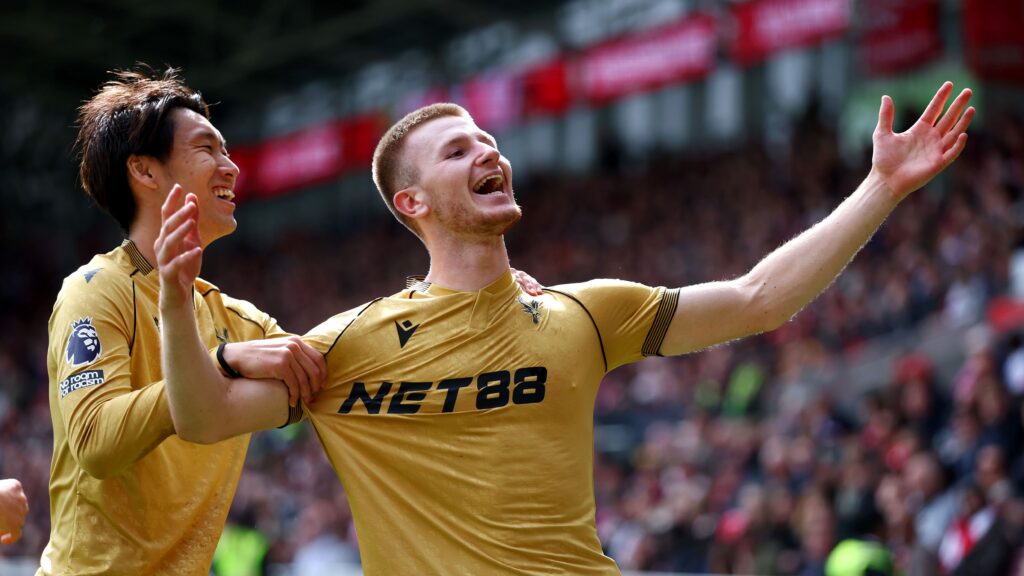
Tonight’s Europa Conference League final at the Red Bull Arena is not just another European tie—it’s a collision of two contrasting football philosophies, each chasing history in an era where underdogs are redefining the landscape. Crystal Palace and Rayo Vallecano may not be the glamorous names of European football, but they carry a shared ambition: to etch their names into club lore by lifting a continental trophy. For both, this is a rare chance to claim a first major honor on the international stage.
The clash between Oliver Glasner’s Palace and Iñigo Pérez’s Rayo is less about reputation than about tactics. While many expected Palace to cruise through the competition, the Eagles have faced turbulence in the Premier League, from injuries to player absences. Yet, Glasner has steered them through adversity, reinforcing his reputation as a manager who thrives under pressure. His tactical versatility and experience in knockout football—most notably the FA Cup triumph over Manchester City—have positioned Palace as a side capable of handling high-stakes moments.
On the opposite side, Rayo Vallecano’s journey has been even more unexpected. Pérez, once an assistant under Andoni Iraola, has transformed the Madrid-based club into a side that embraces controlled aggression. Though Rayo’s reputation as a pressing machine remains intact, their game has evolved: more tactical discipline, better ball progression, and a sharper identity. Their relentless transitions and direct approach have made them a nightmare for opponents, particularly when momentum shifts in their favor.
 Databall
Rayo’s controlled chaos and high-pressure game
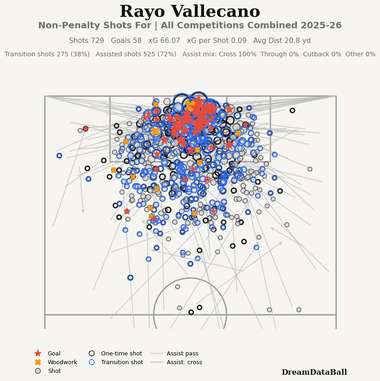
Rayo Vallecano’s identity is built on intensity and pressure, but Pérez has refined the chaos into something more structured. Their attack thrives on rapid transitions, with nearly 40% of their shots originating from counterattacks. Their shot map reveals a preference for central areas around the box, where they overload the penalty zone to create chances. While their average xG per shot is modest, the sheer volume and proximity to goal make them a constant threat.
Their season-long xG trends reflect a team that generates consistent offensive output despite defensive vulnerabilities. Matches often feel open and unpredictable, with Rayo riding the momentum of aggressive pressing. Yet, their defensive fragility—especially in second-ball situations—means they rarely dominate possession. Instead, they rely on forcing errors and capitalizing on chaos, a strategy that could unsettle even the most composed opponents.
Crystal Palace’s transition mastery and Adam Wharton’s influence
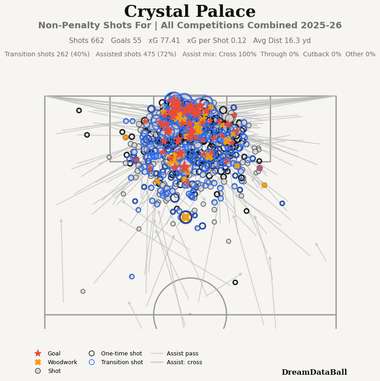
Crystal Palace’s offensive profile contrasts sharply with Rayo’s. Their shot map shows a concentration of high-quality attempts in central zones, with fewer speculative long-range strikes. About 40% of their shots also come from transitions, but their approach is more polished. They prioritize precision over volume, converting vertical attacks into clear-cut chances rather than overwhelming opponents with sheer numbers.
 Databall
At the heart of Palace’s transitional play is Adam Wharton, a midfielder whose profile embodies modern football’s ideal: bold, intelligent, and relentlessly vertical. Wharton doesn’t just recycle possession—he dictates tempo, breaks lines, and creates danger with a mix of passes, dribbles, and decisive interventions. His ability to accelerate play and exploit defensive gaps makes him a pivotal figure in Palace’s quest for control.
Wharton’s presence in the buildup to shots is constant. His passes and dribbles frequently lead to dangerous situations in the half-spaces and the edges of the box, where a single touch or flick can dismantle a defensive block. Against Rayo’s aggressive pressing, Wharton’s composure and vision could be the difference between a controlled transition and a chaotic counterattack.
Can Rayo exploit Palace’s set-piece weaknesses?
While Rayo Vallecano isn’t traditionally a dominant force on set pieces, their opponents’ vulnerabilities in these situations could prove decisive. Crystal Palace ranks among the Premier League’s poorest defenders on defensive set pieces, particularly when it comes to second-ball situations. Their xG conceded per corner or throw-in is alarmingly high, with opponents consistently creating high-quality chances in central areas after the initial clearance.
 Databall
The data is revealing: Palace concedes shots in central zones at an alarming rate, particularly after the first clearance. Opponents consistently find space to shoot from inside the box, with xG values exceeding 0.31 per attempt—a clear indication of structural fragility. For Rayo, who excels in second-ball situations and central overloads, this presents a golden opportunity. They don’t need elaborate routines; they just need to apply relentless pressure, overload the middle, and pounce on the second contact.
A final balanced by chaos
This final is not a clash of giants but a collision of two distinct footballing minds. Glasner’s Palace represents control, structure, and clinical efficiency, while Pérez’s Rayo thrives on intensity, unpredictability, and emotional volatility. Palace may have the edge in individual quality and physicality, but Rayo’s ability to disrupt and dominate transitions could tip the scales.
The outcome may hinge on moments of chaos: a Wharton interception, a Rayo pressing trap, or a Palace set piece gone wrong. In a one-off final, chaos often decides the result. Tonight, both teams will embrace it—one as a weapon, the other as a risk.
Regardless of the winner, this final is no longer about underdogs. It’s a showdown between two managers with opposing philosophies, each fighting for the defining moment of their careers.



More Stories
Ligue 1 clash: monaco hosts marseille for an early season showdown
Lille vs PSG: where to watch the ligue 1 clash tonight
Suivez Lille – PSG : Où Regarder, Compos et Cotes