
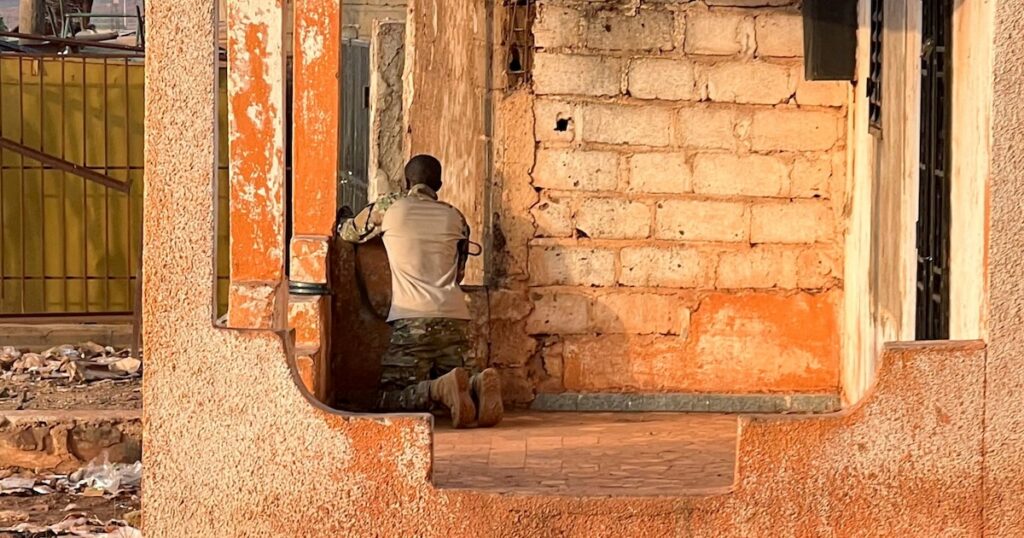
On April 26, a significant setback unfolded in Kidal, northeastern Mali. Russian mercenaries from the Africa Corps—successors to the Wagner Group since 2025 and allies of the Bamako junta—were forced into a humiliating retreat. Social media footage captured the scene: disarmed fighters hastily boarding trucks under pressure from the GSIM (Group for the Support of Islam and Muslims), an Al-Qaeda affiliate, and their Tuareg rebel allies from the Front for the Liberation of Azawad (FLA). The Africa Corps abandoned a staggering number of armored vehicles and helicopters, leaving them in the hands of jihadists and rebels. Several Malian soldiers were also taken prisoner following brief clashes.
coordinated attacks shake Mali’s capital
Since Saturday, Mali has faced a wave of coordinated assaults by GSIM fighters, allied with the separatist Tuareg FLA, targeting key positions across the country. Strategic locations in Bamako, Kati—home to the nation’s primary military base—and Gao, a former UN stronghold, were all hit. At least six cities endured these attacks, signaling a dramatic escalation in the conflict.
kidals fall marks Russia’s strategic blunder
On Monday, the Africa Corps, controlled by Russia’s Defense Ministry, confirmed its withdrawal from Kidal. The retreat was a bitter blow to Moscow’s allies in Bamako. In November 2023, Wagner Group mercenaries had proudly seized the city, hoisting their infamous skull-and-crossbones flag—a rare tactical victory for Russia’s military presence in Mali. “Kidal was the only true strategic success Russia had achieved since deploying to Mali in 2021,” noted Djenabou Cissé, a researcher with the Foundation for Strategic Research, in an interview. Its loss underscores the fragility of Moscow’s military ambitions in the region.
junata’s reliance on mercenaries backfires
Since 2021, Mali’s military junta has leaned heavily on Russian mercenaries—first Wagner, now Africa Corps—to counter jihadist advances. Yet violence has only worsened. Reports from The Washington Post highlight that some of the deadliest attacks on civilians were carried out by Russian mercenaries and Malian troops. Between 2021 and 2025, UN and human rights groups documented a surge in conflict-related sexual violence linked to these forces, according to Le Monde.
Wassim Nasr, a journalist specializing in jihadist movements, emphasized the mercenaries’ ineffectiveness: “It was always clear that Russian forces, whether under Wagner or Africa Corps, were ineffective partners in the fight against terrorism. Saturday’s attacks only confirmed their shortcomings.”
Bamako under siege as jihadists advance
Videos emerging from across Mali revealed the scale of the assaults. In Kidal, jihadists stormed the governor’s office, while GSIM fighters entered Bamako unopposed. In Kati, a bombing destroyed the home of Defense Minister Sadio Camara—who was killed during the offensive. The attacks have tightened the noose around Bamako, with jihadists reportedly imposing blockades to suffocate the economy.
trahison at Kidal: Russia’s failed gambit
On Monday, Prime Minister Abdoulaye Maïga addressed the nation, honoring the late defense minister. Meanwhile, junta leader Assimi Goïta declared in a televised address that the situation was “under control,” vowing to pursue operations until the groups behind the attacks were “fully neutralized.”
However, skepticism lingers. A Malian officer told RFI that local authorities had warned Africa Corps three days before the assault—yet no action was taken. “The Russians negotiated their retreat,” the officer alleged. With Kidal lost, speculation grows that Africa Corps may abandon other northern strongholds, further weakening Mali’s beleaguered army.
kremlin remains silent on africa corps’ future
During a daily briefing on April 28, Kremlin spokesperson Dmitri Peskov refused to address whether Africa Corps could regain control. He did claim, however, that the mercenaries had prevented a coup attempt by FLA and GSIM fighters, as reported by Reuters.


More Stories
Niger: Tiani faces fallout from special forces anger after Russian intervention
Crisis in Niger, IMF agreement in Sénégal, and Moroccan elections: Five essential stories
RDC-Israël : un rapprochement aux enjeux multiples