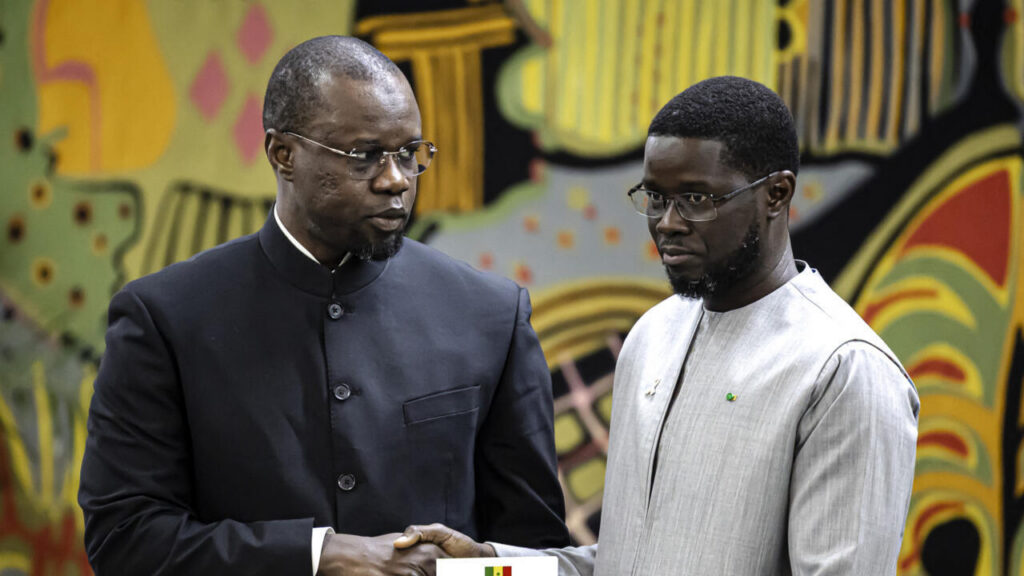
After just two years in power, the political alliance between Bassirou Diomaye Faye and Ousmane Sonko has collapsed. The President has removed Sonko from the Prime Minister position, effectively ending their partnership. Now serving as President of the National Assembly, Sonko remains a dominant figure in the Pastef party, which holds the majority in Parliament but has been excluded from the government. How did this rift develop, and what does it mean for the future of governance in Senegal?
From partnership to political rupture
The Diomaye-Sonko tandem, once hailed as a symbol of renewal in Senegalese politics, has dissolved under pressure. The decision to exclude Sonko from the Prime Minister role marks a significant shift in the balance of power. Meanwhile, Sonko’s election as President of the National Assembly and his continued leadership of Pastef—despite his absence from the executive—highlight the deepening divisions within the ruling coalition.
This political fracture raises critical questions: Can the President and the Assembly President coexist under such strained conditions? Will these tensions overshadow the pressing needs of the Senegalese people?
Key figures in the debate
The discussion on these developments features prominent voices from Senegal’s political and intellectual spheres:
- Abdoulaye Tine, Minister Advisor and Spokesperson for the Presidency of the Republic
- Amadou Ba, Former Minister of Culture, Deputy, and National Secretary in charge of Communication for Pastef
- Babacar Ndiaye, Political Analyst and Research Director at the Wathi think tank
The stakes for Senegal’s future
The current political climate in Senegal is marked by uncertainty. With Pastef controlling Parliament but excluded from the government, the stage is set for a potential power struggle. The risk of prolonged political tensions could divert attention from essential priorities such as economic development, social welfare, and national cohesion.
As the country navigates this challenging period, the ability of its leaders to find common ground will be crucial. The decisions made in the coming weeks could shape Senegal’s political landscape for years to come.