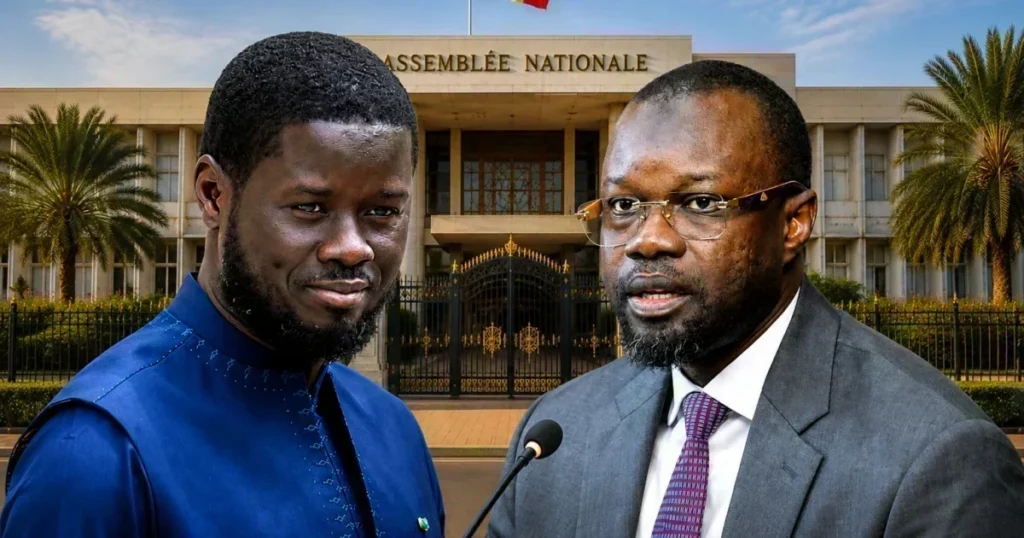
political clash over special credits at Senegal’s assembly
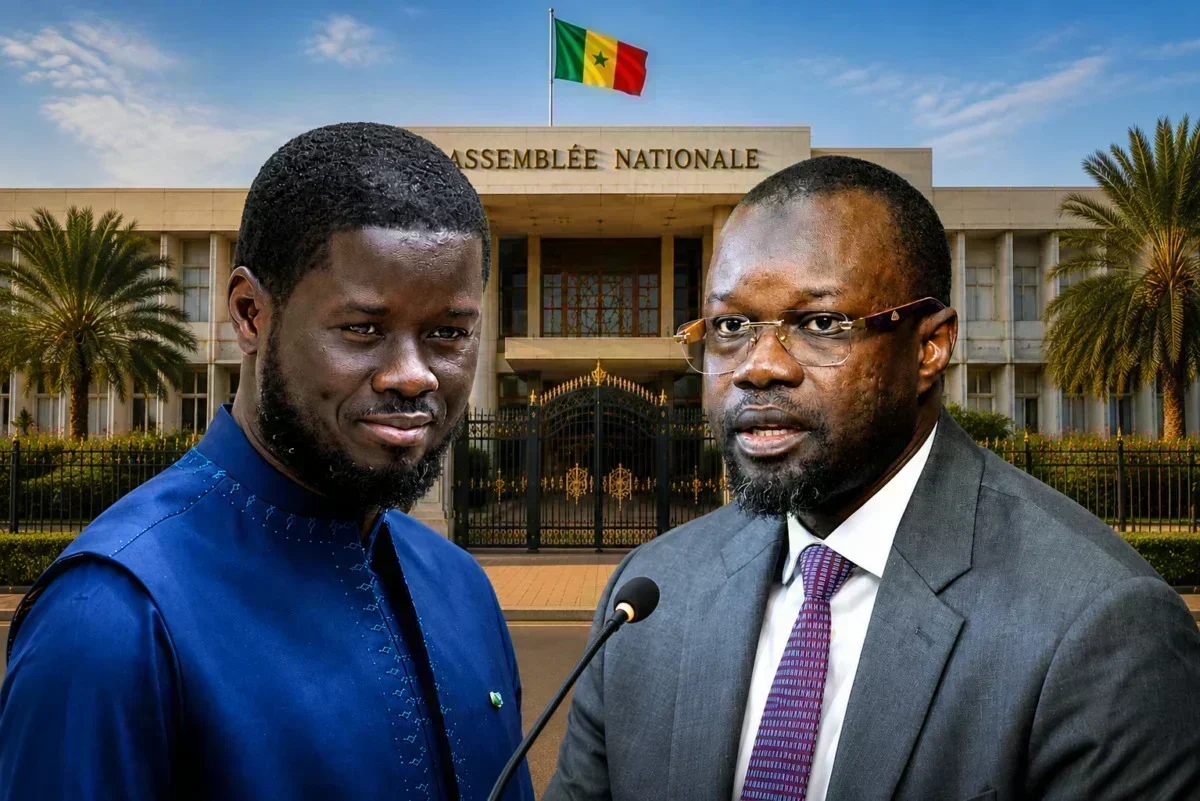
Tensions escalate between Senegal’s executive and legislative branches as lawmaking processes become battlegrounds for legal, procedural, and personal disputes.
The delicate balance of power at Senegal’s National Assembly continues to fray. Following debates over assets declarations, another intense confrontation emerged between the executive and legislative branches during technical commission reviews of a bill regulating special credits. The latest flashpoint? President Bassirou Diomaye Faye’s decision to send Justice Minister Moussa Sarr instead of Economy Minister Cheikh Diba to the Assembly. Once again, the executive introduced multiple amendments—all of which were swiftly rejected by Pastef lawmakers. Will the controversial Article 82 be invoked again next week during the plenary session?
Technical commission deliberations on the bill—proposed by Guy Marius Sagna, Mame Diarra Bèye, and Alphonse Mané Sambou—began around 3 PM under the leadership of Commission Chair Cherif Ahmed Dicko. Justice Minister Moussa Sarr immediately raised concerns about ambiguities in the draft legislation, proposing six amendments. Pastef deputies requested—and were granted—a brief recess to review the proposals before reconvening.
An unexpected ministerial substitution sparks controversy
Ordinarily, the Economy Minister would represent the government in discussions on financial matters, including special credits. However, President Faye circumvented this convention by signing an interim decree on August 7—placing Justice Minister Moussa Sarr at the forefront. The move sent a clear signal to observers, raising questions about the executive’s strategic intentions.
During the session, Sarr took issue with the bill’s drafting inconsistencies, submitting amendments that sought to expand the scope of special credits. These ranged from redefining their purpose to altering oversight mechanisms. Yet, the Pastef-led commission swiftly rejected all six amendments, adopting only one introduced by Alphonse Mané Sambou. This narrowly approved change reinforced the role of the Finance and Budget Control Commission in overseeing special credit expenditures.
All executive amendments rejected in a single session
The government’s proposed amendments faced unanimous rejection. One of the most contentious revisions sought to include credits allocated to the National Assembly and Prime Minister within the bill’s scope. Another targeted Article 5, which originally excluded social and political expenditures from special credits. The executive also pushed to redefine special credits as encompassing broader national interests, including social cohesion and humanitarian urgencies—far beyond Pastef’s original defense and security-focused definition.
Control mechanisms proved another sticking point. While the government argued for adherence to existing laws and regulations, legislators insisted on parliamentary oversight through the Finance Commission—an amendment later strengthened by Mané Sambou’s proposal.
The Assembly ultimately approved the Pastef-sponsored bill, setting the stage for next week’s plenary vote. Analysts anticipate the executive will reintroduce its rejected amendments, triggering another round of legislative resistance. With Speaker Ousmane Sonko previously vowing to block Article 82 unless applied to draft laws, the stage is set for another constitutional referral.

More Stories
Can Senegal’s local elections be Bassirou Diomaye Faye’s make-or-break moment?
Senegal’s parliament: What power does Ousmane Sonko hold to derail the 2026 budget?
Senegal’s December 2 dilemma: can Diomaye Faye’s gamble reshape the nation’s future?