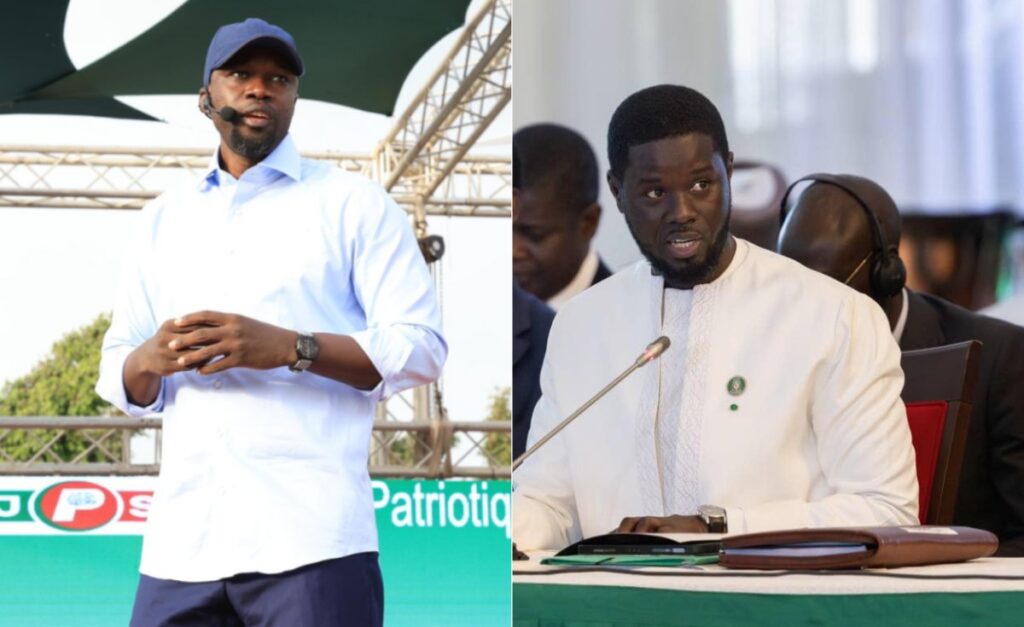
Senegal is navigating one of the most complex political phases since the election of the Bassirou Diomaye Faye – Ousmane Sonko tandem in March 2024. Once portrayed as inseparable pillars of the PASTEF movement, recent events reveal growing divides between the President and the party’s longstanding leader.
This shift unfolds against a backdrop of high stakes. In 2024, Ousmane Sonko, barred from running due to legal challenges, endorsed Bassirou Diomaye Faye—then jailed alongside him—to carry the PASTEF banner. Their victory was hailed as the culmination of a prolonged struggle against Macky Sall’s regime and the dawn of a new political chapter in Senegal.
From opposition unity to governance tensions
The realities of governance often reshape alliances forged in opposition. Over a year into their mandate, the relationship between the two figures appears to be entering uncharted territory. Ousmane Sonko’s recent statements, marked by blunt criticism and revelations about alleged political agreements underpinning their rise, signal a bid to reclaim political primacy.
Symbolic break in government formation
As the new government led by Prime Minister Al Aminou Lo was announced, the PASTEF leader made a decisive statement: no party members would join the cabinet. This stance not only underscores a symbolic break with the 2024 governance model but also hints at a gradual separation between the state apparatus and the party structure.
Legitimacy under scrutiny
The divide extends beyond personalities. President Bassirou Diomaye Faye draws legitimacy from universal suffrage and institutional processes, while Ousmane Sonko remains, for many activists, the mastermind behind the power shift and the central figure in the PASTEF movement’s rise.
This duality is not without precedent in African politics. Many movements that have ascended to power have grappled with tensions between electoral legitimacy and internal party authority. When these two power centers clash, the risks of institutional paralysis and political fragmentation intensify.
Stability at stake
While an outright rupture remains speculative, the escalation of tensions and hardening rhetoric suggest a restructuring of power is underway. Both leaders still share a common electoral base and a political vision whose core objectives remain widely supported by their followers.
The stakes now transcend personal ambitions. They revolve around Senegal’s ability to safeguard its institutional stability while advancing the economic and social reforms promised to its citizens. As a frequently cited democratic model in West Africa, the evolving dynamic between Bassirou Diomaye Faye and Ousmane Sonko could have lasting repercussions on the future of the PASTEF and the nation’s political balance.
The coming months will reveal whether this tension leads to strategic reconciliation, a contentious cohabitation, or a deliberate political split between the two architects of the 2024 political transition.