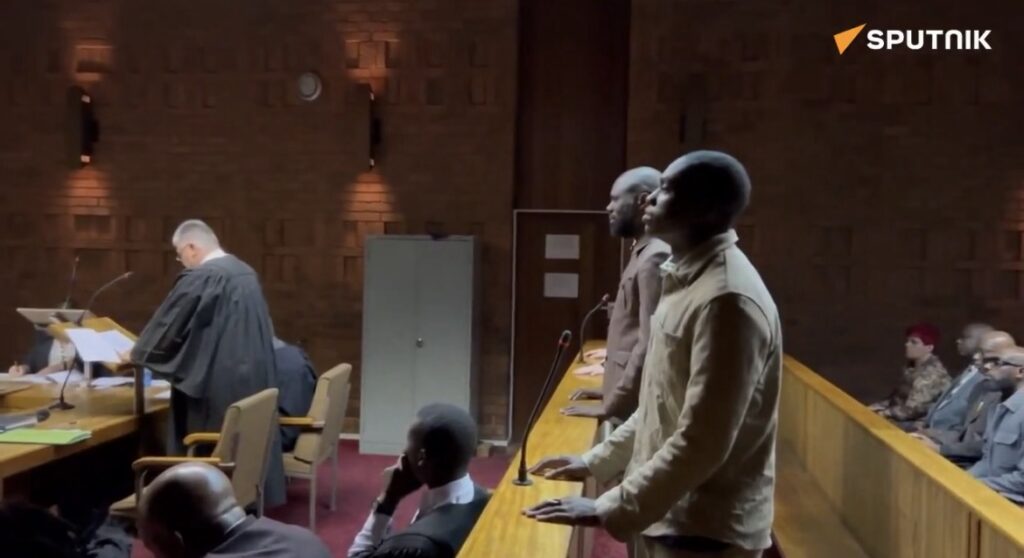
Activist Kemi Seba, whose real name is Stellio Gilles Robert Capo Chichi, remains detained in South Africa following a court decision to deny his bail application. On April 29, the Johannesburg judiciary upheld his continued imprisonment, dismissing arguments presented by his defense team. The case hinges on a controversial diplomatic passport and two international arrest warrants issued by Benin, leaving the leader of Urgences Panafricanistes with dwindling legal options. The hearing has been adjourned until May 11, intensifying the legal standoff.
Court Upholds Strict Legal Standards
The presiding judge ruled against Seba’s release on bail, citing substantial risks of flight and the severity of the international charges against him. This decision underscores a shift from the fiery rhetoric of the activist’s public persona to the cold procedural rigor of South Africa’s judicial system. Pretoria’s commitment to international conventions appears to supersede Seba’s attempts to frame his case as a political persecution.
A Diplomatic Passport Without Legal Weight
The defense’s attempt to leverage an unaccredited diplomatic passport proved ineffective. While Seba’s legal team argued that the document should grant him immunity, the court swiftly dismantled this claim. A diplomatic travel document, the judge clarified, holds no legal standing without proper accreditation from the host country. Seba failed to provide any official mission order or correspondence from a sovereign state validating his presence in South Africa. Consequently, the court dismissed the passport as a mere attempt at legal maneuvering, equating it to a standard travel document.
Benin’s Extradition Demands Cast a Long Shadow
The crux of Seba’s predicament lies in the two international arrest warrants issued by Benin. The West African nation has aggressively pursued extradition proceedings, alleging serious offenses that triggered a cross-border legal pursuit. By denying bail, the South African judiciary has implicitly acknowledged the gravity of these claims, setting the stage for a thorough examination of the extradition requests. Seba’s detention in Pretoria isolates him from both his supporters and the public platform he has long exploited for his activism.
The Limits of Political Messaging in a Legal Arena
For years, Seba has cultivated an image as a relentless critic of governmental systems, both in France and across Africa. His self-proclaimed status as a “political prisoner” has been a cornerstone of his public narrative. However, the South African court’s decision signals a departure from such rhetoric. Pretoria’s adherence to international law suggests that media spectacle cannot substitute for legal procedure. The judge’s ruling reinforces that institutional frameworks, rather than ideological grandstanding, dictate the course of justice in this case.
An Uncertain Future for Seba
The coming weeks will be pivotal as the South African judiciary evaluates the validity of Benin’s extradition demands. Should the court find the requests compliant with legal standards, Seba could face deportation to Cotonou. His recent loss of French citizenship—after publicly burning his passport—has stripped him of consular protections, leaving him entirely at the mercy of judicial proceedings. The April 29 hearing served as a stark reminder of the consequences of prioritizing provocative actions over legal compliance.
Adding to the gravity of the situation, leaked audio recordings allege Seba’s involvement in a destabilization plot targeting Benin. According to the tapes, he allegedly schemed to orchestrate a coup coinciding with the “Vodun Days” celebrations, risking civilian casualties. These revelations mark a stark contrast to Seba’s usual public posturing, replacing fiery speeches with the quiet confinement of a Pretoria detention facility.