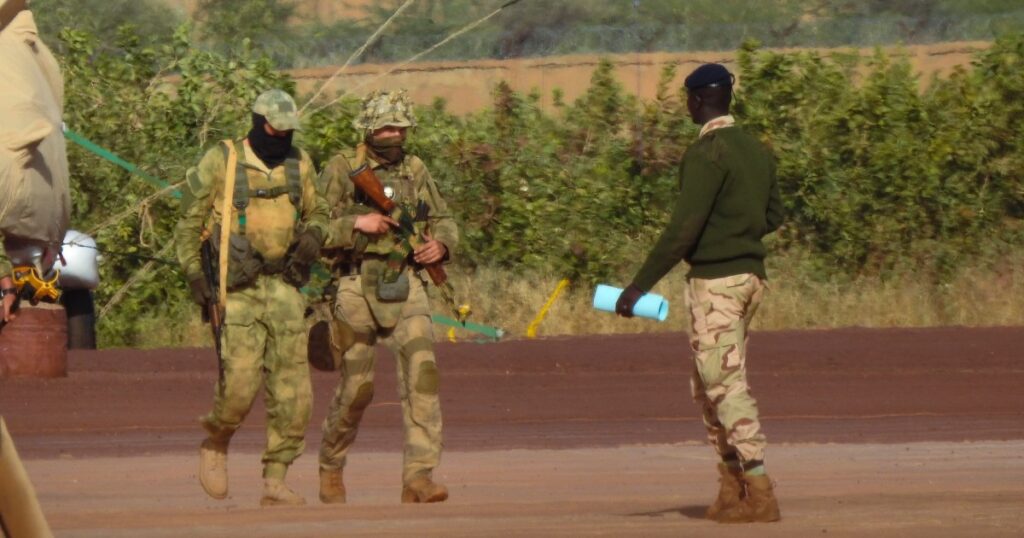
As Mali grapples with escalating armed conflicts, the role of Russia’s security forces in the West African nation has come under intense scrutiny. Following coordinated attacks by armed groups that targeted key military installations, Malian authorities reported receiving air support from Russian forces to thwart rebel advances toward the capital, Bamako.
The security landscape in Mali remains precarious, with government forces struggling to reclaim control from Tuareg separatists and al-Qaeda-linked factions. These rebel groups have vowed to encircle Bamako, intensifying pressure on the military-led administration.
Russian forces in Mali: deployment and withdrawal
In the aftermath of France’s withdrawal of over 4,000 troops in 2022, Mali turned to Russia for military assistance. Initially deployed under the Wagner Group, Russian fighters were later reorganized into the Africa Corps, a unit directly under the Russian Defence Ministry. The shift followed the death of Wagner’s founder, Yevgeny Prigozhin, in 2023.
During recent offensives by rebel groups, reports emerged that Russian forces withdrew from Kidal, a strategic northern city. Africa Corps confirmed the withdrawal was a joint decision with Malian authorities, though questions persist about the circumstances. Analysts and social media users in Mali have raised doubts about the effectiveness of Russia’s military support, particularly as violence surges in neighboring Sahel nations like Burkina Faso and Niger.
key developments in the conflict
On Saturday, coordinated attacks struck multiple cities, including Bamako, Kidal, Gao, and Sevare. The Malian Defence Minister, Sadio Camara, was killed, and Kidal was temporarily seized by rebels. The military government claimed to have killed over 200 attackers, but the rapid advances by armed groups exposed vulnerabilities in Mali’s defences.
Russian fighters, originally part of Wagner, were noted for their aggressive tactics, while Africa Corps has adopted a more defensive posture. However, during the recent attacks, Russian forces were seen retreating from Kidal, reportedly after negotiations involving neighboring Algeria. The withdrawal left behind significant equipment, including a drone station, raising concerns about Russia’s commitment to Mali’s security.
Russia’s strategic missteps in the Sahel
Russia positioned itself as an alternative to Western influence in the Sahel, marketing its forces as non-colonial partners. However, the recent failures in Mali have tarnished its reputation. While Russian fighters have operated in the Central African Republic, Libya, and Sudan, their presence in the Sahel—particularly in Burkina Faso and Niger—has been limited and largely supervisory.
Analysts suggest that Russia’s inability to prevent the loss of Kidal and the killing of a key military leader, Camara, has undermined its credibility. Ulf Laessing, head of the Konrad-Adenauer Stiftung’s West Africa program in Bamako, noted that the withdrawal from Kidal, a symbolic Tuareg stronghold, signals a loss of confidence in Russia’s capabilities.
questions about Russia’s future role
Despite claims by Africa Corps and Russia’s Defence Ministry that air support was provided to Malian troops, skepticism remains. The Malian military has not confirmed Russia’s involvement in the withdrawal decision, and regional leaders have criticized the lack of preparedness. With rebel groups now encircling Bamako, the effectiveness of Russia’s ongoing operations is increasingly in doubt.
As Mali’s military leader, Assimi Goita, reassures the public of heightened security measures, the broader implications of Russia’s struggles in the Sahel are becoming clear. The reputational damage may deter other African nations from seeking Russia’s military partnership, leaving the future of its influence in the region uncertain.