On the surface, the nations spanning the Sahelian belt – a geographical expanse stretching from Mali to Chad – hardly project the image of a new economic frontier. Frankly, this isn’t the Singapore of foreign direct investment. Key economic indicators for Mali, Burkina Faso, and Niger reveal significant challenges. In Mali, 47% of its 25.9 million inhabitants are under 15, only 25% of its land is arable, and the country ranks 188th out of 193 in the UNDP’s Human Development Index. Nearly 45% of its population lives below the poverty line. Ouagadougou and Niamey present similar statistics, with 40% and 60.5% of their populations, respectively, living in poverty (World Bank data). All three are landlocked nations, currently led by military juntas that have formed the Alliance of Sahel States (AES), seemingly with the distant blessing of the Kremlin, aiming to dismantle remaining French strongholds. Their proclaimed anti-French, anti-Western, and anti-democratic stance was intended to usher in prosperity for their citizens, a prosperity they claimed Europeans had withheld. However, this has not materialized. Nevertheless, two neighboring countries, Algeria and Morocco, are now extending their services to these nations.
Morocco: an Atlantic gateway
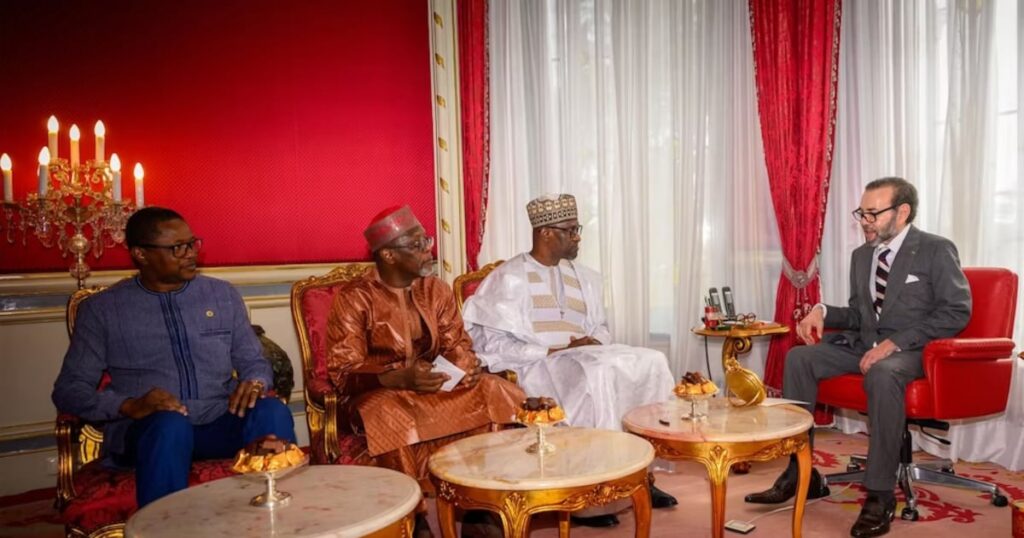
Through the development of the Dakhla Atlantic port, the Kingdom of Morocco is proposing a facility in Western Sahara comparable to Tanger Med, a significant hub connecting with Europe. Construction is anticipated to conclude by 2028, with operations commencing the following year. The strategic vision for this infrastructure is to serve as a primary entry point for West Africa and a crucial conduit to the Americas. Rabat has already hosted the three leaders of the AES. From a geopolitical perspective, this is a sharp proposition: a deep-water port, potentially linked by a future railway (though not yet confirmed), would provide these three landlocked countries with direct access to the ocean, thus alleviating their isolation. The overarching goal is to stimulate their economies. For Morocco, which faces geographical isolation due to its ongoing conflict with Algeria, this initiative simultaneously demonstrates that its development plan for Western Sahara will benefit the entire sub-region. Furthermore, this economic advancement is intended to indirectly combat the jihadist groups destabilizing the Sahel by offering hope and opportunities to a desperate youth population. The Sahel region is experiencing a soaring birth rate, with its population projected to double within a decade.
Algeria: a trans-Saharan gas pipeline to Europe
Algeria, which previously experienced strained relations with Niger, reconciled with Abderrahmane Tiani, head of the military government in Niamey, in mid-February. Algeria proposed to commence construction of the Trans-Saharan gas pipeline segment, originating in Nigeria and now slated to pass through Niger before reaching Algeria, immediately after Ramadan. This 4800-kilometer pipeline is designed to supply natural gas to Europe. Sonatrach, Algeria’s national hydrocarbons company, would oversee construction within Nigerien territory and provide training to Nigeriens for its operation. This commitment to local capacity building offers a distinct advantage over some other foreign investors, such as China, which often do not prioritize training local personnel in the management of their national resources.
two complementary, yet clashing, strategies
In Madrid and subsequently Washington (February 23rd and 24th), discussions have commenced regarding Morocco’s autonomy plan for Western Sahara. Should this conflict, now in its fiftieth year, reach a resolution, Algeria and Morocco could potentially collaborate on the Sahel’s explosively complex security and demographic challenges. Such cooperation would prevent the AES states from exploiting the existing rivalries between the two regional powers.
Jihadism thrives on the combined scourges of extreme poverty and authoritarian governance. Both Algeria and Morocco, independently, seek to disrupt this destructive cycle. Each nation leverages its unique strengths: Algeria offers its vast hydrocarbon resources and Sonatrach’s specialized expertise, while Rabat champions its grand infrastructure projects and its ambition to serve as a pivotal hub connecting three continents (Africa, America, Europe). These two strategies, though inherently complementary, are unfortunately at odds due to the enduring Sahrawi conflict. This is a missed opportunity for greater regional synergy. Notably, on September 26, 2025, Mali’s Prime Minister, Abdoulaye Maïga, publicly demanded that Algeria “cease supporting international terrorism.” In response, Algeria’s Foreign Minister, Ahmed Attaf, denounced this as “the rambling of a ruffian.”