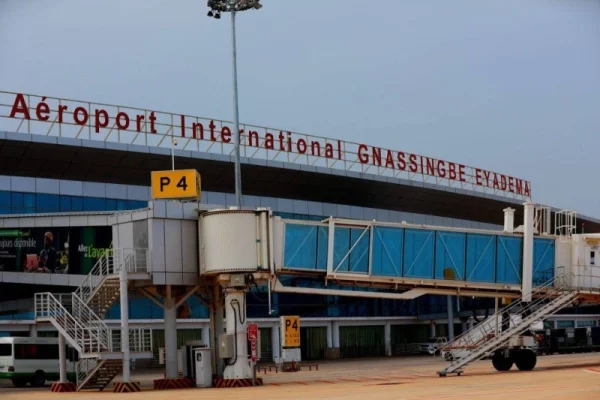
The third edition of the Biashara Afrika panafrican forum in Lomé kicked off on a dramatic note, turning a high-profile economic gathering into a real-time case study on continental integration challenges. What was meant to showcase the African Continental Free Trade Area (AfCFTA) and its promise of a 1.4 billion-consumer market instead became a showcase of bureaucratic absurdities when two African investors found themselves blocked at Lomé Gnassingbé Eyadéma International Airport.
What began as a routine arrival for the Nigerian and Ghanaian businessmen—both holding valid ECOWAS passports—ended in humiliation. Despite the decades-old commitment to free movement within the Economic Community of West African States (ECOWAS), both were denied entry unless they produced European passports and secured temporary visas. The message was clear: in Togo, holding an African passport can be less valuable than holding a European one.
Dr. Jumoke Oduwole, Nigeria’s Minister of Industry, Trade and Investment, didn’t mince words during her keynote. She recounted how one investor, a finance services professional, immediately reconsidered his plans after the ordeal. “He told me he wouldn’t consider investing here. We hadn’t even left the airport, and his decision was already made,” she said. “A similar situation where a European would need a visa to enter the EU on an African passport? It would never happen.”
ADVERTISING
The paradox of integration: bureaucracy trumps policy
For a country positioning itself as a regional logistics and financial hub, the incident was a public relations disaster. Visa requirements for neighboring Africans don’t just inconvenience travelers—they repel investment. At Lomé Airport, an African investor gains faster entry by flashing a European passport. The ECOWAS one? Effectively optional.
This isn’t just an inconvenience—it’s a structural weakness. The AfCFTA promises a unified market worth $3.4 trillion and 1.4 billion consumers. Yet its credibility is undermined daily by inconsistent border policies that treat African travelers differently based on passport color.
A 48-hour ultimatum to fix the breach
Confronted with the spectacle of African investors being turned away at the very forum celebrating the AfCFTA, President Faure Gnassingbé broke protocol. No drawn-out inquiries. No parliamentary committees scheduled six months out. Instead, he issued a blunt directive: “I give the Minister of Security 48 hours to resolve this anomaly.”
The clock is ticking. By the time Biashara Afrika 2026 wraps up, Togo’s immigration services must demonstrate they’ve learned the lesson: border procedures should facilitate movement, not obstruct it. The forum had set out to dismantle non-tariff trade barriers across Africa. Ironically, it took a single misplaced stamp at Lomé Airport to reveal just how fragile that vision remains.
ZLECAf’s credibility crisis: free movement or empty slogan?
Economists and entrepreneurs at the forum were unanimous. “This isn’t just an isolated incident—it’s a warning signal,” said an Ivorian economist. “Without real free movement of people, the AfCFTA will remain a hollow promise.” A Ghanaian entrepreneur added, “If we need a European passport to invest in Africa, then integration is nothing but a slogan.”
The lesson from Lomé is stark: the continent’s integration ambitions are being sabotaged not by lack of policy, but by entrenched administrative habits. The next steps are clear—harmonize visa rules, digitize border processes, and above all, ensure political will matches rhetorical commitment. Because in Africa today, a poorly placed stamp can cost millions in lost investment—and years of trust.