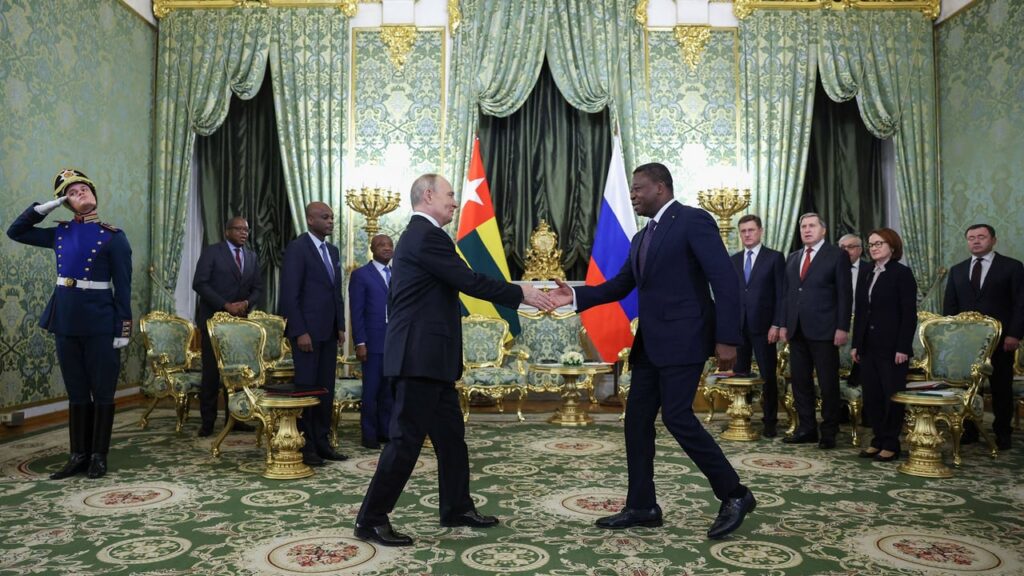
Lomé is quietly reshaping its security partnerships in West Africa’s volatile Sahel region. The Togolese government has been quietly strengthening ties with Ankara and Moscow, raising questions about the long-term implications for regional stability.
Recently, Togo has welcomed military advisors from Russia’s Africa Corps and struck defense agreements with Turkey. These moves follow years of clandestine cooperation aimed at combating the escalating threat posed by armed groups in neighboring Sahel nations.
From covert cooperation to open military ties
While Togo has historically relied on traditional Western allies for security support, recent shifts suggest a strategic pivot toward non-Western partners. The Africa Corps, a Russian military entity active across Africa, has reportedly established a presence in the country since 2025, offering specialized training and logistical assistance.
Meanwhile, Turkey has emerged as a key partner in aerial surveillance and intelligence-sharing. Ankara’s drones and technical expertise have been deployed in Togo’s northern Savanes region, where jihadist factions have intensified cross-border attacks from neighboring Burkina Faso.
Why Lomé is diversifying its defense partnerships
Analysts point to several factors driving Togo’s recalibration of its military alliances. First, the growing instability in the Sahel has forced neighboring states to seek alternative sources of security support. Second, traditional partners like France have scaled back their military footprint, leaving a void that non-Western actors are now filling.
For President Faure Gnassingbé, the decision reflects a pragmatic approach to safeguarding national security amid regional chaos. By engaging with Russia and Turkey, Lomé gains access to advanced military hardware and training without the political conditions often attached to Western aid.
Regional reactions and potential risks
The emergence of Russian and Turkish influence in Togo has not gone unnoticed. While some analysts argue that these partnerships could enhance regional counterterrorism efforts, others warn of potential geopolitical tensions. The Africa Corps’ involvement, in particular, has drawn scrutiny due to its murky operational history in other African nations.
Neighboring countries in the Economic Community of West African States (ECOWAS) are closely monitoring the situation. Some officials privately express concerns that Togo’s new alliances could complicate collective security initiatives, particularly as jihadist groups continue to exploit porous borders.
Looking ahead: What this means for West Africa’s security landscape
The coming months will be critical in determining whether Togo’s strategy pays off. If the Russia-Turkey cooperation yields tangible results in combating terrorism, other Sahel nations may follow suit. However, if the partnerships introduce new vulnerabilities—such as foreign interference or opaque military agreements—the risks could outweigh the benefits.
One thing is certain: Lomé’s evolving security posture marks a significant shift in West Africa’s geopolitical dynamics, with implications far beyond its borders.
More Stories
Can Barrick Gold’s Loulo-Gounkoto ‘peace deal’ survive Mali’s corruption storm?
Can Niger still call itself a state of law after jailing lawyer Abdourahamane Lirwana?
Can Benin replicate its 2023 financing success with 328 billion FCFA in 2026?