
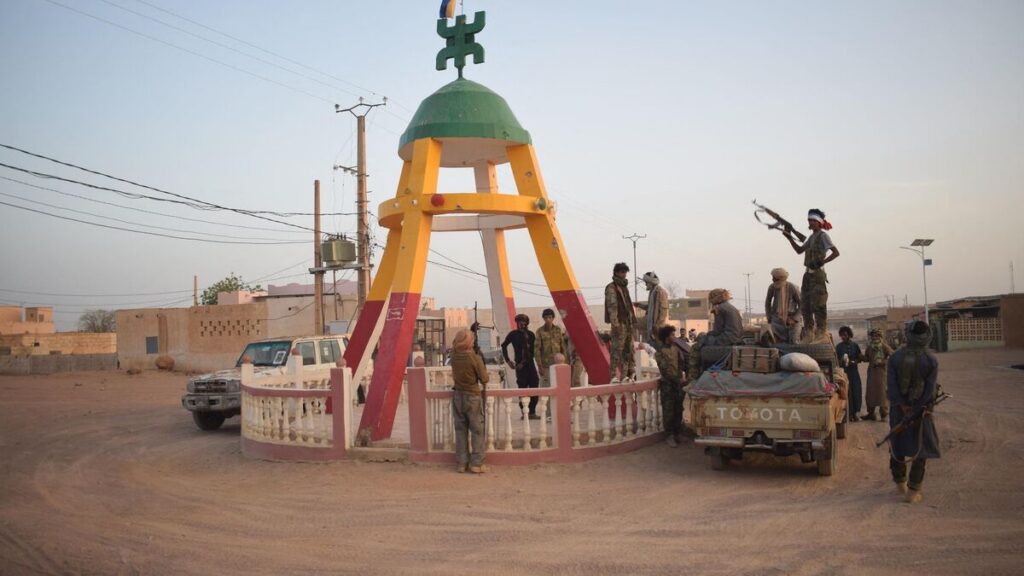
Tuareg rebels of the Azawad Liberation Front (FLA) coalition gather at the Kidal roundabout in Kidal, on April 26, 2026. April 25, 2026's shock attacks, synchronised by Tuareg rebels of the Azawad Liberation Front (FLA) coalition and the jihadist Group for the Support of Islam and Muslims (JNIM), targeted several areas in the vast arid country. Fighting resumed on April 26 in several areas, including Kita near Bamako, Kidal, Gao and Severe. Tuareg rebels meanwhile announced an agreement allowing Russian forces backing Mali's army to withdraw from the northern city of Kidal, which they claimed was "totally" under their control. (Photo by abdollah Ag Mohamed / AFP)
In the heart of the Sahel, a new military player has emerged, reshaping the balance of power in the region. Africa Corps, Moscow’s latest paramilitary arm, has faced a rare setback in Mali, yet remains a cornerstone of Russian strategy across Africa.
This past weekend, rebels in eastern Mali recaptured Kidal, a strategic stronghold long held by Africa Corps fighters. After intense clashes and negotiations, the Russian-backed militia withdrew from the city, marking a significant shift in the regional conflict. Despite this setback, Africa Corps continues to wield influence far beyond Mali’s borders, consolidating Moscow’s presence in Africa’s most volatile zones.
From Wagner to Africa Corps: a strategic pivot
The rise of Africa Corps follows the decline of the Wagner Group, a once-dominant Russian paramilitary force. Founded in 2023, Africa Corps was officially unveiled by Kremlin-linked military blogger Deux Majors, citing Igor Korotchenko—a former colonel and pro-Kremlin journalist—as a key figure in its formation. Under the leadership of Deputy Russian Defense Minister Iounous-bek Evkourov, the group operates with far greater secrecy than its predecessor.
Wagner’s legacy, marred by scandals and the mysterious deaths of its founders Evgueni Prigojine and Dmitri Outkine in 2023, has given way to a more centralized and disciplined force. Africa Corps now absorbs Wagner’s remaining assets, personnel, and operations across Africa, particularly in the Sahel.
Objectives: sovereignty, resources, and influence
Africa Corps has made its agenda clear from the outset. According to Korotchenko, the group aims to conduct large-scale military operations across Africa to help nations break free from neocolonial dependencies, expel Western influence, and secure full sovereignty. The organization’s name itself is a deliberate nod to history, echoing the Afrikakorps, the Nazi-aligned force that fought in North Africa during World War II.
Unlike Wagner, Africa Corps avoids the spotlight, focusing instead on strengthening alliances with pro-Russian governments. It provides military support, training, and equipment, weaving its influence through Burkina Faso, Libya, Sudan, the Central African Republic, and Niger. In Mali, the group has deployed hundreds—if not thousands—of fighters, reinforcing the junta in Bamako against Touareg rebels and jihadist factions.
A calculated presence in Mali
Mali remains a critical theater for Africa Corps. Since 2024, the militia has played a pivotal role in sustaining the military government, countering rebel advances, and filling the void left by Western powers, including France. Moscow’s strategy extends beyond military support: controlling migration routes and securing access to mineral resources are equally vital objectives.
Yet Africa Corps is not without controversy. Despite its lower-profile approach, the group has faced international sanctions, including from the United Kingdom in 2024, which accused it of widespread human rights violations and exploiting natural resources for profit. These allegations underscore the group’s complex role as both a military ally and a source of contention in Africa’s evolving power dynamics.
As Africa Corps reshapes the Sahel’s security landscape, its actions continue to draw global attention, raising questions about the future of Russian influence in a region long contested by foreign powers.

More Stories
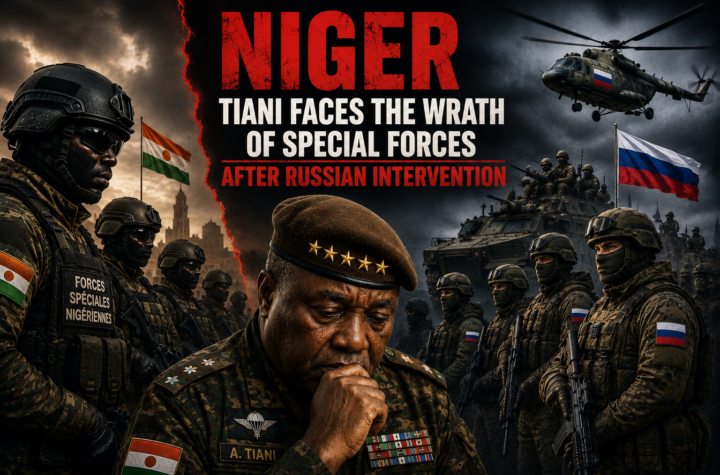
Niger: Tiani faces fallout from special forces anger after Russian intervention
Crisis in Niger, IMF agreement in Sénégal, and Moroccan elections: Five essential stories
RDC-Israël : un rapprochement aux enjeux multiples