
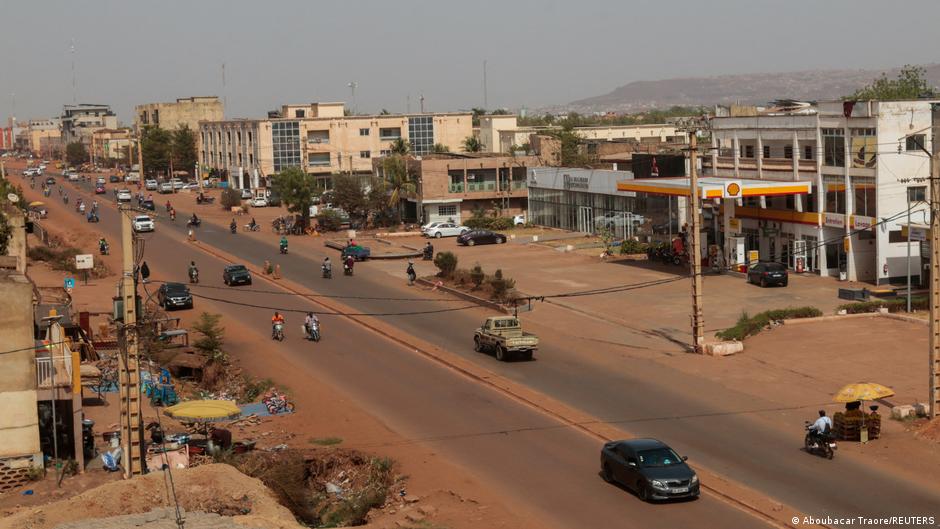
The international human rights organization Amnesty International has urgently called on jihadist factions in Mali to cease their blockade of Bamako and uphold the fundamental right of civilians to move freely throughout the country. The appeal comes as armed groups escalate attacks on key supply routes, leaving the capital and surrounding regions increasingly isolated.
Impact of the blockade on Bamako’s civilians
Since late April, jihadist factions have imposed a road blockade encircling Bamako, cutting off critical supply lines that the landlocked nation relies on for essential goods. Amnesty International warns that this siege is pushing civilians to the brink of a humanitarian crisis, with severe disruptions to food supplies, healthcare access, and overall safety.
“The ongoing blockade has unleashed unacceptable hardships on the civilian population, threatening their basic rights to food, medical care, and security,” stated a spokesperson for Amnesty. The organization highlighted an incident on May 6, where jihadists attacked a civilian convoy transporting fruits between Bamako and Bougouni in southern Mali. The trucks, not accompanied by military escorts and carrying no weapons or soldiers, were deliberately targeted.
Escalating military operations and conflicting claims
In response to the growing threats, the Malian armed forces have intensified aerial strikes on Kidal, a city currently under the control of the Azawad Liberation Front (FLA) and its jihadist allies, the Group for the Support of Islam and Muslims (JNIM). Military officials confirmed conducting multiple airstrikes on the city, while separatist forces claim to hold 200 Malian soldiers captive following clashes on April 25.
Residents in Kidal report severe disruptions, including prolonged power outages and disrupted telecommunications, making it difficult to communicate with other parts of northern Mali. The uncertainty has left locals distrustful, unsure of which faction to rely on for safety and stability.
Humanitarian toll in central Mali
In central Mali, particularly along the left bank of the Niger River in the Ségou and Koulikoro regions, jihadist groups have established control over hundreds of villages. Schools remain shuttered, and civilians face extortion through illegal taxes. Data from earlier this year indicated that over 2,300 schools across Mali are closed, with the north and central regions bearing the brunt of the closures.
“Both the government and rebel factions appear to be in a phase of regrouping and rearmament,” noted Abdoulaye Sounaye, a researcher specializing in Sahelian jihadist movements. “The military is preparing for a major offensive, while jihadist forces are equally bracing for potential attacks. It is the civilians who will suffer the consequences.”
Calls for inclusive dialogue to resolve the crisis
Analysts emphasize that the path to lasting peace in Mali requires an inclusive political dialogue involving all factions, including those currently labeled as terrorists. Ahmed Ould Abdallah of the 4S Center stressed the urgency of national reconciliation, stating:
“The crisis gripping Mali is not just a security issue—it is a political one. The government must open channels of dialogue with all societal groups to find a sustainable solution. Eternal conflict will only deepen the suffering of the Malian people.”
Despite the official stance against negotiating with groups designated as terrorists, confidential discussions have reportedly taken place between Malian authorities and jihadist factions to facilitate fuel supply negotiations. Experts argue that a broader, transparent dialogue remains the only viable path to ending the cycle of violence.

More Stories
French national detained in Senegal over homosexuality amid new anti-lgbtq laws
Marseille vs rennes: last chance for european football
Mali blocus crisis: GSIM faces scrutiny over humanitarian violations in Bamako