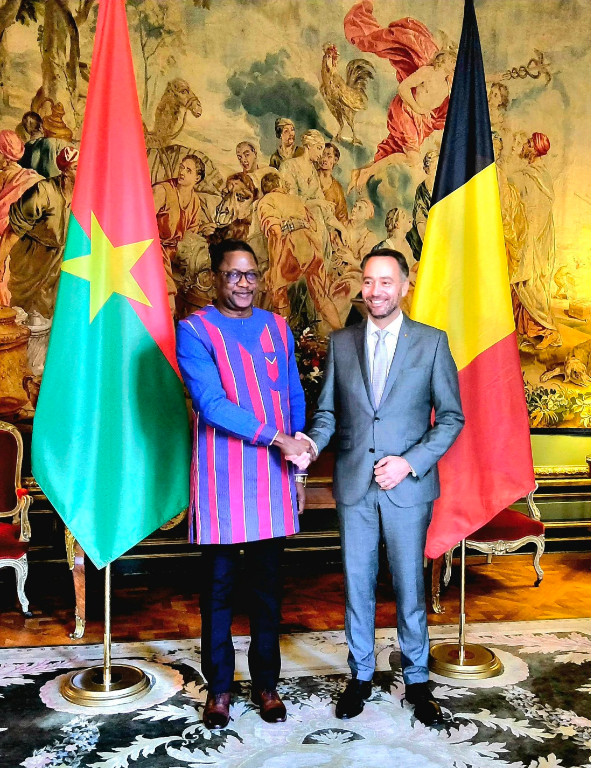
The announcement of a €40 million Belgian cooperation commitment to Burkina Faso, confirmed during Foreign Minister Karamoko Jean-Marie Traoré’s Brussels visit in early November 2026, arrives at a pivotal moment for Ouagadougou’s diplomatic and economic landscape. The pledge comes despite rising political tensions with Western partners, raising questions about the long-term viability of Burkina Faso’s sovereignty-first strategy and the real-world impact on its population and economy.
Why €40 million matters in Burkina Faso’s economic survival
The €40 million pledge from Belgium—announced during Traoré’s meeting with Belgian diplomat Maxime Prévot—is not a one-time infusion but a forward-looking commitment for the post-2027 period. While €40 million won’t resolve Burkina Faso’s deep-seated challenges, it arrives as the country faces severe fiscal constraints, ongoing security crises, and a growing humanitarian burden.
Belgium’s decision to extend this aid signals more than diplomatic convenience. It reflects a strategic calculation: preserving economic influence in a Sahelian nation that has increasingly pivoted toward non-Western partners such as Russia. But for the average Burkinabè citizen, this funding represents critical capital for education, healthcare access, and rural development—areas under severe strain due to funding gaps and regional instability.
From Brussels to Ouagadougou: rebuilding trust or buying time?
Traoré’s two-day visit to Brussels was not limited to financial pledges. On November 4, he met with EU High Representative Kaja Kallas to discuss Burkina Faso’s evolving international partnerships and the future of bilateral relations. The next day, talks with Prévot focused on security cooperation, regional stability, and long-term development frameworks.
These engagements send a clear message: despite public rhetoric rejecting Western influence, Burkina Faso remains open to pragmatic cooperation. The €40 million aid is a tangible demonstration of this balance—allowing the Traoré administration to uphold its sovereignty narrative while still accepting external funding that supports public services and local communities.
For Belgium, sustaining cooperation is a balancing act. By maintaining dialogue and financial support, Brussels avoids complete isolation of Ouagadougou—a country it views as strategically important in West Africa. It’s a form of quiet diplomacy, one that prioritizes economic presence over political alignment.
The paradox of sovereignty and reliance on foreign aid
Since seizing power in September 2022, President Ibrahim Traoré has championed “sovereign patriotism,” symbolized by the withdrawal of French forces and vocal criticism of Western interference. Yet the €40 million Belgian aid tells a different story: Burkina Faso’s development cannot proceed without external financing. This contradiction raises a key question: can a nation assert complete independence while still dependent on international aid?
Analysts suggest this reflects a nuanced strategy: rejecting political interference but accepting financial cooperation where it serves national needs. The €40 million is not tied to ideological alignment but to development outcomes—education materials, healthcare delivery, and rural infrastructure. This pragmatic approach allows Burkina Faso to diversify partnerships without abandoning economic lifelines.
What’s next? Movement or status quo in Burkina Faso-Belgium relations
The €40 million announcement is a strong signal—but signals alone don’t change geopolitics. For real progress, Ouagadougou and Brussels will need to move from pledges to implementation. That means disbursing funds transparently, ensuring project oversight by local communities, and building a cooperation model that respects Burkinabè autonomy.
Brussels, for its part, gains a foothold in a region where other powers are expanding influence. For the Burkinabè people, this aid offers a lifeline in desperate times. But in the complex dance of sovereignty and necessity, one thing is clear: €40 million is more than an accounting entry—it’s a statement of what Burkina Faso still needs, and what the West still believes it can offer.