Institutional launch: Wadagni sets the tone for Bénin’s new seven-year term
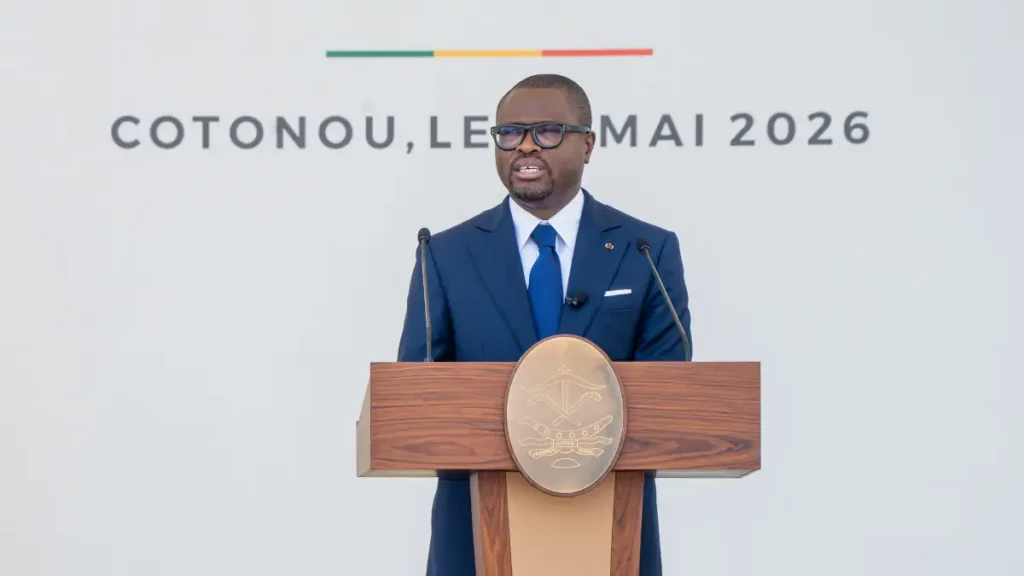
Romuald Wadagni, President of the Republic of Bénin, chaired the first Council of Ministers of his seven-year mandate (2026-2033) on May 28, 2026, at the Palais de la Marina in Cotonou. Just days after his official inauguration, the newly appointed government convened to receive the President’s foundational directives, marking the official launch of executive operations for the new term.
A renewed sense of public service
In his opening remarks, President Wadagni warmly welcomed the newly appointed ministers, emphasizing the solemn responsibility they now bear. He underscored that their roles are not positions of privilege, but missions of national service, demanding unwavering commitment to the collective good of the Béninese people.
The Head of State outlined core principles to guide government action, calling for sobriety, uncompromising integrity, and unwavering solidarity in all executive functions. He explicitly rejected any partisan or personal considerations in public decision-making, stressing the primacy of national interest.
Key priorities: territorial equity and national security
During the session, President Wadagni highlighted two pillars of his administration’s agenda. The first is a strategic push to reduce disparities between Bénin’s communes. This initiative will prioritize equitable access to infrastructure, essential public services, and increased investment in local governance across all regions.
Security also emerged as a critical focus. In light of recent armed attacks in northern Bénin, the President called for sustained strengthening of national defense and territorial protection measures. He urged the government to maintain high vigilance and proactive engagement with security forces to safeguard citizens and stabilize the region.
Revised governance: a more structured and responsive executive
The new government is rolling out a streamlined operational framework. From now on, the Council of Ministers will meet on the first Wednesday of each month, forming the backbone of regular executive coordination. Extraordinary sessions may be convened whenever urgent matters arise.
The Interministerial Committee will meet twice monthly—on the first and third Mondays—to ensure cross-sectoral alignment. Additionally, joint working sessions will bring together the Council of Ministers, the Interministerial Committee, and sectoral ministers to address complex policy challenges in a collaborative setting.
This inaugural meeting signals the formal start of institutional operations under the new seven-year mandate, following President Wadagni’s swearing-in ceremony on May 24, 2026.