
Bénin’s agricultural backbone under threat
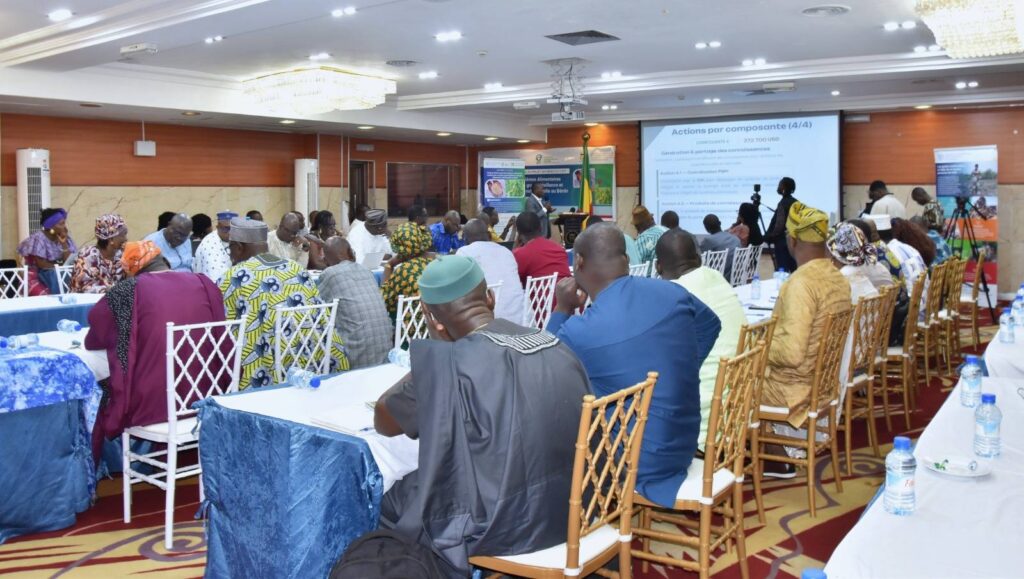
Bénin’s economy relies heavily on agriculture, which employs nearly 70% of the workforce, contributes 26% to the GDP, and supplies around 80% of export earnings. Yet this vital sector is faltering due to a silent but devastating enemy: soil degradation. Speaking at the launch of the Food Systems project in Cotonou’s Bénin Royal Hotel, Minister of Agriculture, Livestock, and Fisheries Adin Yeton Bloukounon Goubalan delivered a stark warning.
« Degraded soils lead to chronically low yields, trapping farmers in a cycle of poverty and vulnerability, » he declared before an audience of agricultural leaders and institutional partners. The numbers tell a sobering story: 38% of Bénin’s land is now classified as degraded, and over 5 million citizens—nearly 40% of the population—face the direct consequences. With crop productivity plummeting by at least 50%, rural communities are increasingly cut off from essential resources like food and water, deepening poverty and food insecurity.
A systemic solution for Bénin’s food future
The government’s Food Systems initiative is more than a quick fix—it’s a long-term strategy to overhaul the nation’s agriculture. Developed in partnership with the Food and Agriculture Organization (FAO) and the Global Environment Facility (GEF), the program aims to restore degraded land and modernize the rice and maize value chains by 2030.
The project doesn’t just address symptoms; it reimagines the entire agricultural system. Through policy reforms, improved production techniques, and better market access, it seeks to shift these key crops from low-output, high-impact practices to sustainable, high-efficiency models that deliver real socio-economic benefits.
A three-way funding model for lasting change
To make this vision a reality, a total investment of 20.7 million dollars has been committed. This funding breaks down into three parts: a 5.9 million dollar grant from the GEF, a 14.8 million dollar national co-financing by the Bénin government, and additional technical support from international partners. The project will unfold over the next six years, focusing on five high-priority communes: Karimama, Malanville, Glazoué, Kétou, and Les Aguégués.
The anticipated outcomes are ambitious: restoring 20,000 hectares of degraded land and introducing sustainable farming practices across 114,900 hectares. Direct beneficiaries include 36,000 farmers, while an estimated 356,000 people in target regions will see indirect benefits, from improved food security to better livelihoods.
Collaboration and caution as project rolls out
While the initiative offers hope for rural Bénin, leaders are calling for meticulous execution. Minister Goubalan emphasized the need to carefully vet soil restoration technologies before scaling up, warning that ineffective methods could derail the entire program.
The FAO’s Resident Representative in Bénin, Paul-Henri Zoéwindé Bouda, echoed the call for unity, stressing that success hinges on the full participation of all stakeholders—government agencies, implementing partners, and the farmers themselves.
« No single solution will work without collective ownership and commitment, » he noted. « The project’s impact will be measured not just in hectares restored, but in the resilience of communities and the durability of change. »
Building a food-secure future
By tackling soil degradation at its root, the Food Systems initiative isn’t just about saving crops—it’s about securing Bénin’s food future. If the 2030 targets are met, the country could not only stabilize its rice and maize supplies but also set a replicable model for ecological transition across West Africa.



More Stories
Sénégal: president Diomaye Faye establishes new political movement
Togo Protests: Opponents Decry Constitutional Reform
Sonko’s political funds: surprising claims about primature management