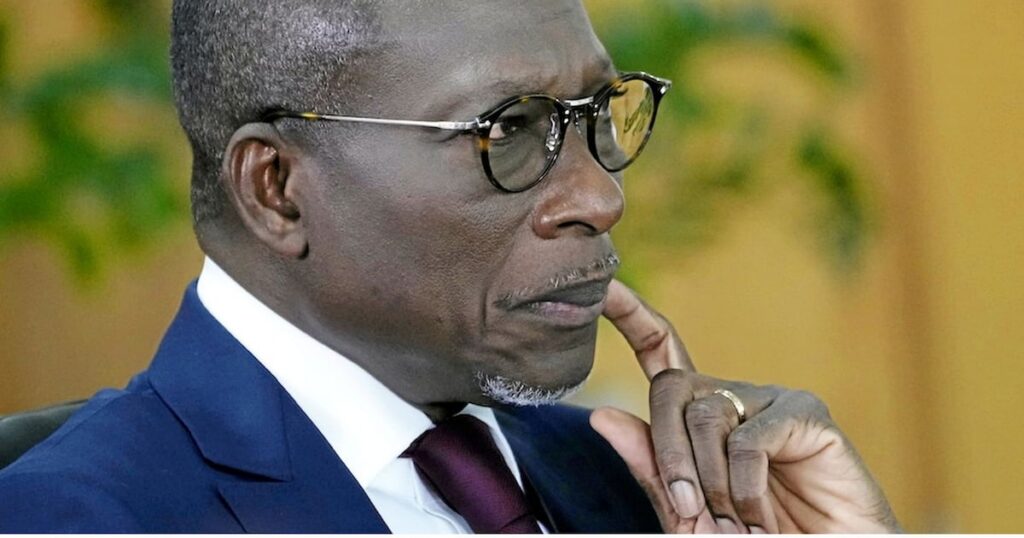
A dramatic but ultimately unsuccessful coup attempt recently sent shockwaves through Bénin, challenging the administration of President Patrice Talon. In the early hours of a Sunday, December 7th, a faction of mutinous soldiers briefly seized control of the national public broadcaster, SRTB, in Cotonou, announcing the president’s removal. However, the 67-year-old head of state, slated to conclude his decade-long tenure in April 2026, was swiftly secured as loyal forces systematically reclaimed critical installations. Security intelligence indicates the mutineers initially targeted Talon’s private residence in the Guézo district before being repelled. By late morning, Cotonou, the nation’s economic hub, was under intense scrutiny, with helicopters patrolling overhead and security teams on the ground, as calm gradually returned throughout the day. This unexpected uprising marked Bénin’s first coup attempt since Mathieu Kérékou’s successful power grab in 1972, underscoring a rare moment of instability for the West African nation.
In a brief national television address aired Sunday evening during the 8 PM news, President Patrice Talon acknowledged the gravity of the day’s events. “Our nation experienced incidents of extreme seriousness today,” he declared, vowing that “this betrayal will not go unpunished.” The President also revealed that some individuals remained captive by fleeing mutineers, emphasizing the critical need to fully stabilize the situation and safeguard the populace.
The tragic human cost of the attempted takeover included the death of General Bertin Bada’s wife, the President’s military cabinet director, who was killed during an assault on their home in Abomey-Calavi. The daughter of this trusted official, who had been promoted to air corps general just last June, also sustained injuries from the attackers’ gunfire.
As summarized by the Minister of Interior, Alassane Seidou, by midday, the events unfolded “in the early morning of this Sunday, December 7, 2025, when a small group of soldiers initiated a mutiny with the aim of destabilizing the State and its institutions. Faced with this situation, the Béninese Armed Forces and their hierarchy, faithful to their oath, remained republican. Their swift response allowed them to maintain control and foil the maneuver. Therefore, the Government invites the population to go about their normal activities.”
The Minister of Foreign Affairs, Olushegun Adjadi Bakari, clarified that the majority of soldiers remained loyal to the president, and only “a small group” had attempted to seize power.
Since the incident, multiple corroborating security sources have confirmed the apprehension of at least a dozen military personnel, including the alleged instigators of the attempted putsch, as well as an individual previously discharged from the Béninese army.
Mutineers target presidential residence and palace
The first explosions reverberated at dawn. According to several security sources, a group of soldiers, reportedly supported by “external elements”—believed to be mercenaries—first attempted to breach the residences of high-ranking officers before advancing towards the president’s home and the presidential palace. They then took control of the public television station. On set, staff were held at gunpoint as the mutineers recorded a message. In their declaration, the insurgents claimed to be acting under the authority of Lieutenant-Colonel Pascal Tigri, announced the formation of a “Military Committee for Refoundation” under his leadership, and proclaimed Patrice Talon “removed from his duties,” just months before his official term was set to conclude.
Lieutenant-Colonel Tigri further stated that the Constitution and all state institutions were suspended, and that “the national army would exercise, until further notice, the full powers vested in the State of Bénin.” He justified these actions by citing a desire, he claimed, to end “Patrice Talon’s governance and the deprivation of certain citizens’ rights to choose their candidate,” also decrying “the voting of crisis-generating laws,” “the forced exile of certain citizens,” and “widespread arrests.”
Early reactions came from the United States and French embassies. The American embassy issued an alert to its citizens, mentioning “exchanges of gunfire” in the Guézo district, where the president’s private residence is located. The French embassy also urged its citizens to exercise extreme caution.
However, the coup attempt was swiftly challenged on the ground. Shortly after the mutineers’ declaration, heavy gunfire erupted around the port and the presidential palace. Elements of the Republican Guard, remaining loyal to the head of state, launched a counter-offensive to reclaim strategic positions. Access to the marina, home to the presidential palace, was immediately sealed off, while helicopters patrolled the area and several major roads in Cotonou were blocked. The Béninese government requested assistance from the Nigerian army, which dispatched fighter jets and ground troops to secure the public television station and a military camp seized by the mutineers.
Confusion and tension grips the capital
For several hours, uncertainty prevailed. Rumors spread faster than facts, amplified by TikTok, Facebook, and WhatsApp groups, which served as the primary information channels while authorities delayed speaking out. In this informational fog, everyone tried to grasp the true extent of the events unfolding in the capital.
By early afternoon, the sounds of gunfire had subsided, and police units occupied major intersections in the city center. Contacted by Le Point Afrique, several witnesses described an atmosphere blending concern with restraint. “We still don’t know exactly what happened,” whispered a resident of the Cimetière PK-14 district. Other Béninese citizens pondered what might come next, fearing potential repercussions.
For a nation long considered an oasis of stability in West Africa, this coup attempt was an electrifying jolt. Coming just ten days after a coup in Guinea-Bissau and less than two months after one in Madagascar, Bénin now joins a growing list of democratic regimes in the region threatened by military interventions: Niger, Burkina Faso, Mali, Guinea, and, just last month, for the ninth time since 2020, Guinea-Bissau.
Regional condemnations and troop deployments
The attempted coup immediately drew strong condemnation from the Economic Community of West African States (ECOWAS) and the African Union (AU). The AU denounced the act “firmly and unequivocally” as a violation of constitutional order and called on the military personnel involved to return to their barracks. In a statement disseminated on X, the Chairman of the Pan-African Commission, Mahamoud Ali Youssouf, urged “all actors engaged in this attempt” to “immediately” cease any illegal actions and “return without delay to their professional obligations.”
For its part, ECOWAS announced Sunday evening the deployment of troops to Bénin, following the swift foiling of the coup attempt by authorities. The regional organization specified it had “ordered the immediate deployment of elements of the Standby Force,” with contingents from Nigeria, Sierra Leone, Côte d’Ivoire, and Ghana, to support “the government and the republican army of Bénin” and “preserve constitutional order.”
Presidential elections and security: Bénin on the edge
With the presidential election slated for April, marking the conclusion of his term, Patrice Talon navigates a tense political landscape. The northern part of the country remains impacted by jihadist attacks linked to Al-Qaeda; last April, 54 soldiers were killed there.
On the political front, the current president, a former businessman and cotton magnate in power since 2016, is set to leave office at the end of his second and final term, as constitutionally mandated. However, he has left nothing to chance; the ruling coalition (Bloc républicain (BR) and UP-R), which has strengthened over the years, has already designated his successor: Finance Minister Romuald Wadagni, a cornerstone of the economic policies implemented over the past decade.
The constitutional revision adopted last month, which establishes a Senate and extends presidential and legislative terms from five to seven years, continues to fuel intense debates and criticism. The disqualification of the main opposition party’s candidate, Les Démocrates, further solidifies the advantage of the incumbent camp, even though the two-term limit remains in effect. Just months before the presidential election, this reform exacerbates existing tensions.
According to sources close to the matter, the mutineers harbored political grievances against the incumbent government, criticizing what they perceived as exclusionary governance. The question of potential masterminds behind this attempted coup also remains open, suggesting that deeper tensions may exist within the Béninese army and political sphere.